
Last updated November 24, 2026
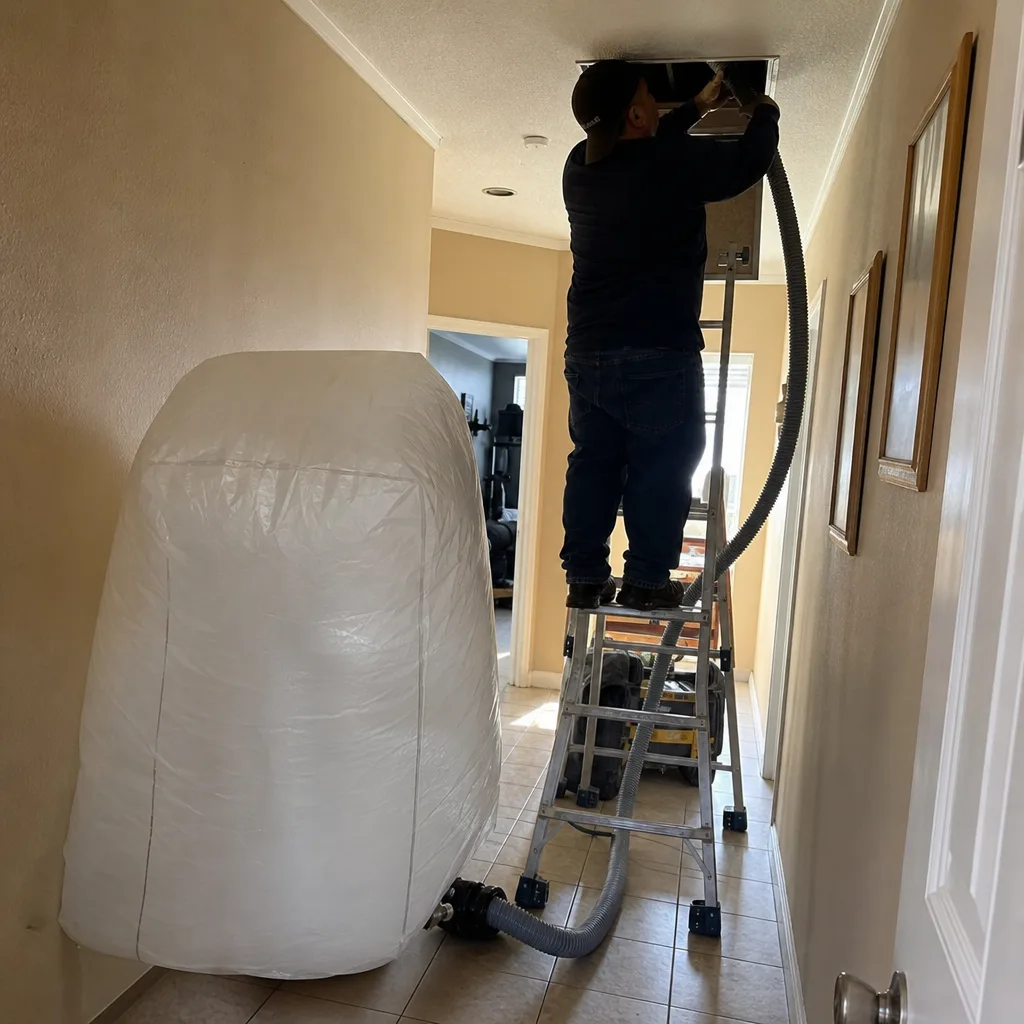
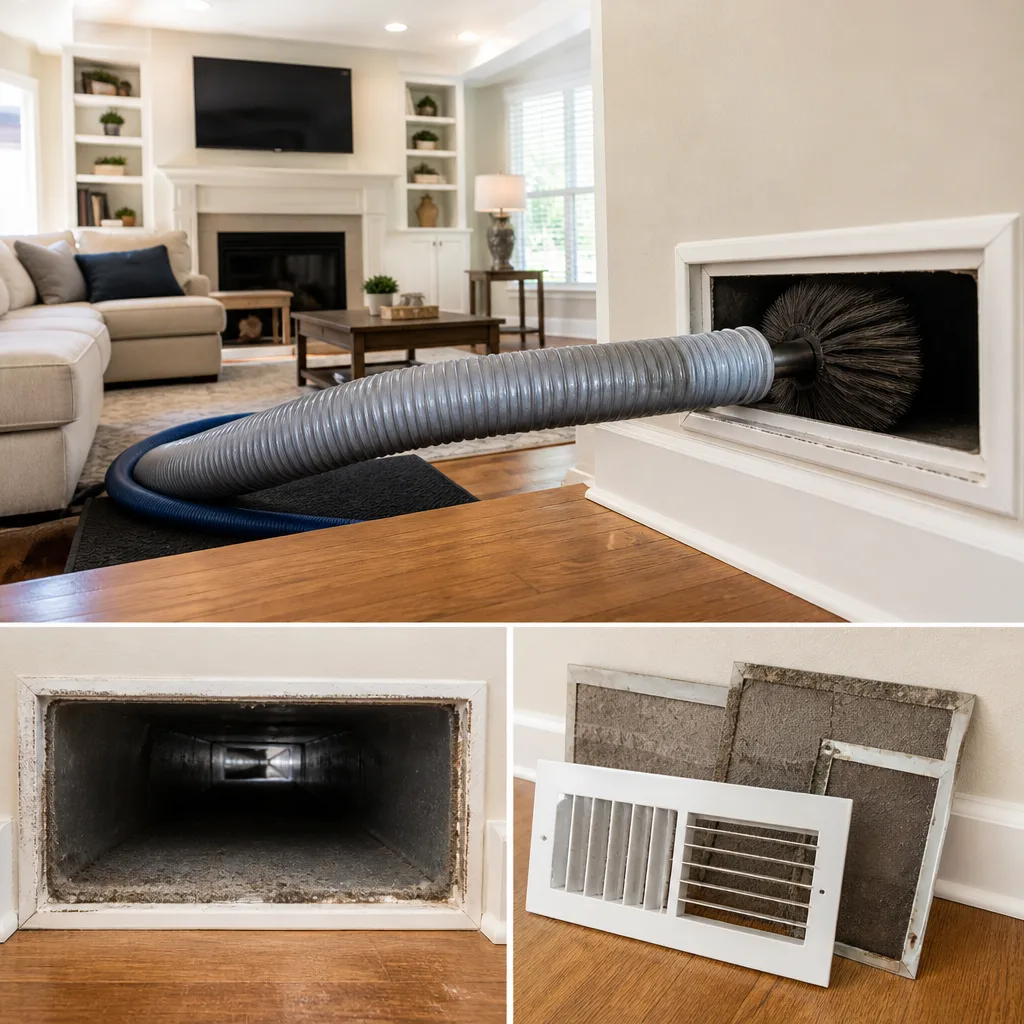 Whole-home duct cleaning
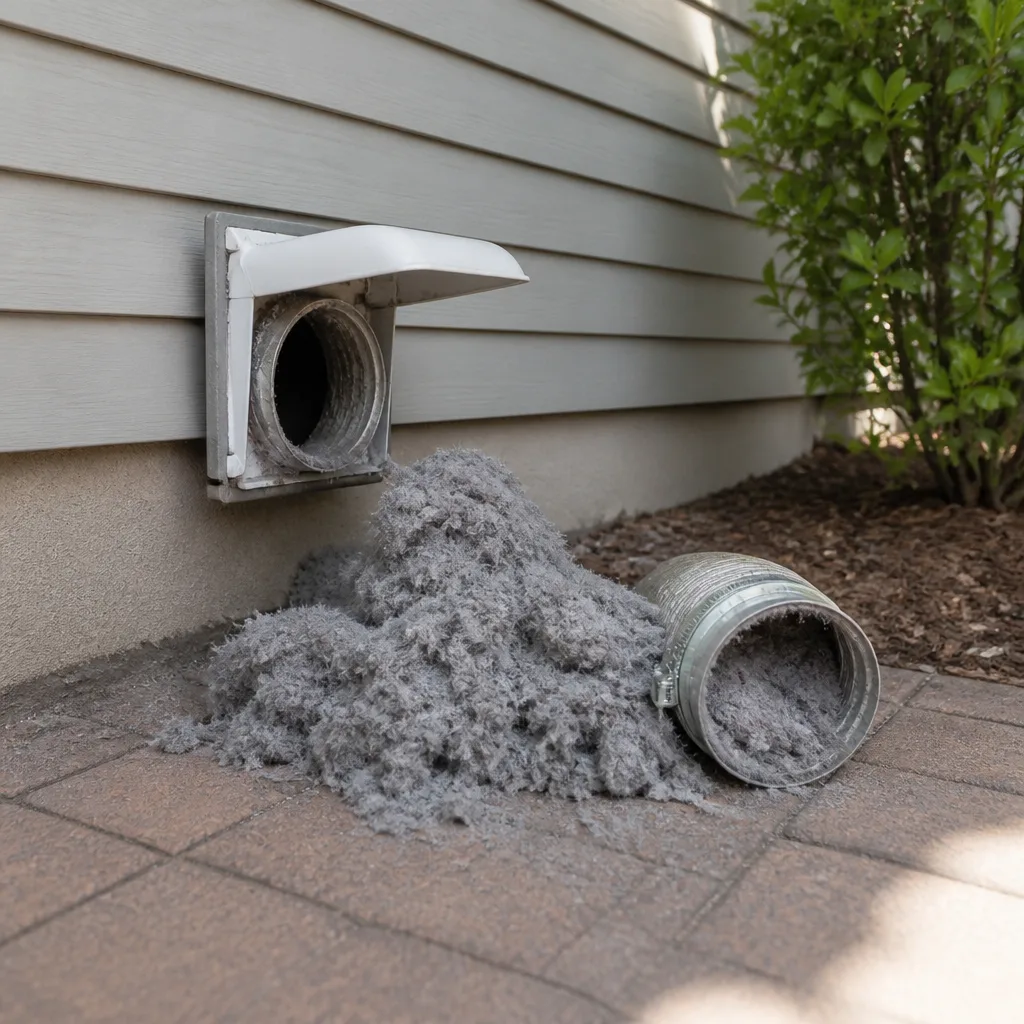 Dryer vent cleaning
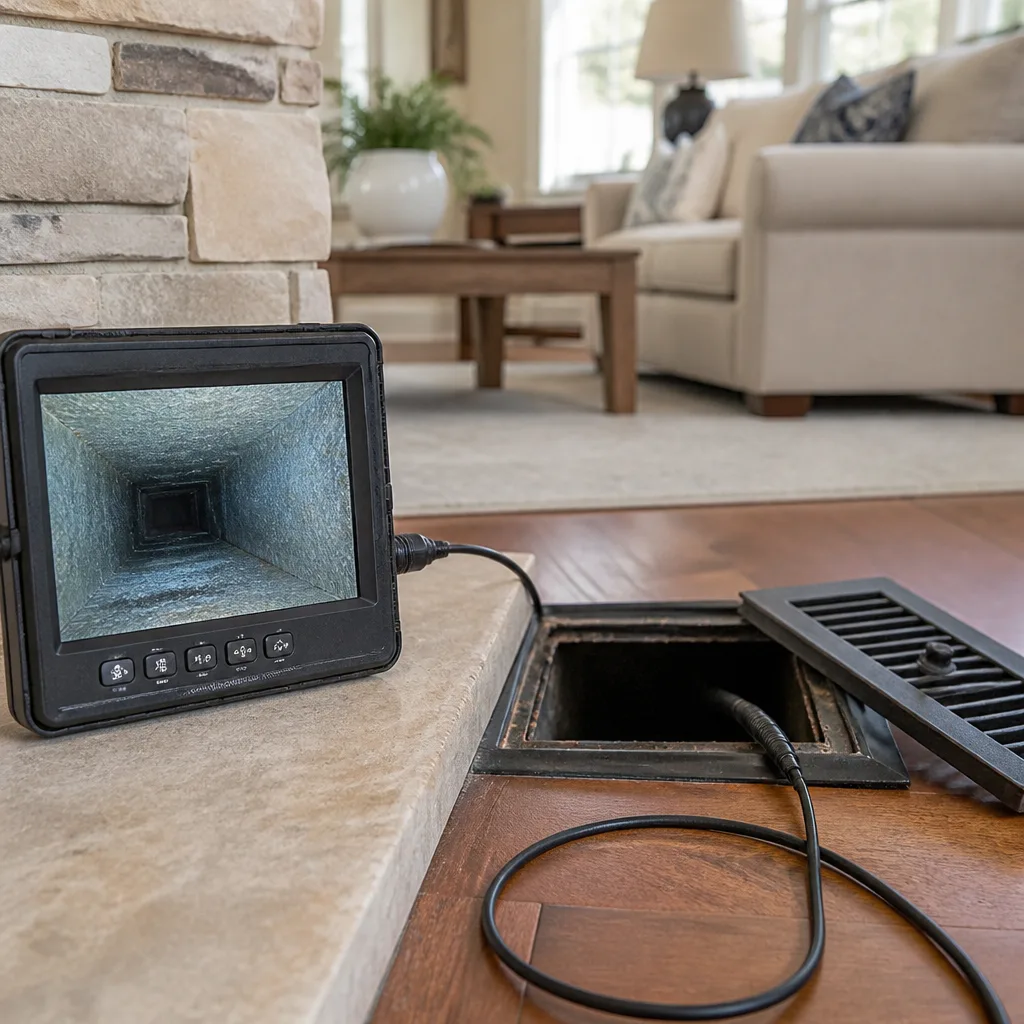 Camera inspection
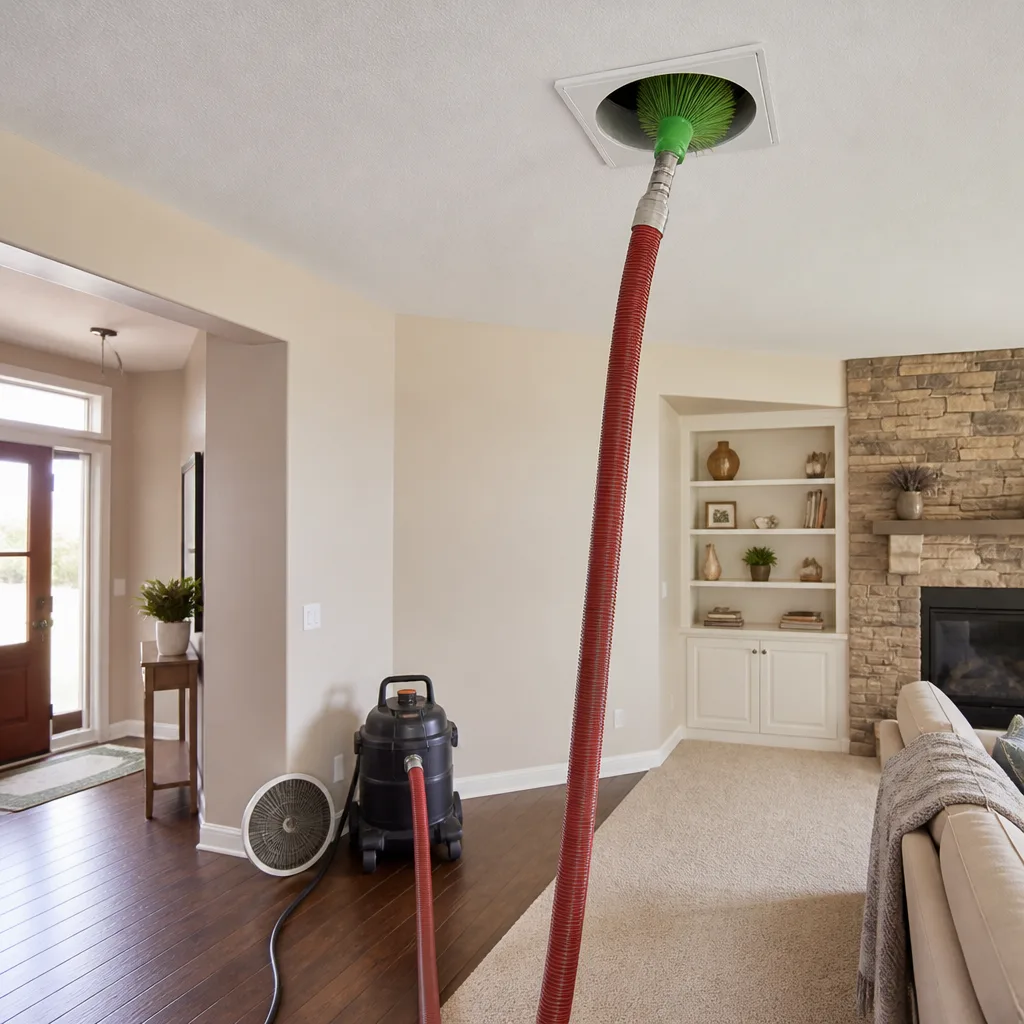 Sanitizing & deodorizing
Whole-system duct and dryer vent check with before-and-after photos - you see exactly what came out of your vents
That "$99 whole-house special" is a bait ad - the real number appears once they are in your hallway, or the "clean" is a shop-vac at the register. We photograph the inside of your ducts before and after instead.
Seasonal Air Duct Cleaning Care for Downtown Santa Ana: Year-Round Homeowner’s Guide
Most Downtown Santa Ana homeowners we talk to are running their duct cleaning on a once-a-year schedule, and nearly all of them are cleaning at the wrong time. The reasoning is understandable: pick a month, stick to it, call it maintenance. But Downtown Santa Ana doesn’t have one uniform season of air quality stress. It has distinct events, a wind-driven dust and smoke window in the cooler months, a humid June gloom stretch, and a long cooling season that keeps the blower running hard. Duct contamination peaks at different times for different reasons, and a single annual cleaning almost always lands on the wrong side of one of them. This guide maps the year quarter by quarter, so you know what’s actually happening inside your duct system in each stretch of the calendar, what to check, and when to call.
Quick Answer
The highest-value seasonal duct care move in Downtown Santa Ana is inspecting and cleaning right after the Santa Ana wind season closes (roughly late February into March), because those dry, particulate-heavy winds push fine dust and debris into return-air paths that then get recirculated all through the cooling months. Pair that with a pre-cooling-season check of the air handler and a humid-season look at the drain pan and cabinet seals, and you’ve covered the three windows that actually matter. A fixed once-a-year date ignores all three.
Styles & brands we work with
- Whole-home duct cleaning
- Dryer vent cleaning
- Camera inspection
- Sanitizing & deodorizing
Table of Contents
- Why Downtown Santa Ana’s Seasons Don’t Match a Generic Cleaning Calendar
- The Post-Santa Ana Wind Window: Your Highest-ROI Clean of the Year
- Wildfire Smoke Season and What It Leaves Behind
- June Gloom, Humidity, and the Mold Question
- Peak Cooling Demand and Blower Wheel Fouling
- Pre-Season and Post-Season Tasks for Ducts and Air Handler
- Adjusting Frequency to Your Household, Not the Calendar
- Living Near the 5/55 Corridor: What Road Exposure Does to Ducts
Why Downtown Santa Ana’s Seasons Don’t Match a Generic Cleaning Calendar
Duct cleaning advice written for the country as a whole assumes a hard winter and a hard summer, with the shoulder seasons doing quiet work in between. Downtown Santa Ana doesn’t run that way. Our winters are mild, so the furnace runs lightly and intermittently, which means heating-season dust loading is lower than the national script suggests. Our cooling season is long and sits at the center of the year, so the blower and evaporator coil carry far more runtime than a Midwest or Northeast system does. And the events that actually drive contamination here, wind-driven particulate, wildfire smoke, and humid marine-layer air, don’t line up with the four seasons at all.
That mismatch matters because duct contamination isn’t a slow even accumulation. It comes in pulses tied to specific events. A single multi-day wind event can deposit more fine particulate into a return-air path than several quiet months combined. A smoke episode does the same with combustion particles, which are smaller and clingier than ordinary household dust. A humid stretch can push a marginally sealed system into condensation problems it wouldn’t otherwise have. If you clean in, say, October, you’ve just cleared the system before the heaviest loading events of the year arrive.
What works better is treating your duct system like the rest of the mechanical equipment in the house: it has high-load periods, recovery periods, and switchover points between heating and cooling modes. Care mapped to those moments catches the system at the right time instead of a random one. Downtown Santa Ana’s climate gives us a fairly reliable rhythm to work from, and once you know it, the calendar stops being arbitrary.
In our experience, the homeowners who get the most out of air duct cleaning are the ones who stopped thinking of it as an annual checkbox and started thinking of it as an event-driven service. That single shift in framing is worth more than any change in technique.
The Post-Santa Ana Wind Window: Your Highest-ROI Clean of the Year
The Santa Ana winds arrive in the cooler months, roughly October through February, and they are the defining seasonal event for indoor air in Downtown Santa Ana. These are dry, gusty, offshore winds that lift fine dust, grit, and loose debris and hold it in the air for extended periods. Homes draw that air in constantly, both through the HVAC return system and through ordinary envelope leakage. The particles that don’t settle on your furniture end up on the return-side surfaces of your ductwork, the blower wheel, and the evaporator coil, which is exactly where you don’t want them.
Here’s why cleaning after the wind season closes beats cleaning before it: the contamination hasn’t happened yet when the winds start. Cleaning in September or early October clears the system just in time for it to load up again over the following four months. Cleaning in late February or March, once the wind pattern has broken and before cooling demand ramps up, captures the peak load and clears it before the system starts running hard for the summer. That ordering is what makes it the highest-return maintenance action a Downtown Santa Ana homeowner can take.
What to look at when the winds pass:
- Return-air grilles and filters: heavier-than-usual gray dust loading and grit are the visible signature of wind-season intrusion. If your filter is loading much faster than usual through these months, the return path is pulling in outdoor particulate.
- Blower wheel and coil surfaces: a thin even film of fine dust on the blower blades and coil fins signals that particulate made it past the filter. This is the part that quietly degrades efficiency.
- Duct interior on the return side: this is where wind-borne dust accumulates first. A short camera inspection tells you whether the deposit is light surface dust or a heavier accumulation worth a full cleaning.
One caution worth stating plainly: inspecting the duct interior and air handler cabinet means working around rotating equipment and, on some systems, electrical components. A homeowner can check grilles and filters easily; anything past the cabinet door is a job for a trained professional with the right containment setup. We use Abatement Technologies equipment for this kind of inspection and containment work precisely because post-wind cleanup can involve heavier contamination than routine maintenance.
If the wind season has passed and your system hasn’t been looked at since before it, this is the moment. See our Air Duct Cleaning Downtown Santa Ana service page for what a full post-wind cleaning involves.
Wildfire Smoke Season and What It Leaves Behind
Wildfire smoke doesn’t follow a neat calendar the way the wind season does, but in Downtown Santa Ana the risk window concentrates in the late summer through fall, when inland fires and prevailing flow can push smoke into the basin. Smoke is a different kind of contaminant than windborne dust. The particles are smaller, they carry combustion residue that leaves an odor signature, and they adhere to duct surfaces and coil fins far more stubbornly than ordinary household dust. If you’ve ever noticed a faint smoke smell returning the moment the system kicks on hours after the air outside cleared, you’ve met this problem.
Standard filtration catches some of it and misses the rest, especially the fine fraction. That fine material lodges on the return side and on the blower and coil. A single heavy smoke episode can leave a persistent odor signature that recirculates with every cycle, and ordinary vacuuming of the grille doesn’t touch it because the deposit is downstream of the grille.
What we check after a smoke event:
- Odor on startup: run the fan briefly and note whether the first air out of the registers carries a smoke or char smell.
- Filter color and loading: combustion particles darken a filter faster and more uniformly than dust does.
- Coil and blower surfaces: smoke residue leaves a visible film that ordinary dust doesn’t.
- Surface contamination in the return trunks: this is where an air quality service rather than a routine cleaning comes into play.
When smoke residue is the problem, cleaning alone may leave the odor behind. This is where our Air Quality & Sanitizing service earns its place, using Aprilaire and Honeywell products to address the contamination at the source rather than masking it. We don’t claim a cleaning erases every last odor, but we do match the method to the contaminant, which is what makes the difference.
June Gloom, Humidity, and the Mold Question
Late spring into early summer brings the marine layer that locals call June gloom, a stretch of overcast mornings and higher humidity than the rest of the year. For a duct system, this is the season that tests your seals. The air handler cabinet and duct joints operate in conditions where condensation can form on cold surfaces, and any gap or poorly sealed joint lets that moisture migrate into places it shouldn’t be. Mold doesn’t need a flood; it needs a surface, organic dust to feed on, and sustained moisture. A marginally sealed duct in a humid stretch can supply all three.
This is why we treat duct repair and sealing as seasonal maintenance and not just a repair call. A small leak you’d never notice in the dry months becomes a genuine problem in June gloom. A properly sealed system stays dry even when the air outside is heavy.
What to watch for in the humid window:
- Musty odor on startup: the classic sign of moisture where it doesn’t belong. It’s often stronger in the morning during the marine layer.
- Condensation around the air handler: visible moisture on the cabinet, drain lines, or nearby duct connections is worth a professional look.
- Drain pan and drain line: a clogged condensate drain in a cooling-dominated climate is one of the most common causes of moisture problems and one of the easiest to catch early.
- Joint and seam condition: loose tape, gaps at connections, and sagging flex duct are common points where humid air gets in.
If the humid season has left you with a smell you can’t place, our air duct cleaning service covers the cleaning side, and our Duct Repair & Sealing service addresses the root cause. In our experience, the smell comes back every year until the seal is fixed.
Peak Cooling Demand and Blower Wheel Fouling
Downtown Santa Ana is a cooling-dominated climate. The air conditioner runs through a long stretch of the year and works harder in the middle of it. That runtime matters more than most homeowners realize, because the blower wheel and evaporator coil collect deposits in proportion to hours of operation, not in proportion to calendar time. A system that runs twice as many hours as a national-average system fouls twice as fast, even in the same house with the same dust load.
The blower wheel is the tell. Its blades are shaped to move air efficiently, and a thin, even film of dust degrades that efficiency much more than the visual impression suggests. You won’t usually see it from the register. You’ll notice it in the symptoms: airflow feels weaker than it did, some rooms don’t cool as well, the system seems to run longer to reach the same temperature, or the energy bill creeps up without an obvious explanation. None of those symptoms point to the duct at first glance, but the blower is part of the air system, and it’s often where the problem lives.
What a pre-cooling-season check covers:
- Blower wheel and housing: visible dust film, debris, and anything that throws the wheel out of balance.
- Evaporator coil: dust loading between the fins, which reduces heat transfer.
- Cabinet interior: dust and debris accumulation inside the air handler cabinet.
- Filter fit and seating: a filter that doesn’t seat properly lets air bypass it, which loads the coil faster.
- Return and supply connections: secure, sealed, and clear of obstruction.
This is the same work we do under our HVAC cleaning service, and it’s the reason we run professional-grade Rotobrush and Nikro systems rather than a shop-vac setup. The equipment matters because the deposit is downstream and stubborn. If you want to understand what that cleaning covers, the HVAC cleaning page lays out the process. (If the reader wants to go deeper on what cleaning the whole system actually entails, the Air Duct Cleaning Downtown Santa Ana overview is the place to start.)
Pre-Season and Post-Season Tasks for Ducts and Air Handler
The two switchover points in the year, going from cooling to heating and from heating to cooling, are when a duct system needs the most deliberate attention. Each switch changes which parts of the system run and how much condensation risk there is. Doing the right tasks at each of these moments buys you a season of cleaner, more efficient operation, and skipping them means starting every season on a system that’s carrying last season’s load.
Before switching to cooling (late spring):
- Replace the filter and check that it seats properly.
- Check the condensate drain and drain pan for blockage and standing water.
- Inspect duct joints and seals for gaps that would let humid air in.
- Check grilles and registers for dust loading and obstruction.
- Have the coil and blower checked if they haven’t been looked at since the previous cooling season.
Before switching to heating (early fall):
- Replace the filter and clear the return-air grilles.
- Inspect the cabinet and ductwork for debris that settled over the cooling season.
- Check that supply registers are open and unobstructed.
- Look for dust loading on the blower and coil that accumulated over the summer.
- Check for any evidence of pest intrusion or debris in the duct runs.
These are homeowner-level checks for the visible components. Anything inside the air handler cabinet, the coil, or the duct interior is a professional job. Gas-fired heating components in particular should only be handled by a trained professional, and if you ever smell gas or suspect a leak, leave it to someone qualified. The checklists above are about knowing what to look at, not about opening the wrong door.
One more point: the switchover is also when a professional cleaning pays off most. If you clean at one switch and then again after the next, you’re resetting the system twice a year to a known-clean state, which is how you keep the air handler from carrying a hidden layer of dust through every season. A single annual cleaning, by contrast, means the system is only clean for part of the year.
Adjusting Frequency to Your Household, Not the Calendar
The “clean once a year” rule is a placeholder. The right frequency depends on how much contamination your specific house generates, and that varies enormously between Downtown Santa Ana homes. Two houses on the same block can have very different duct loads, and the difference comes down to a handful of household variables. Instead of asking what the calendar says, ask which of these apply to you.
- Pets: animals shed dander and hair that feed the dust load and coat the return side faster. A home with multiple pets nearly always needs more frequent attention than the calendar suggests.
- Renovation work: any remodeling, drywall work, or flooring project throws fine construction dust into the air, and a good share of it ends up in the duct system. A cleaning after a renovation is far more valuable than a cleaning in some arbitrary month.
- Proximity to busy roads: homes near major traffic corridors take in more fine particulate from the outside air. The 5 and 55 corridor is the defining example in Downtown Santa Ana, and homes closest to it carry a higher baseline load.
- System age and seal condition: leaky ducts pull in dust from unconditioned spaces, which increases the load and the cleaning frequency.
- Filter discipline: how often the filter is actually changed and how well it seats makes a measurable difference to what reaches the coil and ductwork.
Practical guidance: households with pets, recent renovation, or a location near the corridor are usually looking at a cleaning frequency closer to twice a year, tied to the seasonal windows above. Households with none of those factors can stay on a single post-wind cleaning. The point is that the frequency is a judgment about your house, not a maximum or a minimum handed down from a schedule. When we visit, we look at the actual load on your system and tell you what it needs.
A note on dryer vents, which belong in the same seasonal thinking. Dryer vents are a fire risk, not a maintenance checkbox, and a clogged vent is a genuine safety concern in any home. See our dryer vent cleaning page for what a proper cleaning involves, and fold it into the same annual rhythm you’re building for the rest of the system.
Living Near the 5/55 Corridor: What Road Exposure Does to Ducts
Downtown Santa Ana sits close to two of the busiest freeway corridors in the county, the 5 and the 55. Homes near those lines carry a different duct load than homes further out, and it isn’t just volume, it’s the character of the particulate. Road-generated fine dust is smaller and travels farther into a system than the coarser material that settles out quickly. It reaches the return side and the coil, and it accumulates faster than the ordinary household dust that most cleaning schedules are built around.
That has two practical implications for seasonal care. First, the post-wind cleaning window matters more for these homes, because wind events and traffic particulate compound each other. Second, the filter and the return-side deposit are worth checking more often than once a year. A filter that’s loading faster than usual is your early signal that the load is higher than a generic schedule assumes.
We don’t know every home’s exact exposure, and we’re not going to pretend a single rule covers the whole neighborhood. What we can do is look at the actual load in a specific house and tell you what it needs. If you’re near the corridor and you’ve been running a once-a-year schedule, the first step is a professional assessment rather than a guess.
Common Mistakes to Avoid
- Cleaning in the wrong season. A cleaning in early fall clears the system right before the heaviest wind and smoke events of the year. Cleaning after the wind season captures the actual load instead of anticipating it.
- Treating the air handler as off-limits or unimportant. The blower and coil are where the accumulation actually degrades performance, and a duct cleaning that skips them leaves half the job undone. Ask whether the air handler is part of the scope before you book.
- Assuming a lowball quote covers the whole system. A price that looks dramatically lower than others usually means the cleaning is limited to the easy-to-reach parts. Ask what’s included, and get it in the written estimate.
- Ignoring the seal problem. Cleaning removes the debris; it doesn’t stop the leaks that let new debris back in. In Downtown Santa Ana’s humid stretches, an unsealed duct joint is also a moisture problem, not just a dust one.
- Chasing a fixed annual date instead of the household variables. A pet household, a recent renovation, or proximity to the corridor can all push the right frequency higher than once a year. The calendar isn’t the authority; the load is.
- Skipping the dryer vent because it’s not “air ducts.” A clogged dryer vent is a fire risk that has nothing to do with indoor comfort and everything to do with safety. It deserves the same attention as the rest of the system.
- Doing the inspection work yourself past the grille. Checking filters and grilles is fine. Working inside the cabinet, around the coil, or near any gas-fired component is not a homeowner job. That’s a professional call.
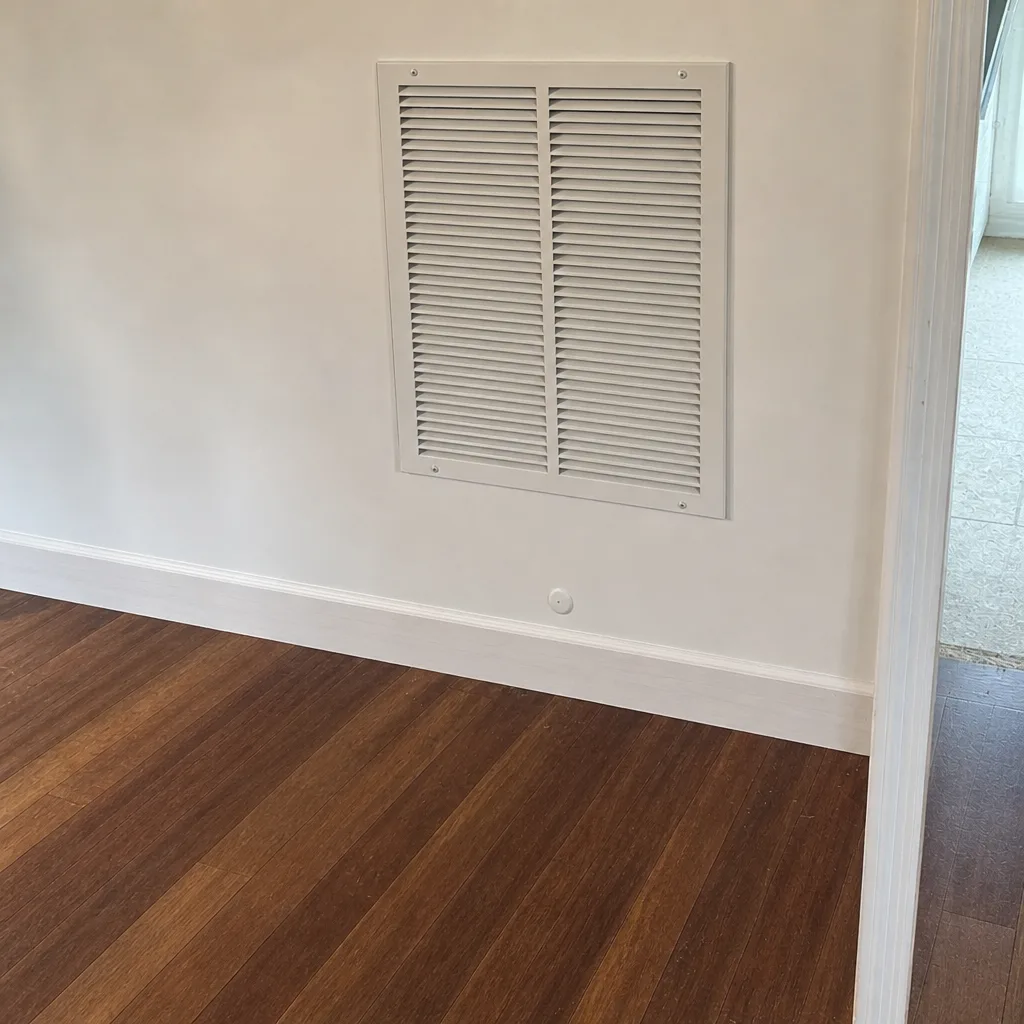
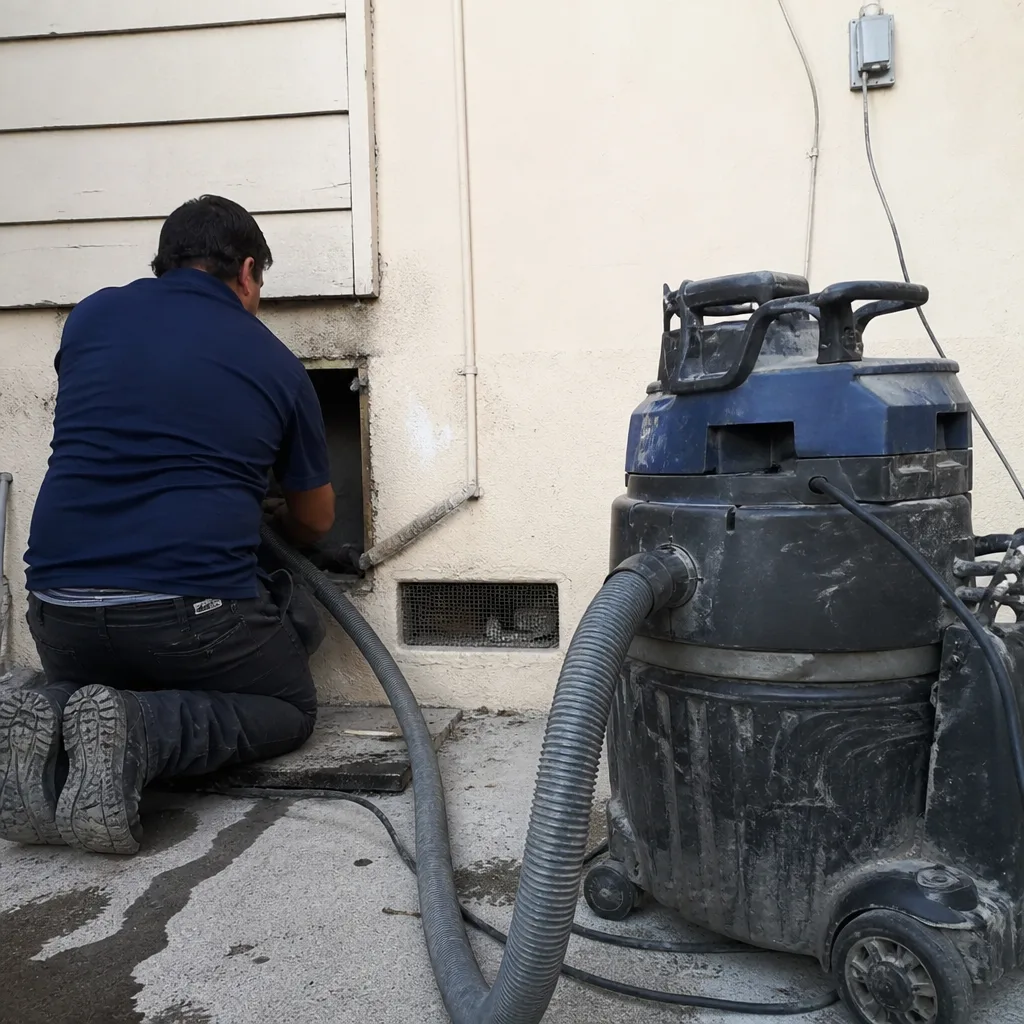
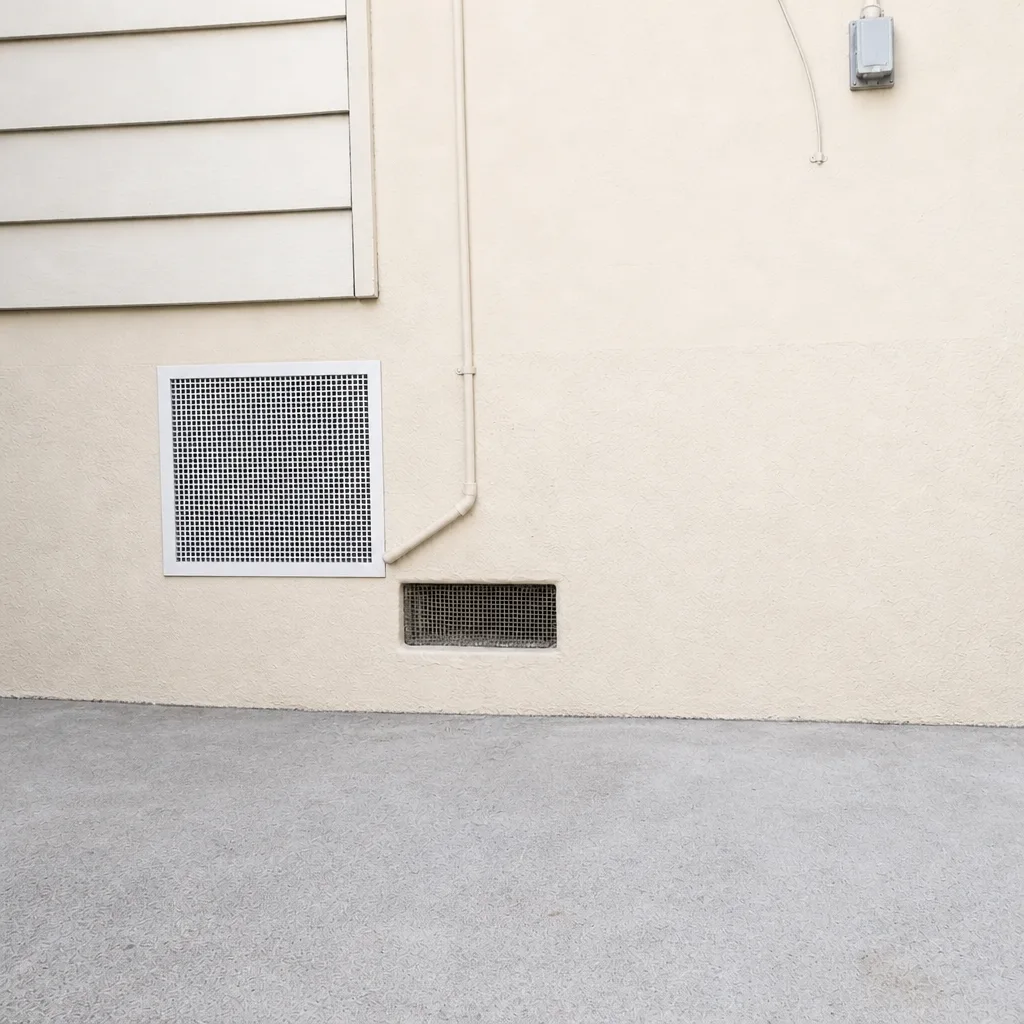
See the difference
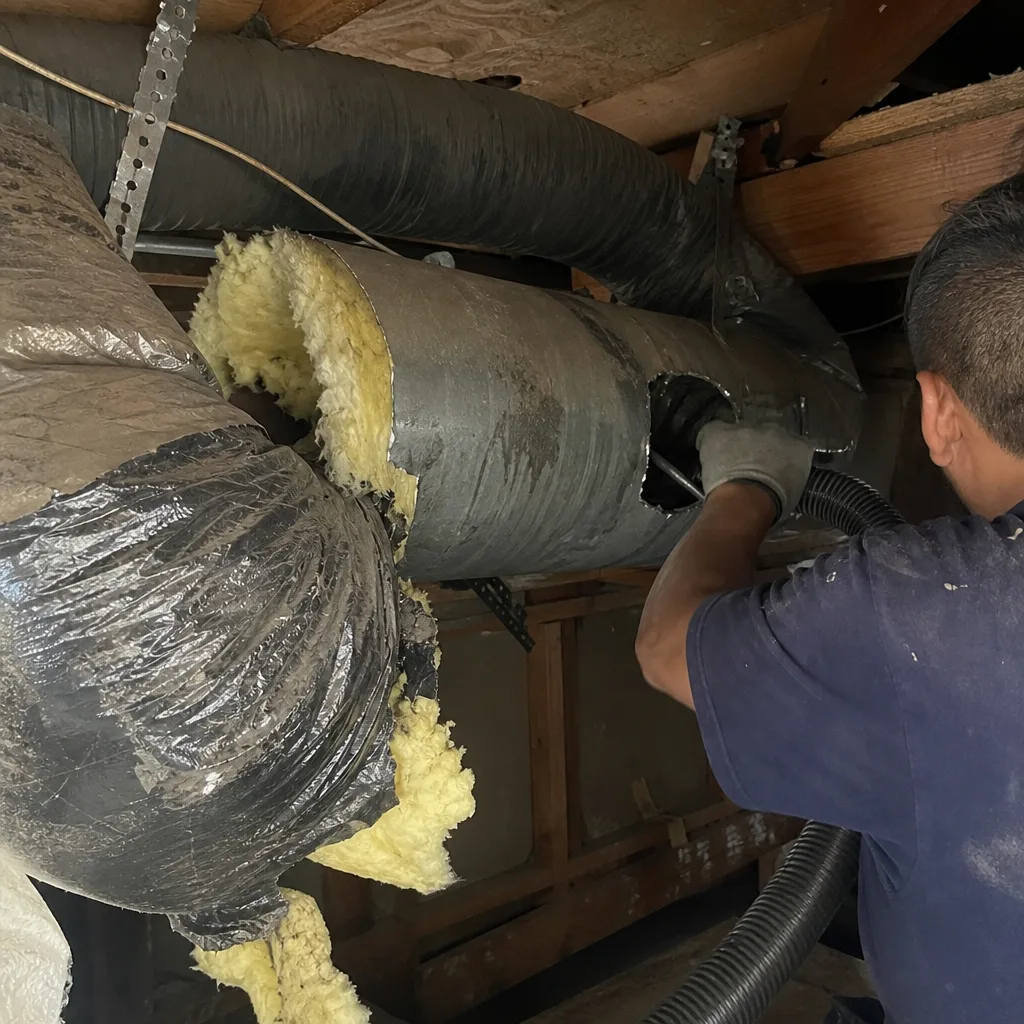 Before
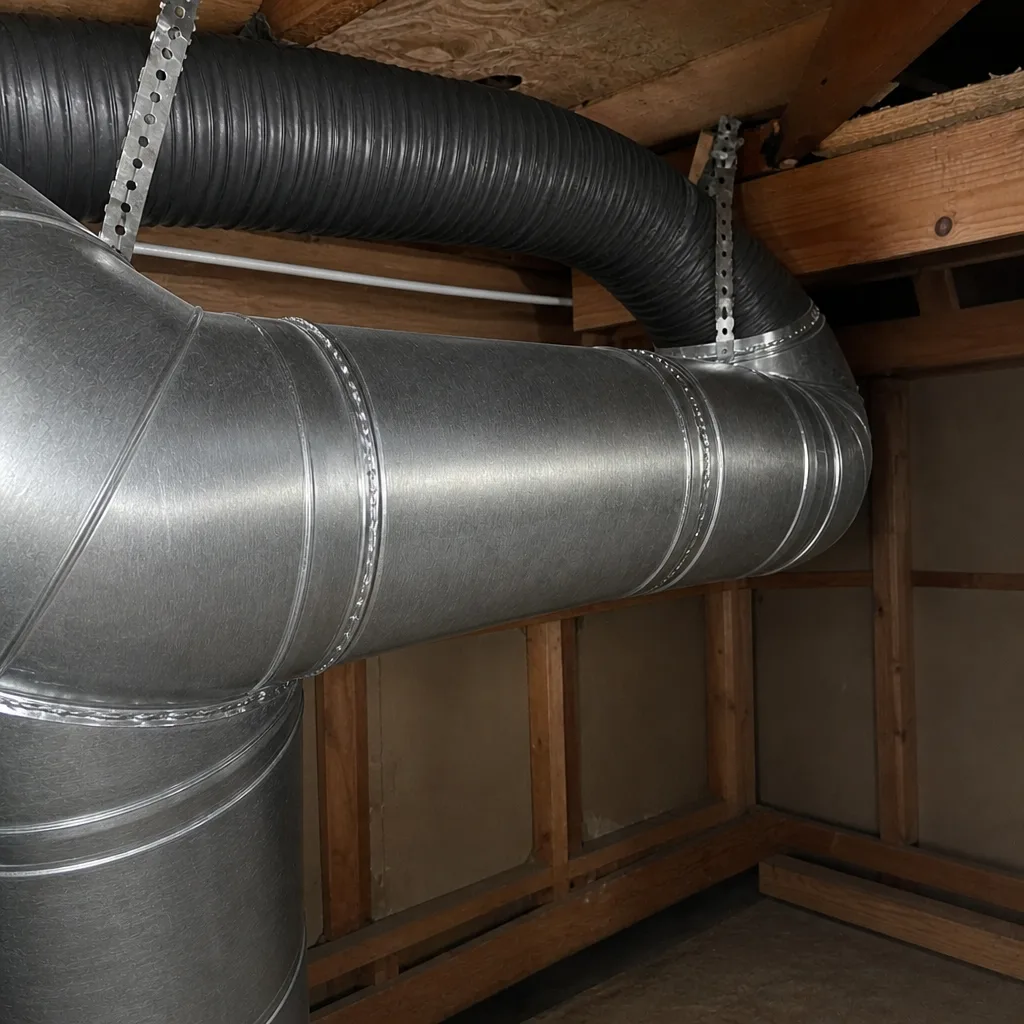 After
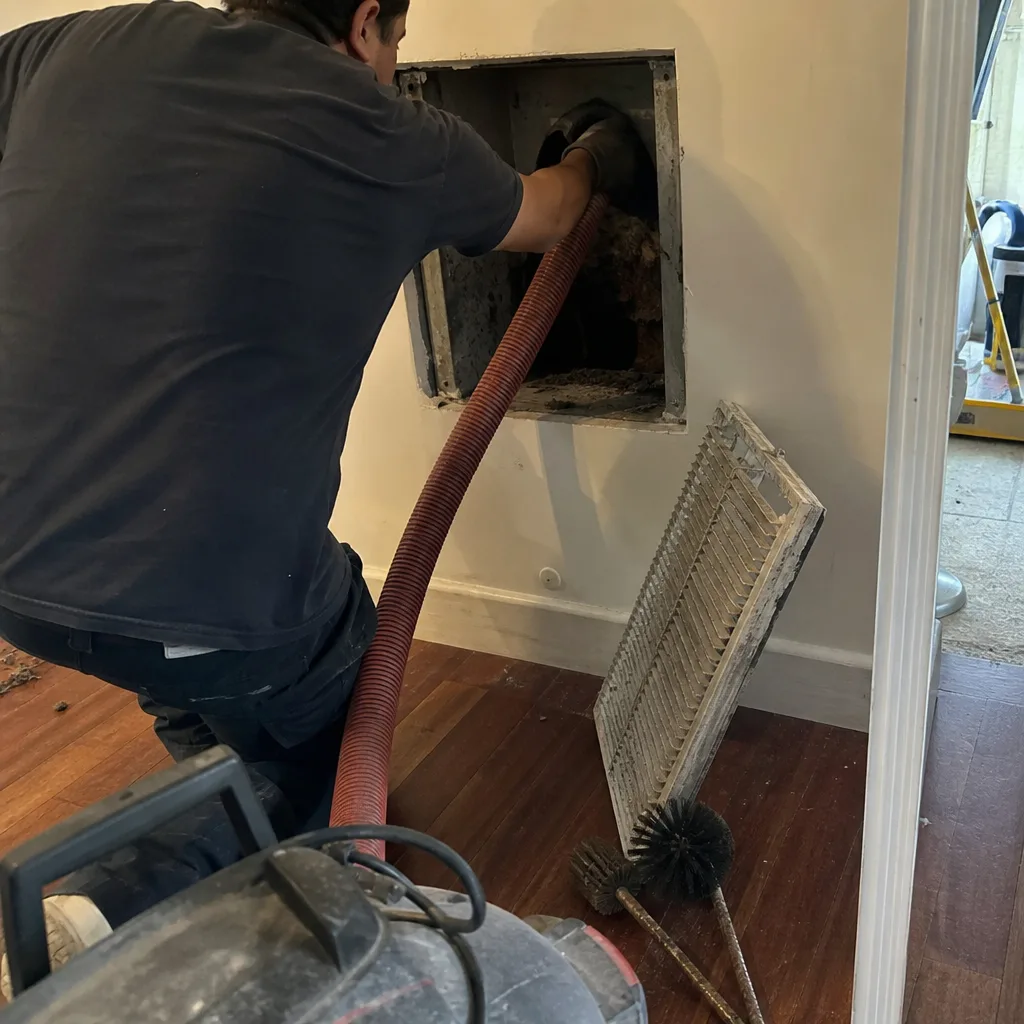 Before
 After
 Before
 After
When to Call a Professional
Call a professional when the symptoms point past the visible components: a musty or smoky odor that returns on startup, airflow that feels weaker than it used to, a room that doesn’t cool the way it once did, or a filter that’s loading noticeably faster than usual. Call after a renovation, after a heavy wind or smoke episode, and whenever you’re near a seasonal switchover and haven’t looked at the air handler in a while. If you’ve noticed any of the above and the duct hasn’t been inspected in more than a year, an assessment is the right first step. Air Duct Cleaning Downtown Santa Ana offers free estimates in Downtown Santa Ana. Call (866) 545-1338 to get one. We answer 24/7. Fast dispatch from 7am to 7pm, Sunday through Friday.
Frequently Asked Questions
Most Downtown Santa Ana homes benefit from at least one cleaning per year, timed to the post-Santa Ana wind window (late February into March), with a second cleaning in the fall if the household has pets, recent renovation work, or sits close to the 5 or 55 corridor. The fixed annual schedule is a baseline, not a rule. Call (866) 545-1338 and we’ll tell you what your specific system actually needs.
After. Cleaning in late February or March captures the peak particulate load the winds deposit and clears it before cooling demand ramps up, whereas cleaning before the winds just sets up the system to reload over the following months. That timing is the single highest-return maintenance action available to a Downtown Santa Ana homeowner.
Usually yes. Pet dander and hair add to the load on the return side and coat the coil faster, so a pet household often needs attention closer to twice a year, ideally at the seasonal switchover points. Call (866) 545-1338 for an assessment of your specific situation.
A common cause is dust loading on the blower wheel and evaporator coil, which builds up in proportion to hours of runtime and degrades airflow and cooling efficiency before you’d see anything obvious at the register. It’s most likely in a cooling-dominated climate like Downtown Santa Ana, where the system runs a long season. Have the air handler checked before assuming the problem is the equipment itself.
It can, especially when paired with an air quality and sanitizing service rather than a cleaning alone, because smoke particles cling to duct surfaces and the coil more stubbornly than ordinary dust. Our team uses Aprilaire and Honeywell products for this kind of work. Call (866) 545-1338 to find out whether your system needs the cleaning, the sanitizing, or both.
Ask for before-and-after photos of your own ductwork and air handler, and get the scope in the written estimate so you can hold the job to what was agreed. Requesting photos is the simplest check, and any contractor worth the investment will be glad to provide them. Call (866) 545-1338 for an exact quote: estimates are free.
The Bottom Line
The right way to care for a duct system in Downtown Santa Ana is to follow the seasonal events that actually load it, not a generic annual cleaning date. Clean after the Santa Ana winds close (late February into March), watch air handler and coil fouling through peak cooling, look at seals and moisture during June gloom, and clean again after a heavy smoke episode. Adjust the schedule to your household’s pets, renovations, and proximity to the I-5 and 55, and treat duct repair and sealing as the root-cause fix that keeps a cleaning from going to waste. That event-driven approach beats any calendar rule, and it’s how we approach every Downtown Santa Ana home. We use professional-grade Rotobrush and Nikro systems and Abatement Technologies containment equipment, and we offer Duct Repair & Sealing and Air Quality & Sanitizing alongside the cleaning. Call (866) 545-1338 for a free estimate. We answer 24/7. Fast dispatch from 7am to 7pm, Sunday through Friday. On-Site in 60 Minutes.
Written by the team at Air Duct Cleaning Downtown Santa Ana.