
Last updated November 24, 2026
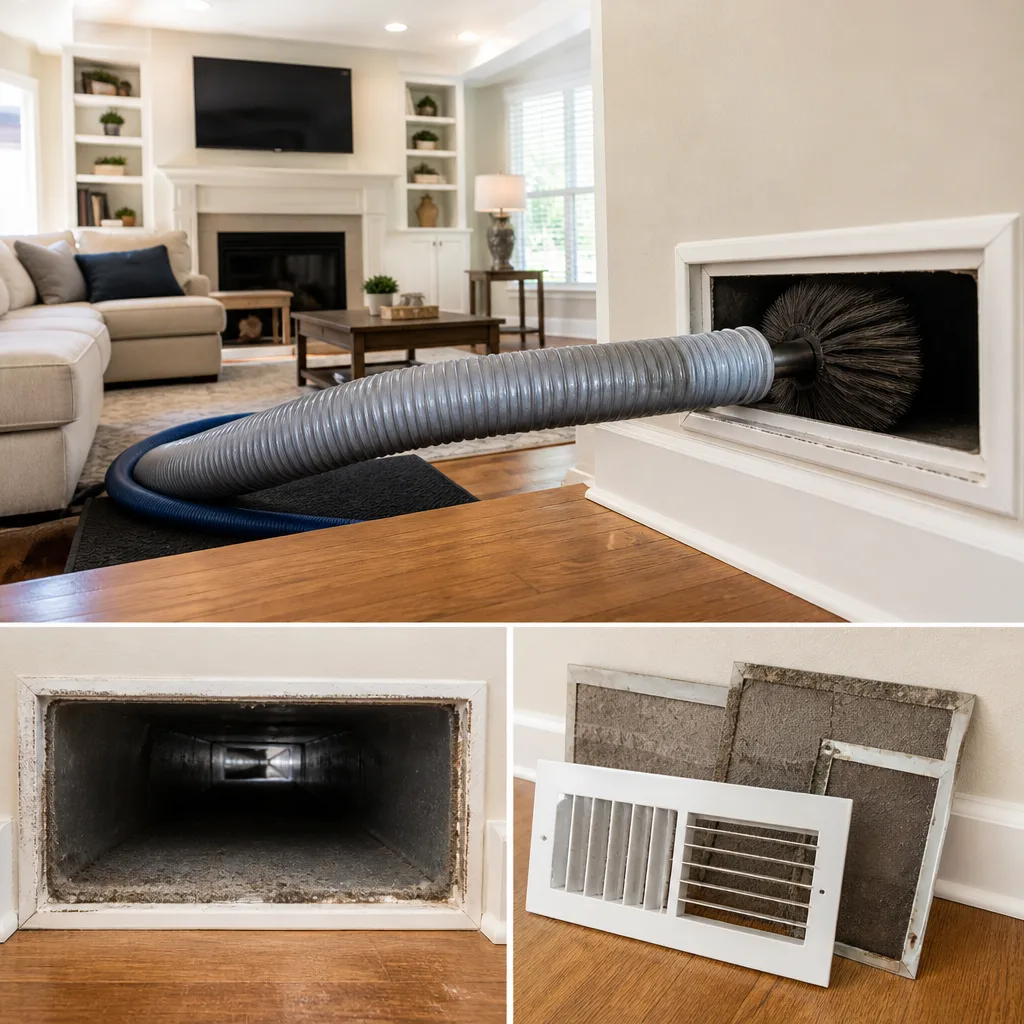 Whole-home duct cleaning
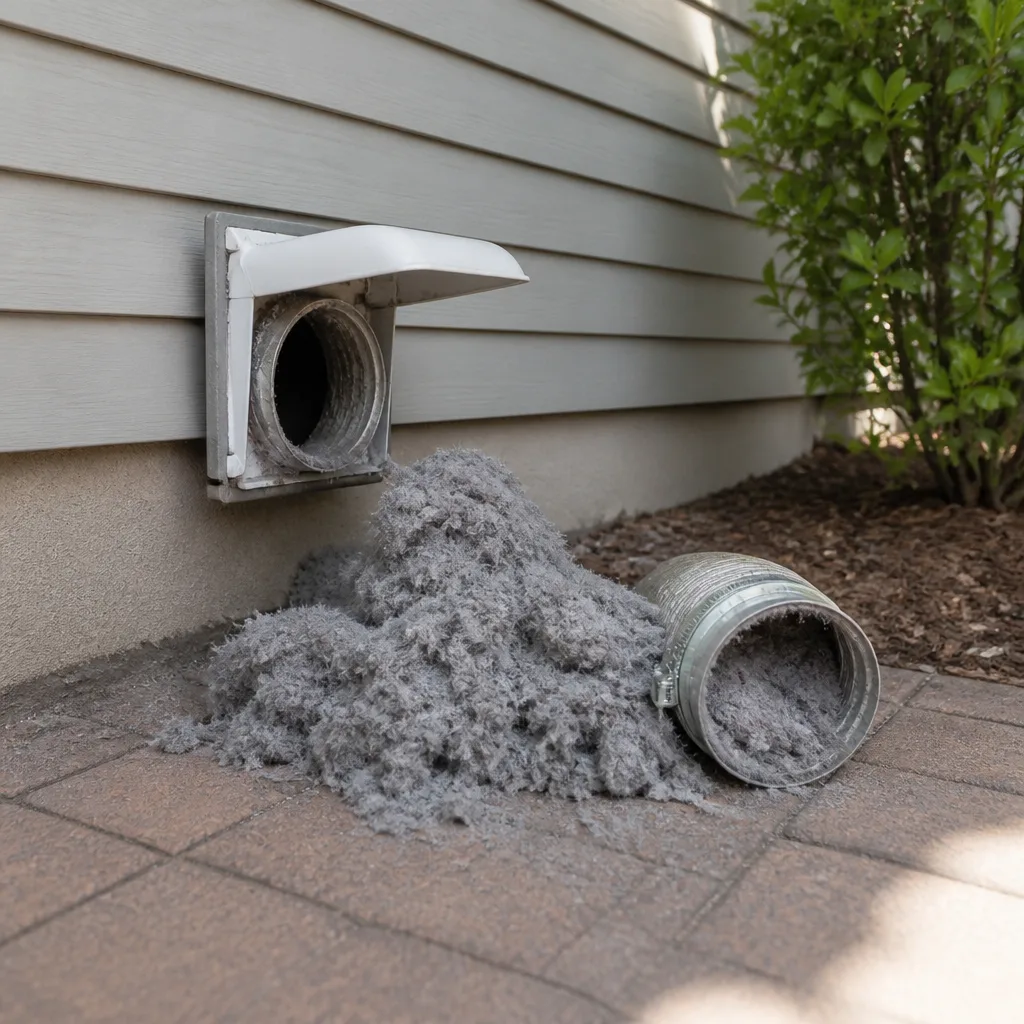 Dryer vent cleaning
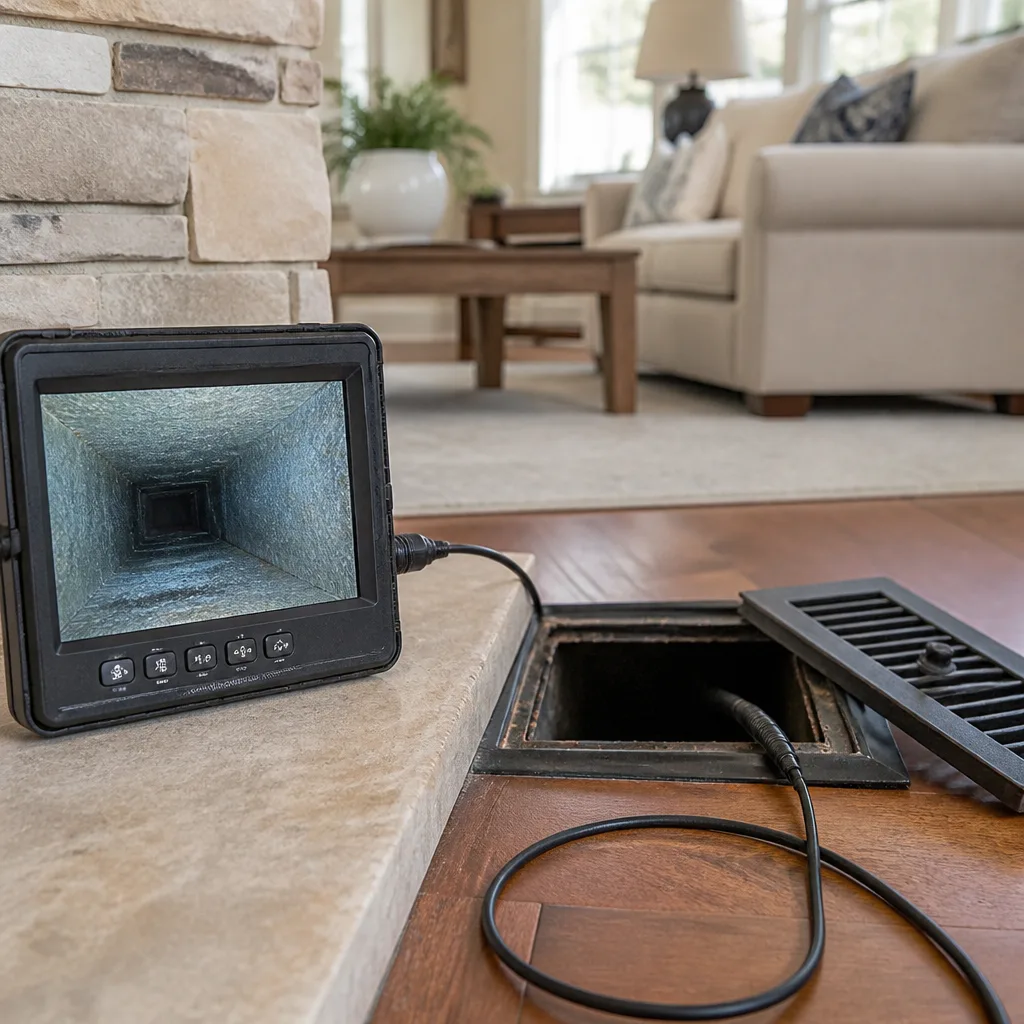 Camera inspection
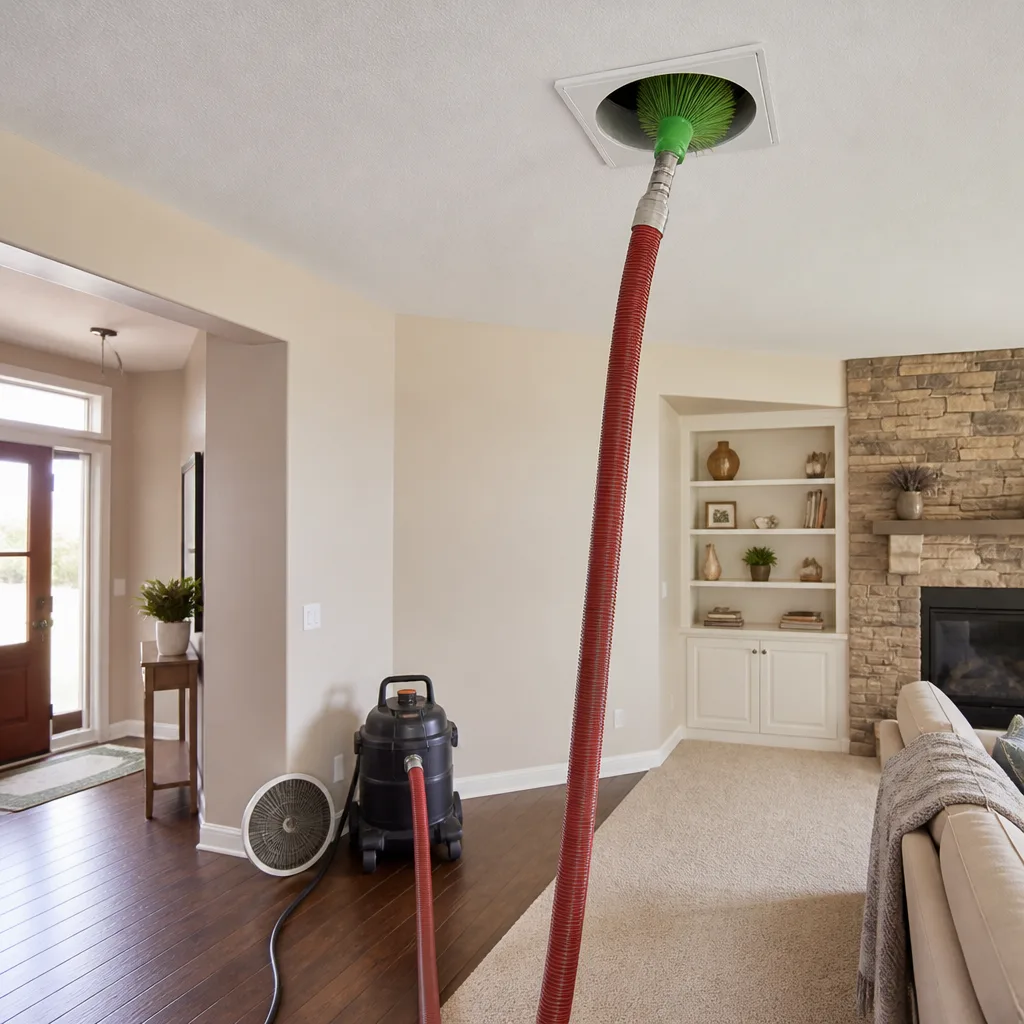 Sanitizing & deodorizing
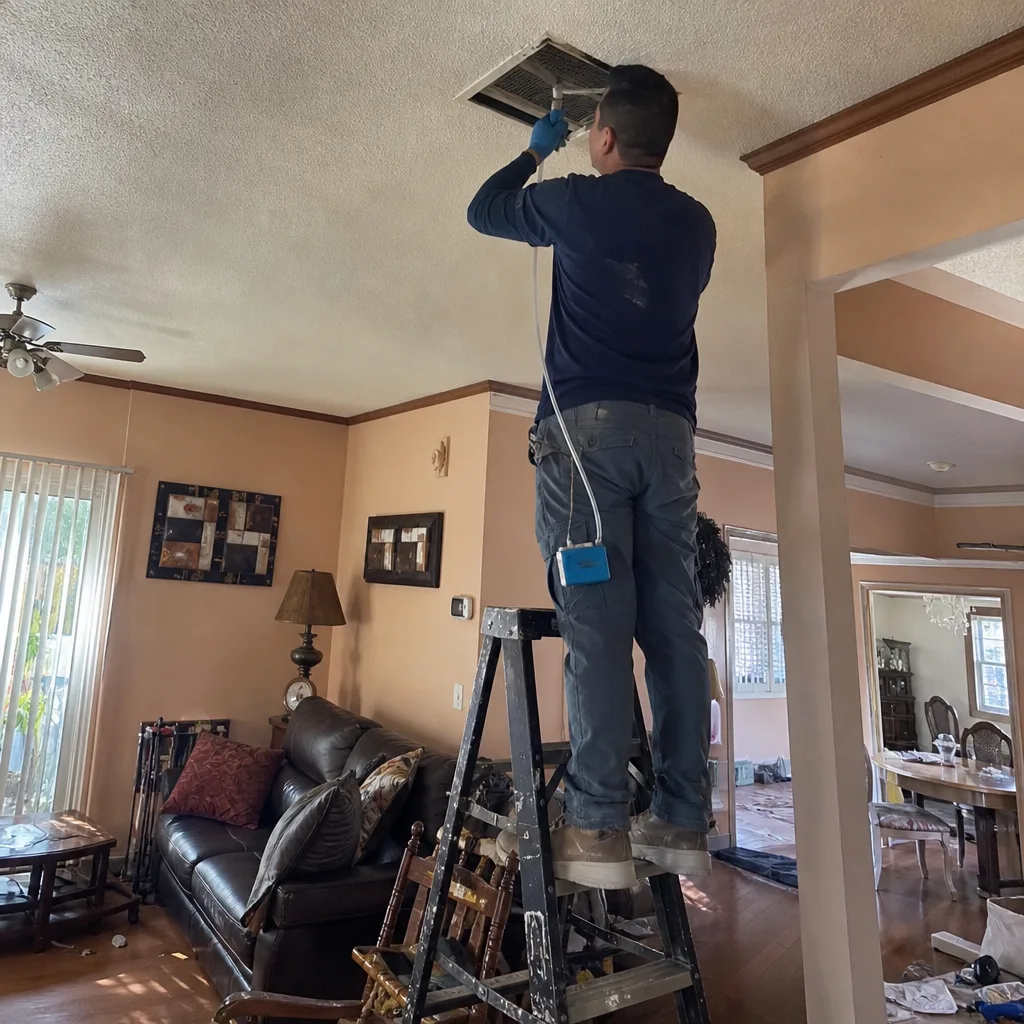
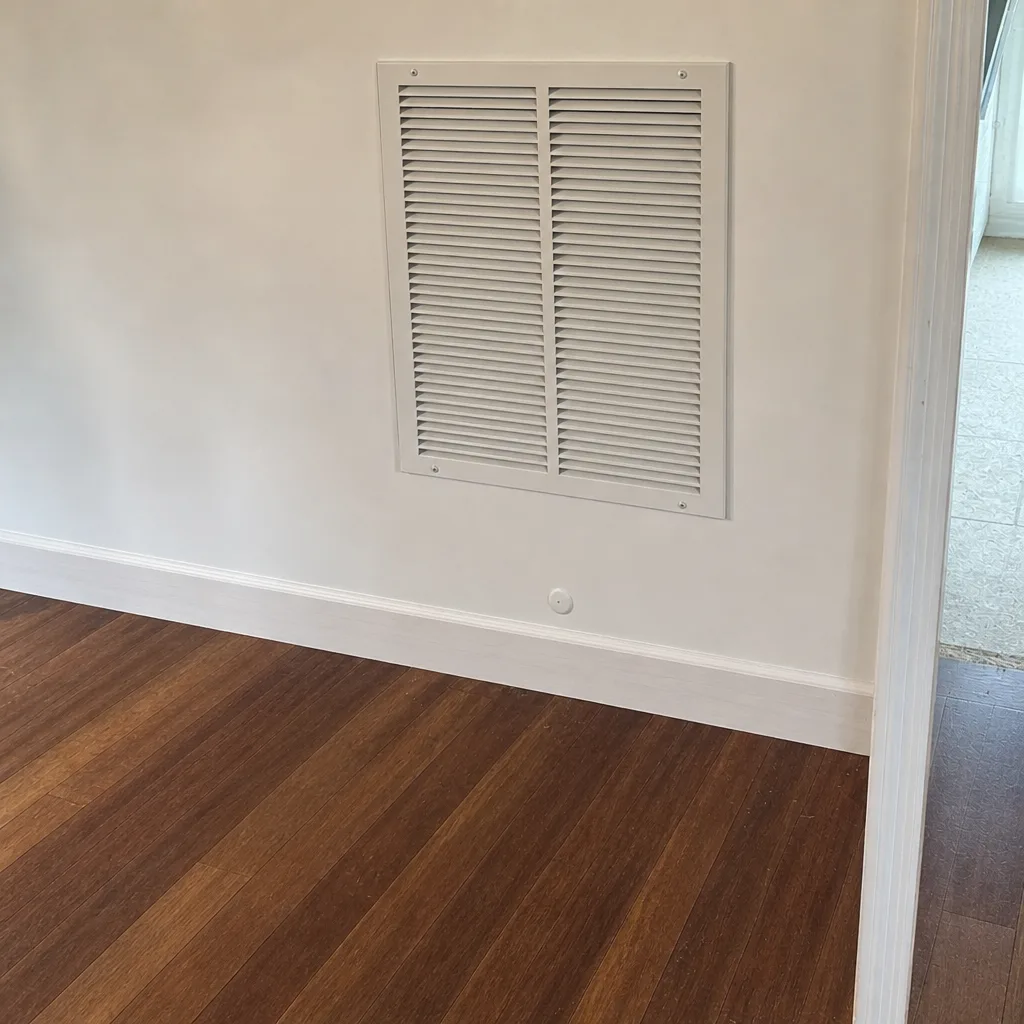
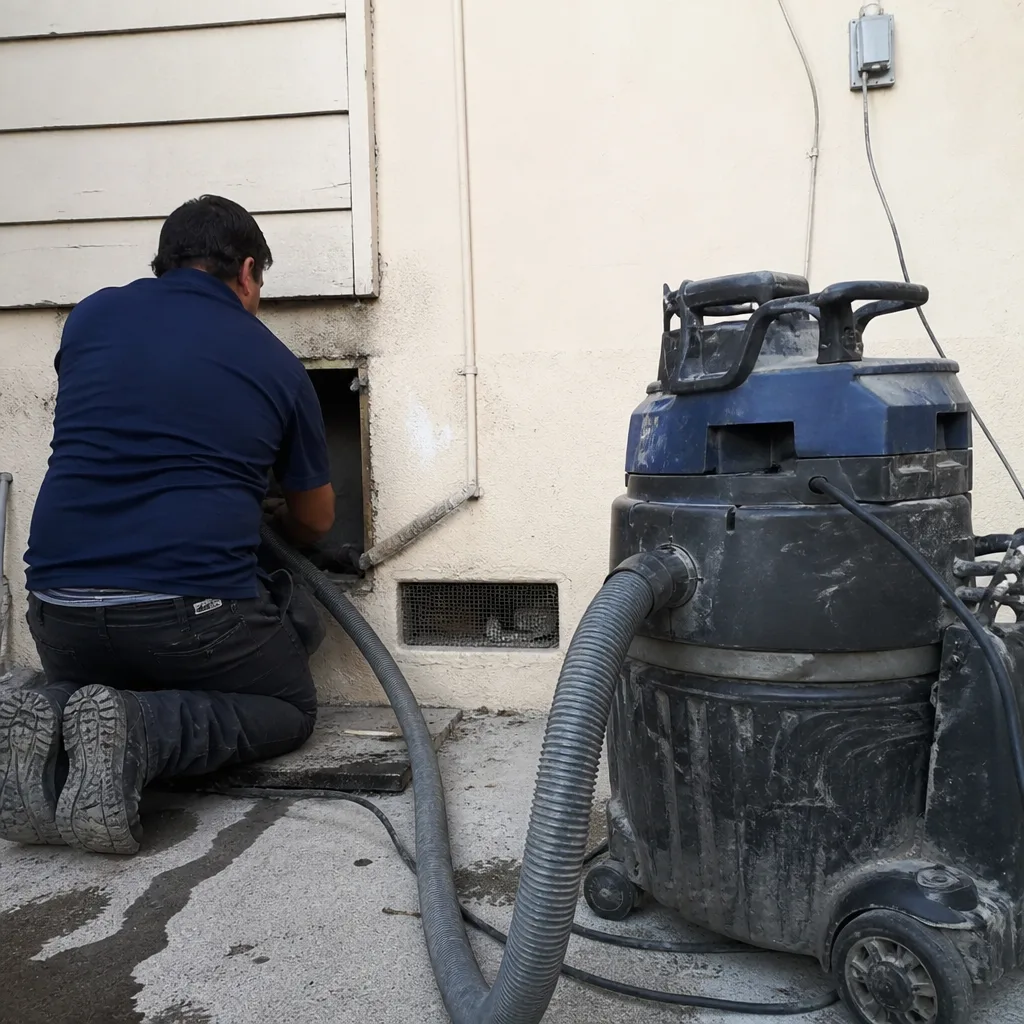
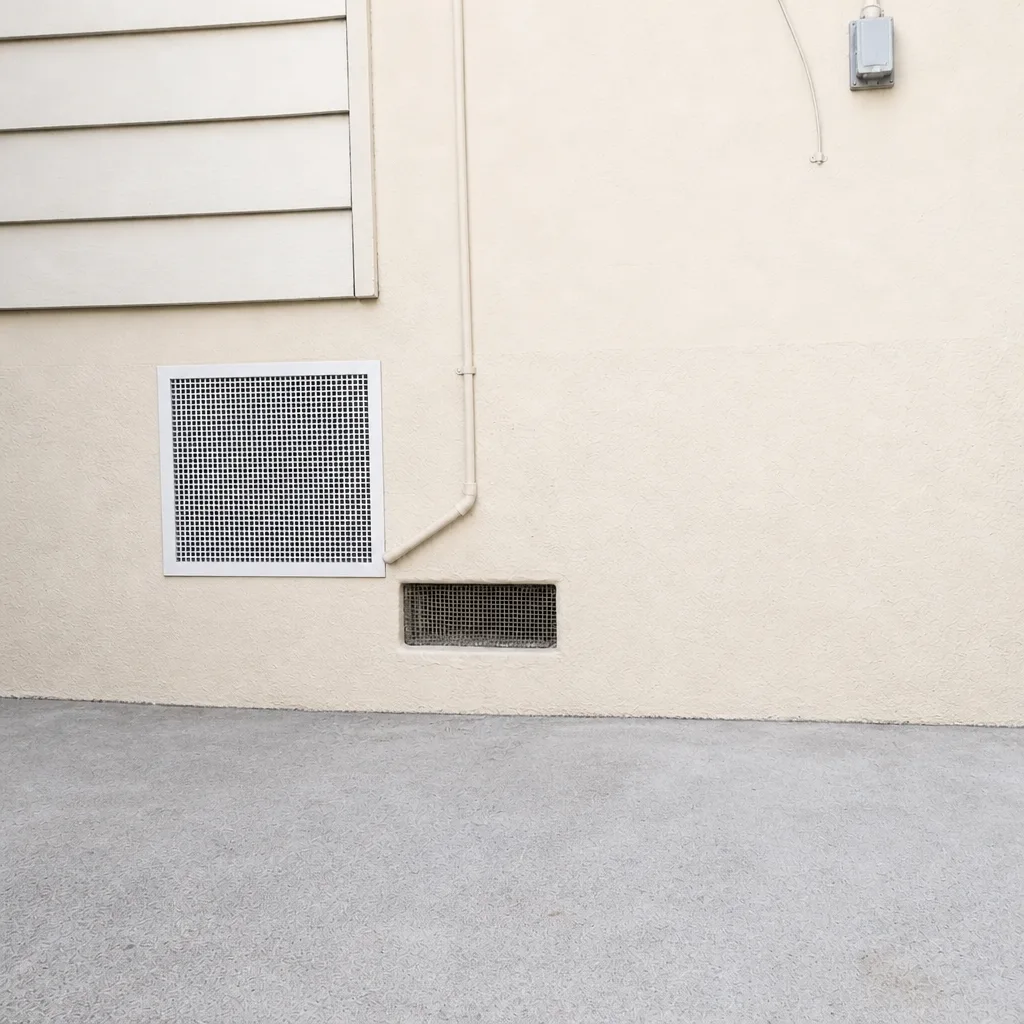
Whole-system duct and dryer vent check with before-and-after photos - you see exactly what came out of your vents
That "$99 whole-house special" is a bait ad - the real number appears once they are in your hallway, or the "clean" is a shop-vac at the register. We photograph the inside of your ducts before and after instead.
DIY vs Professional Air Duct Cleaning: The Downtown Santa Ana Homeowner’s Decision Guide
Most advice about duct cleaning frames the choice as effort versus money: roll up your sleeves with a shop vac, or pay someone to do it. That framing misses the actual problem. A consumer shop vac pulls roughly 90 cubic feet per minute. A truck-mounted Nikro unit pulls around 3,500. The gap isn’t a matter of convenience. It’s a physics problem with a predetermined outcome, because dust that’s been bonded to duct walls by moisture and time doesn’t let go without sustained negative pressure and mechanical agitation. This guide explains what that means for a home in Downtown Santa Ana, what you can honestly do yourself, when DIY makes things worse, and how to compare real costs instead of teaser prices.
Quick Answer
For a typical Downtown Santa Ana home, professional air duct cleaning is the better choice when ducts show visible contamination, musty odors, uneven airflow, or allergy flare-ups, because consumer equipment can’t generate the negative pressure or agitation needed to dislodge and capture biofilm-bound debris. DIY work is worthwhile for register cleaning, filter upgrades, and visual inspection of accessible flex duct. Anything beyond that – especially mold-affected ductwork or disconnected joints – belongs with a trained professional using professional-grade equipment.
Styles & brands we work with
- Whole-home duct cleaning
- Dryer vent cleaning
- Camera inspection
- Sanitizing & deodorizing
Table of Contents
- Why This Is a Physics Problem, Not a Motivation Problem
- CFM and Static Pressure: What the Numbers Actually Mean
- What You Can Legitimately Do Yourself
- Three Scenarios Where DIY Makes the Problem Worse
- Cost of Ownership: DIY vs Professional in Downtown Santa Ana
- Using a DIY Pre-Inspection to Get More From a Professional Visit
- What Professional Equipment Actually Looks Like
- Common Mistakes to Avoid
Why This Is a Physics Problem, Not a Motivation Problem
Dust in a home’s duct system isn’t loose powder sitting on a shelf. Over time, dust particles pick up moisture from humid air and from condensation that forms on cold duct surfaces. That moisture activates the dust into a sticky film, and once mold or bacteria colonize it, the film becomes a biofilm – a microbial mat physically anchored to the duct wall. A shop vac will pull off the top millimeter of loose material and leave the rest untouched. That’s not a criticism of shop vacs. It’s just what the engineering allows at their airflow.
The other half of the equation is capture. Any cleaning method that agitates debris without containing it simply redistributes the contamination into the living space. Scrubbing a dirty duct with a brush and no HEPA negative pressure source behind it will make indoor air quality momentarily worse, not better. This is why NADCA-standard contractors pair agitation with containment: the brush or whip loosens material, the vacuum source captures it at the same time.
Downtown Santa Ana homes sit in a mild, dry climate most of the year, but the region does see humid stretches in late summer, and older homes in the neighborhoods around the downtown core often have duct systems that were installed decades ago and never cleaned. Layouts in these houses frequently run flex duct through tight attic or crawl spaces – which means it’s genuinely hard to reach every run without cutting into the structure. That access difficulty is a large part of why professional service exists.
Our technicians have up to 10 years of experience, and the single most common thing we hear from homeowners after a proper cleaning is that they underestimated how much static pressure in a clogged system was costing them. We’ll get to that below.
CFM and Static Pressure: What the Numbers Actually Mean
CFM stands for cubic feet per minute – the volume of air a vacuum moves. Static pressure is the resistance that air encounters inside the ductwork. These two numbers are where the DIY-versus-pro discussion actually lives, because a consumer shop vac and a professional truck-mounted system don’t just have different CFM ratings – they’re operating in different pressure regimes entirely.
Consumer equipment typically operates in the 80 to 150 CFM range with modest static pressure. A truck-mounted Nikro unit moves air at a much larger scale, often in the thousands of CFM, while generating enough static pressure to overcome the back-pressure of an entire duct run. Put plainly: a shop vac will remove loose debris near the register. A professional unit will pull through a 30-foot flex duct run and still maintain enough pressure to pull material off the walls.
- Consumer shop vac: ~80-150 CFM, low static pressure, will remove surface dust but not biofilm or deeply bonded debris
- Portable “professional” rental units: ~200-400 CFM, medium static pressure, useful for single-run light maintenance but limited on whole-system cleaning
- Truck-mounted Nikro or Rotobrush systems: thousands of CFM with mechanical agitation via rotating whips, brushes, or air jets, the standard configuration among NADCA-style contractors for whole-home cleaning
Static pressure is the second half of that picture. A typical residential HVAC system is designed to run at 0.5 inches of water column static pressure in the supply and return plenum. Clogged ducts raise that number, and every tenth of an inch over the design target reduces airflow and forces the blower to work harder. That’s a real, measurable cost in energy and equipment wear – not a marketing line. When technicians check static pressure before and after cleaning, the change is often visible.
This is the core practical point: the tool has to be strong enough to pull contamination out of the system without first blowing it into the room. If you’re considering professional air duct cleaning for a Downtown Santa Ana home, ask the contractor what CFM and what negative pressure equipment will be used. A real answer tells you they understand the equipment. A vague one tells you something else.
What You Can Legitimately Do Yourself
Plenty of maintenance work around ductwork is feasible for a homeowner and genuinely improves indoor air quality. We’re not going to tell you a filter change requires a professional. Here’s what’s worth doing on your own.
- Clean the supply and return registers. Remove each grille (most are held by two screws or snap out), wash them in a utility sink or hose them off, then dry completely before reinstalling. While the grille is off, look inside the boot – the short metal or flex section behind the register. Use a vacuum with a brush attachment to pull out lint and dust from the visible portion. Reinstall the grille and check that the damper (if your register has one) still moves freely.
- Upgrade your filter, correctly. Most homes use a 1-inch filter with a MERV rating between 4 and 8. Moving to MERV 11 or MERV 13 captures finer particles but increases static pressure – which, ironically, can reduce airflow on systems not designed for high-MERV filtration. If you have an older system, ask an HVAC contractor before jumping to MERV 13. Replace 1-inch filters every 1 to 3 months, and 4-inch or 5-inch media filters every 6 to 12 months depending on dust load and pet presence.
- Visually inspect accessible flex duct. If your ducts run through an unfinished attic, basement, or crawl space you can safely reach, look for kinks, tears, disconnected joints, or sections that have collapsed under their own weight. Write down locations. Photograph anything suspicious. Do not try to reconnect duct joints yourself – flex duct joints are taped and sealed with specific materials, and a poorly reconnected joint is worse than a dirty one.
- Run the system fan while you clean registers. This draws a small amount of dust into the filter rather than into room air, though it’s a marginal benefit. Turn off the system before removing registers so you don’t dump dust directly into the blower compartment.
- Check that return air paths are unobstructed. Furniture, rugs, and even decor placed over return grilles restrict return airflow and increase system static pressure. Move obstructions and see if comfort improves.
What’s not on this list: pressure-washing duct interiors, running brushes through long runs, or using atomized sanitizers inside the duct system. Those aren’t in the DIY range, for reasons covered below.
Three Scenarios Where DIY Makes the Problem Worse
Before you pull out the shop vac, understand the three scenarios where homeowner efforts make things measurably worse than leaving the ducts alone.
1. You’re working on mold-affected ductwork
If you’ve had a leak, high humidity, or a long-unaddressed moisture issue, duct interiors may host mold growth. Disturbing settled spores without containment (HEPA filtration at the exhaust of a sealed negative-pressure system) sends them airborne through the entire living space. A homeowner brush will absolutely dislodge the spores – that’s the problem. Any future occupant of that room is now breathing what was previously settled. This is a hard stop for DIY. If you suspect mold, the right move is a professional inspection, and often professional remediation with Abatement Technologies-grade containment equipment plus brand-backed air quality work using Honeywell or Aprilaire products to reset the indoor environment.
2. You disconnect a flex duct joint
Flex duct is more fragile than it looks. The inner liner tears easily if the duct is pulled or twisted, and the joints where two sections meet are typically sealed with mastic and metal tape – not hardware-store duct tape. Poking a shop vac hose into a joint to “get the dust out” often loosens the connection. A disconnected or torn joint doesn’t just reduce efficiency; it pulls attic air (with fiberglass particles, insulation dust, and whatever else lives up there) directly into your supply air. You can easily go from air with some dust in it to air with construction particulates in it. Not a win.
3. You bypass return air sealing
Many homes have gaps at the return air boot, at the plenum, or at joints near the air handler. These gaps pull unfiltered air from unconditioned spaces (attics, crawl spaces, wall cavities) straight into the system. If a homeowner vacuums the register boots but leaves those gaps open, the system is no cleaner than before – it’s just collecting a fresh load of attic air the moment the fan kicks on. Sealing and repair is part of proper duct service. If you’re going to the trouble of cleaning the system, get the leakage fixed. Otherwise you’re cleaning every few years for no gain.
On any Downtown Santa Ana home built before roughly 1990, we’d add a fourth caution: duct layout is often non-standard, and DIY probing around flex runs sometimes discovers structural obstacles the contractor who installed the original system designed around. That’s not a reason to panic – it’s a reason to let someone who works with these systems daily do the inspection before you start pulling hose.
Cost of Ownership: DIY vs Professional in Downtown Santa Ana
The cheapest-looking option usually isn’t. When you tally equipment, time, and re-treatment risk, the honest comparison for a typical Downtown Santa Ana home looks like this:
- DIY shop vac approach: $80-$200 for a quality shop vac with HEPA filter; 4-8 hours of your time; contributes to filter replacement cost; likely to require professional re-treatment within 1-2 years because surface-only cleaning doesn’t reset the system – and doesn’t touch return air leaks or disconnected flex.
- DIY rental of a portable duct machine: $100-$250 for a day’s rental, plus your time, plus the learning curve of using unfamiliar equipment in tight spaces. Often produces visibly cleaner boots but doesn’t move enough air volume to clean long runs.
- Professional whole-system cleaning: priced per system by written estimate, based on run count, system size, and whether repair or sealing is included. One visit, before-and-after photos, one contractor accountable for the whole system.
Estimates are free and the price is set per job by the written estimate, so the honest thing to do is have the system inspected before deciding. A trained technician using a video inspection camera can tell you within twenty minutes whether the ducts actually need cleaning or whether you’ve been sold a service you don’t need. Professional cleaning isn’t cheap, but neither is replacing a blower motor that’s been forced to run against a clogged system for years, or treating allergy symptoms that could have been reduced with proper maintenance.
Worth noting: costs vary by whether the system needs only cleaning or also needs HVAC cleaning (the air handler, coil, and blower) or duct sealing and repair. A whole-system quote should itemize those separately. If a quote comes in as a single flat teaser number for “the whole house,” ask what’s actually included in that number – the answer will tell you a lot.
Using a DIY Pre-Inspection to Get More From a Professional Visit
The smartest thing you can do before booking a professional cleaning is a twenty-minute pre-inspection. It doesn’t replace the service – it makes the service more valuable, because you arrive at the appointment with real information instead of guesses.
- Photograph every register. Supply and return. Note which rooms feel weak on airflow and which feel strong. The technician can focus on the specific runs.
- Note odors and timing. Does the musty smell come on when the heat runs, the AC runs, or all the time? Does it change with weather? This is diagnostic information.
- List recent changes. New roof? Remodel? Water leak? New pets? Recent smoke event from a nearby fire? These all affect what the technician should look for.
- Check your filter type and size. Write it down. If you’re running a MERV 13 in an older system not designed for it, the technician needs to know – and may recommend dropping to a MERV 8 with better dust control elsewhere.
- Locate your air handler. Know whether it’s in the garage, attic, closet, or crawl space. This is basic information a professional will ask for anyway.
- Photograph accessible flex duct. Anything that looks kinked, torn, or disconnected. Send the photos in advance when you book.
A contractor working from your photographs and notes is more accurate than one working from guesswork. Your visit becomes diagnostic rather than exploratory, which is where the value of professional service actually lives. Whether it’s Air Duct Cleaning Downtown Santa Ana or any other contractor, that’s a smart approach. The relevant point here isn’t the brand – it’s the workflow. Come prepared, and you’ll get more out of the appointment.
What Professional Equipment Actually Looks Like
Most homeowners can’t evaluate equipment on sight, which means they can’t tell a legitimate contractor from a commodity one. A short field guide helps.
Vacuum source. Either truck-mounted (largest CFM, best for whole-home work) or portable professional units (Rotobrush and Nikro both make equipment trusted by NADCA-standard contractors). The key is that the vacuum is HEPA-filtered and exhausted to the outdoors or, in some configurations, into the home through a sealed filtration barrier. If a contractor shows up with a shop vac and a brush, that’s not cleaning – it’s surface dusting.
Agitation. Rotating whips, air jets, or specialized brushes designed to scrub duct walls without damaging the liner. This is the part of the job that actually dislodges bonded material. It’s also the part most DIY attempts skip entirely.
Containment and HEPA filtration. Abatement Technologies equipment is the standard in remediation-level air quality work because it holds negative pressure and captures fine particulates. When a contractor uses this tier of equipment, they can handle contaminated systems – not just dusty ones.
Brand-backed air quality products. Aprilaire and Honeywell products integrated into sanitizing and air quality services are a signal that the contractor’s work extends beyond vacuuming. You’ll want to ask what specific products they use and why.
Dryer vent capability. Dryer vents get packed with lint and can be a genuine fire risk if neglected. A crew that treats dryer vent cleaning as a dedicated service – not an add-on – is treating the whole air system, not just the ducts.
None of this means every professional visit will be identical. It means you can ask two or three specific questions when you book – what vacuum, what agitation, what containment – and use the answers to sort out who’s doing real work versus who’s running a brush through a register and calling it a cleaning.
Common Mistakes to Avoid
- Trusting a teaser price. A low per-vent or per-room coupon price is almost always the entry point for a much larger invoice once the technician is on site. Ask for a whole-system price up front and get it in writing before work starts. Any contractor who won’t provide one is telling you something.
- Assuming “cleaned” means “cleaned and sealed.” Cleaning without repairing return air leaks leaves the system re-contaminated within months. In older Downtown Santa Ana homes, return leaks are common and easy to fix during the same visit. Ask for both.
- Booking without a video inspection. A contractor with a camera can show you what’s actually inside your ducts before work begins and after it’s complete. If they can’t or won’t, look elsewhere. Before-and-after photos of your own system are the standard you should expect.
- Running a brush or shop vac into flexible ductwork. Flex duct is easy to tear and easy to disconnect. A torn liner allows attic air and insulation particles into the supply stream. This is worse than dirty ducts.
- Using spray sanitizers without addressing the source. Sanitizing a duct system that still has a moisture problem or a return leak is a temporary fix at best. Address the source first, then consider air quality treatments.
- Ignoring the air handler. Duct cleaning that doesn’t include the blower and coil leaves the main source of contamination in place. Ask what the service covers.
- Skipping the dryer vent because “it’s just the dryer.” Lint buildup in a dryer vent is a fire hazard, and the duct cleaning contractor is usually already on site. Include it.
Why Some Quotes Are So Much Cheaper
If you’ve received three quotes and one is half the price of the others, the difference is almost always scope, equipment, or accountability. The cheapest quotes typically involve: no video inspection, a single-pass vacuum without mechanical agitation, no filter replacement, no return air sealing, and no written documentation of work performed. In some cases the “cleaning” is a technician running a shop vac over the register boots and calling it done. This isn’t a knock on the trade – it’s a fact of any service industry where equipment quality and time invested drive the cost. A quote that includes Rotobrush or Nikro-tier equipment, containment, and documented before-and-after photos is doing more work, and it costs more because it does.
See the difference
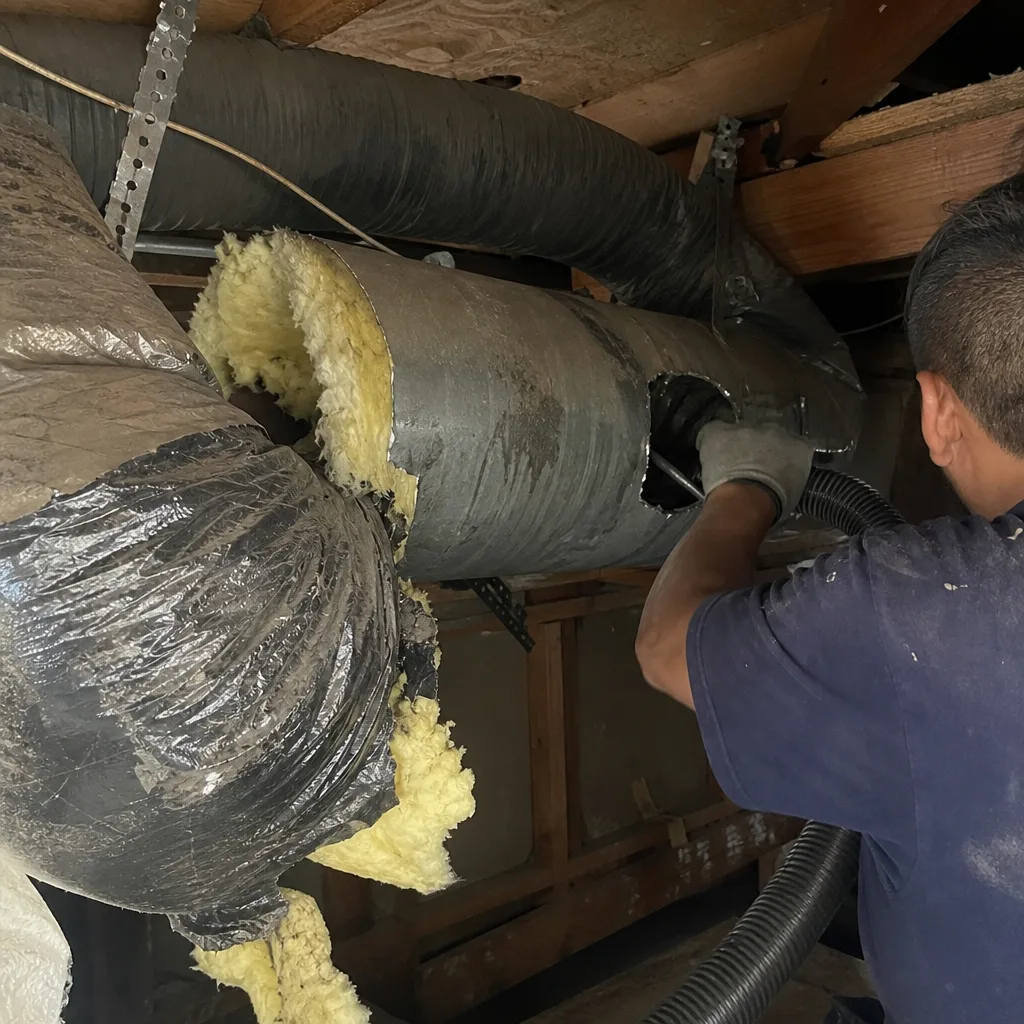 Before
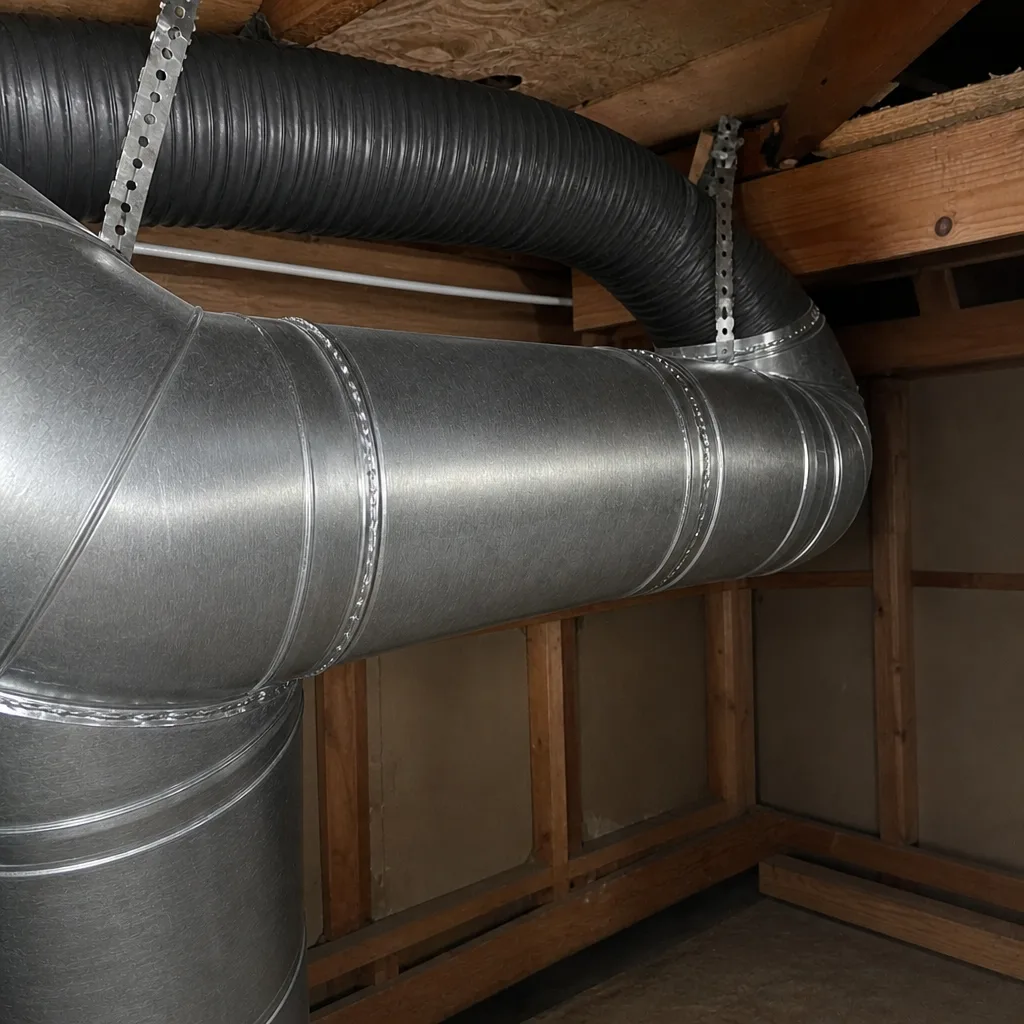 After
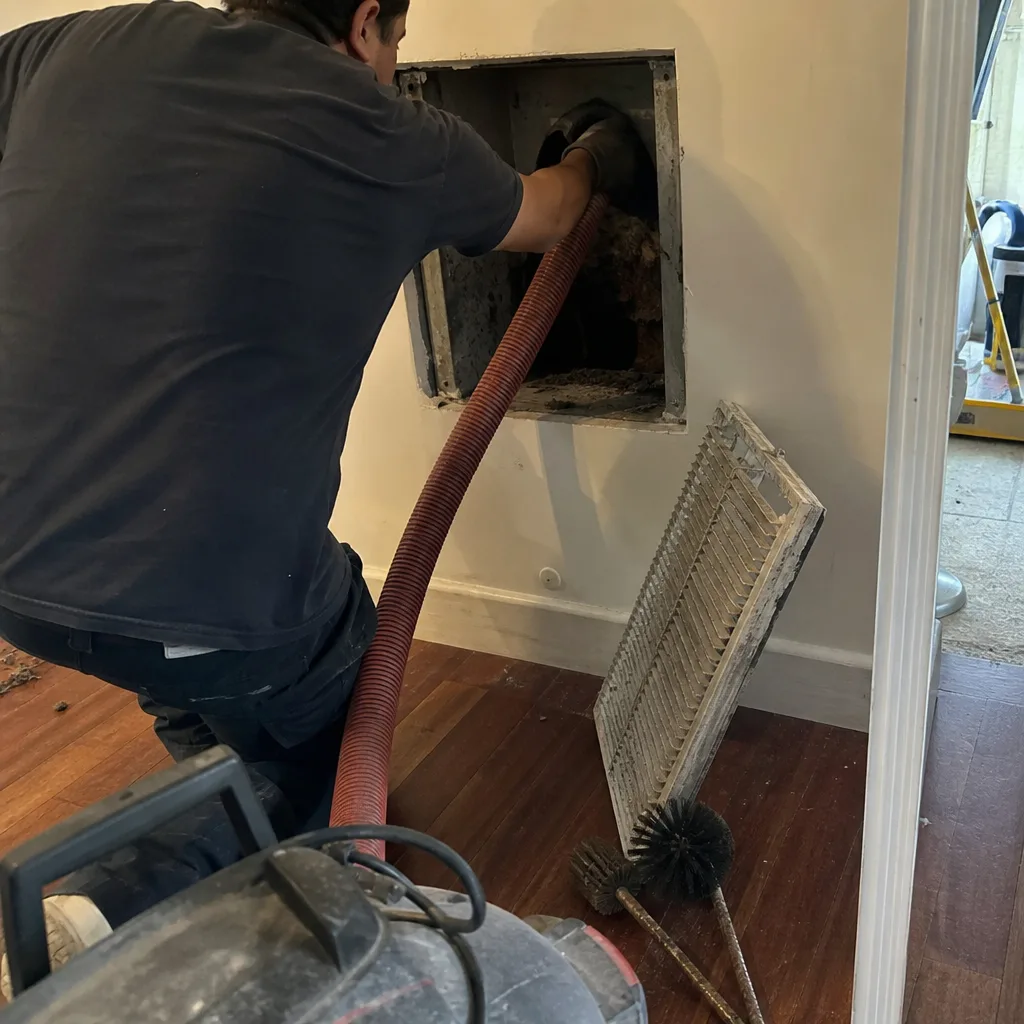 Before
 After
 Before
 After
How Often Does This Actually Need Doing?
For most homes, we tell people: every 3 to 5 years is a reasonable planning cadence, with real consideration of what’s in the home. Homes with pets, recent remodeling, smokers, residents with allergies or asthma, or a history of moisture issues generally benefit from a shorter interval. Homes in Downtown Santa Ana that are newer construction with well-sealed systems and no pets often comfortably go 5+ years between cleanings. A video inspection is the honest answer-replacement for any general rule – it tells you what your system actually needs rather than what a calendar says.
When to Call a Professional
Call when you see or smell something that indicates the system needs more than surface work: visible dust discharge from registers after a filter change, persistent musty odors, uneven airflow between rooms, a recent water event, mold visible near duct openings, or allergy symptoms that track with HVAC use. Also call if you’ve recently moved in and don’t know the service history, or if a remodel just finished and you’re concerned about drywall dust in the system. Finally, call if a home inspection flagged duct issues during a real estate transaction – the inspection report will be more useful to a professional than any DIY attempt.
Air Duct Cleaning Downtown Santa Ana offers free estimates in Downtown Santa Ana. Call (866) 545-1338. We answer 24/7. Fast dispatch from 7am to 7pm, Sunday through Friday. Estimates are free and the price is set per job by the written estimate.
Frequently Asked Questions
Professional air duct cleaning in Downtown Santa Ana is priced per system, not per vent, and varies with the number of runs, system size, and whether repair, sealing, or air handler cleaning is included. Estimates are free and the price is set per job by the written estimate – so the honest first move is to book an inspection and let the technician give you a specific number for your home. Call (866) 545-1338. We answer 24/7. Fast dispatch from 7am to 7pm, Sunday through Friday.
Because cheaper quotes usually skip things: no video inspection, no mechanical agitation, no return air sealing, and often a shop vac rather than a truck-mounted or professional portable unit. A low teaser price generally becomes a much larger invoice once the technician is on site. Ask for a whole-system price in writing before work begins, and ask what equipment will be used. Call (866) 545-1338. We answer 24/7. Fast dispatch from 7am to 7pm, Sunday through Friday.
You can clean register grilles, vacuum visible boots, and upgrade filters – all legitimate DIY tasks. You can’t clean duct interiors with a shop vac, because consumer units move around 90 CFM while professional systems move thousands, and the pressure difference is what determines whether bonded debris gets removed or just redistributed. Call (866) 545-1338 for a free estimate if you want to know what your system actually needs.
Ask for before-and-after photos of your own duct system, not stock images. A contractor with a video inspection camera can show you the interior condition before and after cleaning. If a crew can’t or won’t document their work this way, that’s your answer. Call (866) 545-1338. We answer 24/7. Fast dispatch from 7am to 7pm, Sunday through Friday.
Yes, but the reason isn’t climate – it’s system condition. Dust and biofilm accumulate based on filtration quality, moisture exposure, return air leaks, and home history, not on outdoor temperature. A well-sealed system with good filtration in a dry home can go years between cleanings; a system with return air leaks and pets may need attention sooner. The only way to know is a video inspection.
Duct cleaning addresses the duct runs and registers. HVAC cleaning addresses the air handler, blower, coil, and plenum – the equipment that actually moves the air. Most whole-system services include both because cleaning the ducts without cleaning the air handler leaves the source of contamination intact. Ask what the quote covers, and make sure it’s specific.
No. Disturbing mold-affected ductwork without containment sends spores airborne into the living space, which is worse than leaving them settled. Mold-affected ducts require professional remediation with proper containment and HEPA filtration, followed by air quality treatments. Call for an inspection before touching anything.
Every 3 to 5 years is a reasonable baseline for most homes. Add pets, remodeling dust, water events, or allergy-sensitive residents and shorten the interval. A well-sealed newer system in a clean home can stretch longer. Video inspection beats any calendar rule.
The Bottom Line
The DIY-versus-professional question isn’t really about effort or money – it’s about physics. Consumer equipment can’t generate the negative pressure or agitation to dislodge biofilm-bound contamination, and attempts to compensate often make things worse by redistributing debris or disturbing flex duct joints. What homeowners can legitimately do: clean registers, upgrade filters correctly, inspect accessible flex duct, and prepare a thorough pre-inspection before calling a professional. What should be left alone: interior duct scrubbing, mold-affected systems, and return air sealing. For most Downtown Santa Ana homes, a professional visit pays for itself over a cycle of DIY attempts – and it does so with documented before-and-after evidence rather than guesswork. The right move is an inspection, a written whole-system quote, and a clear answer about what equipment will be used.
Air Duct Cleaning Downtown Santa Ana connects homeowners with licensed local professionals using professional-grade Rotobrush and Nikro systems, backed by air quality products from Honeywell and Aprilaire. Our technicians have up to 10 years of experience. Estimates are free and the price is set per job by the written estimate. Call (866) 545-1338 to book an inspection. We answer 24/7. Fast dispatch from 7am to 7pm, Sunday through Friday.
Written by the team at Air Duct Cleaning Downtown Santa Ana.