
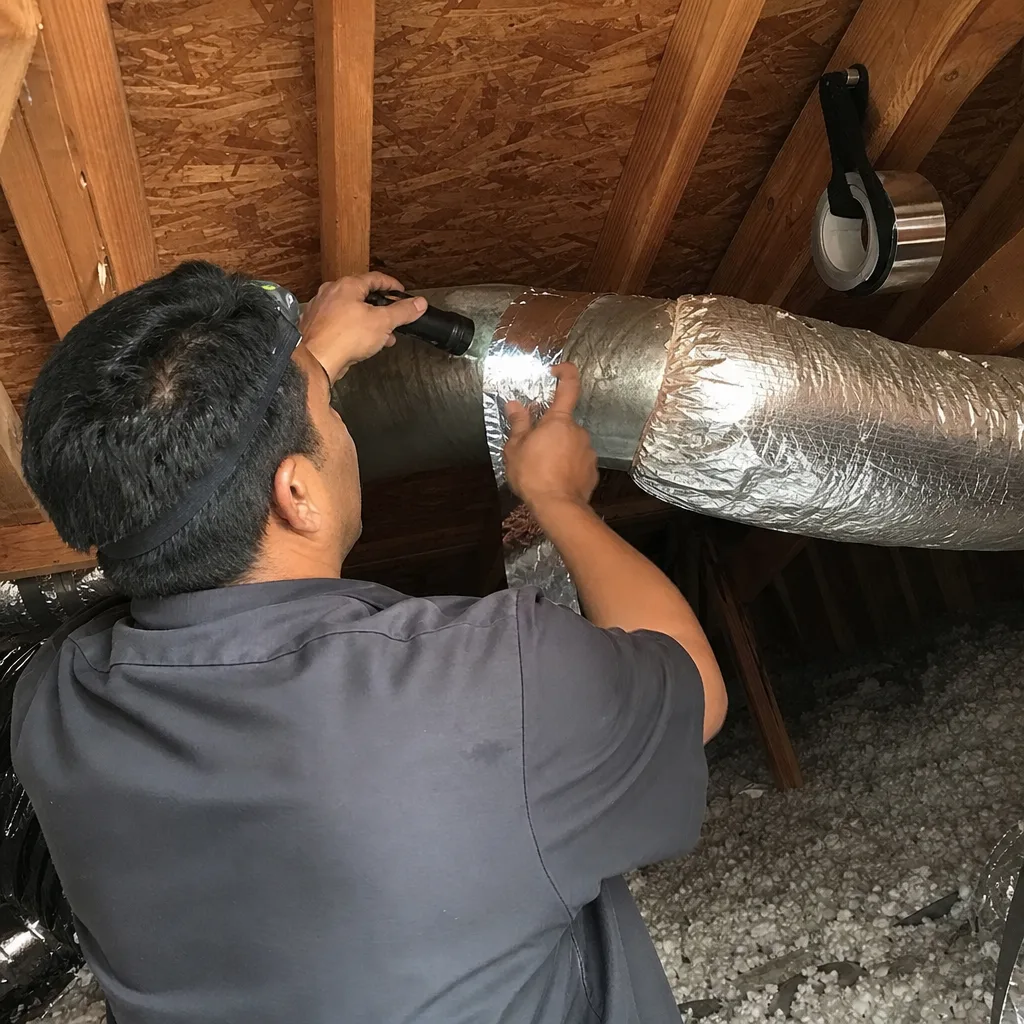
Last updated November 24, 2026
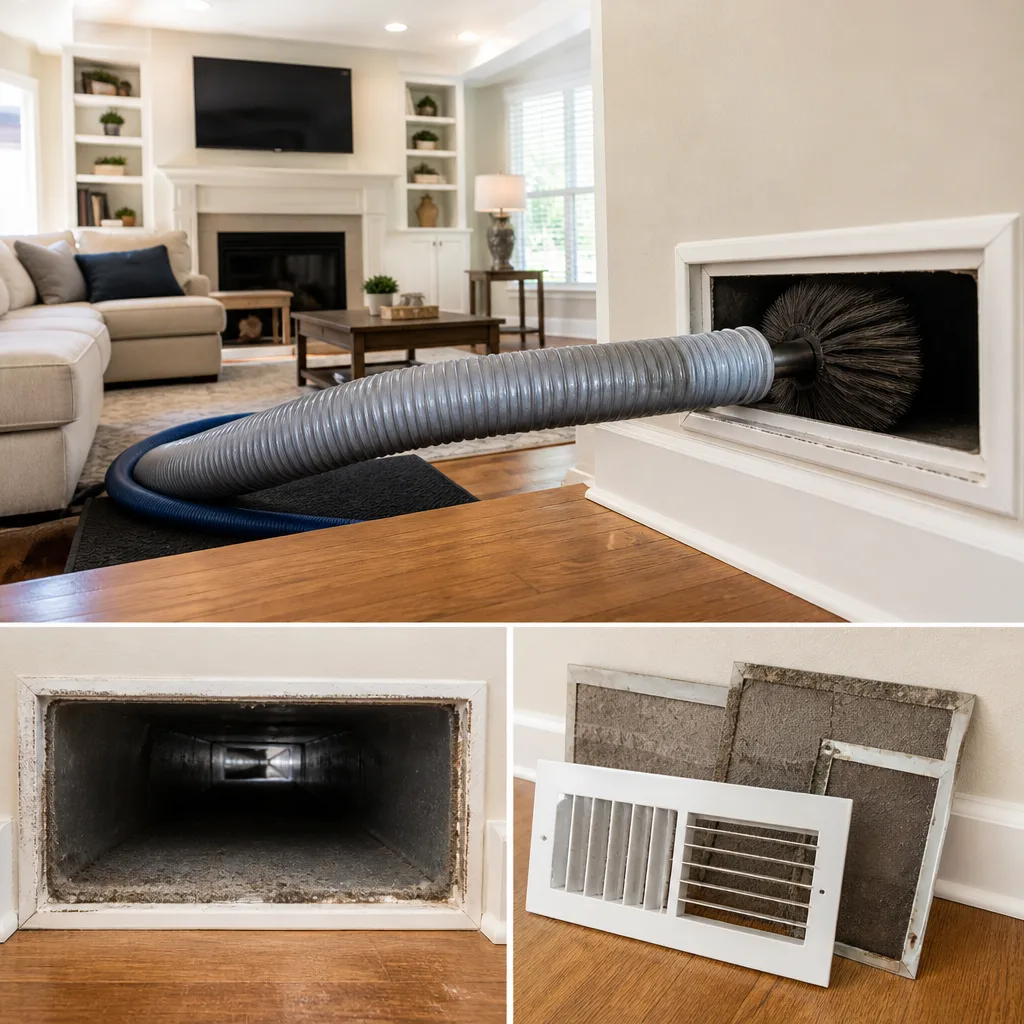 Whole-home duct cleaning
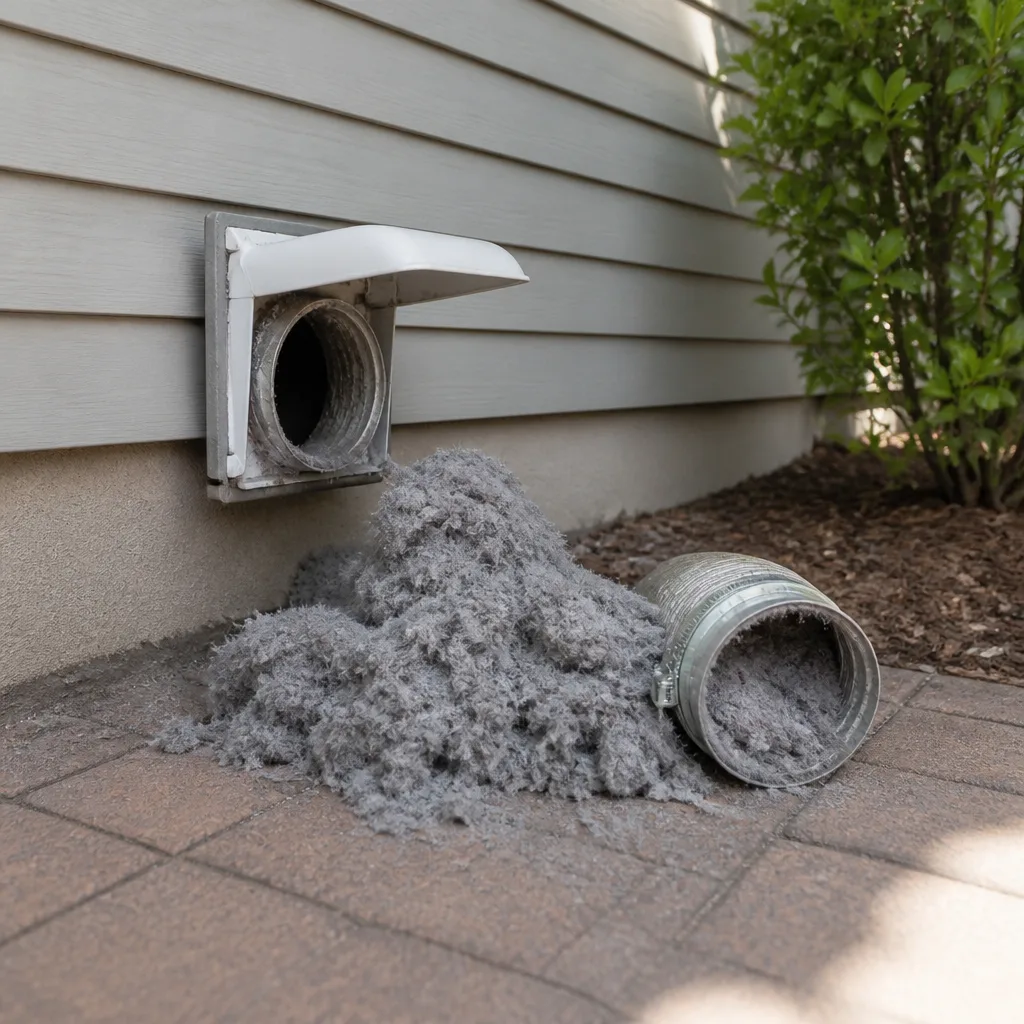 Dryer vent cleaning
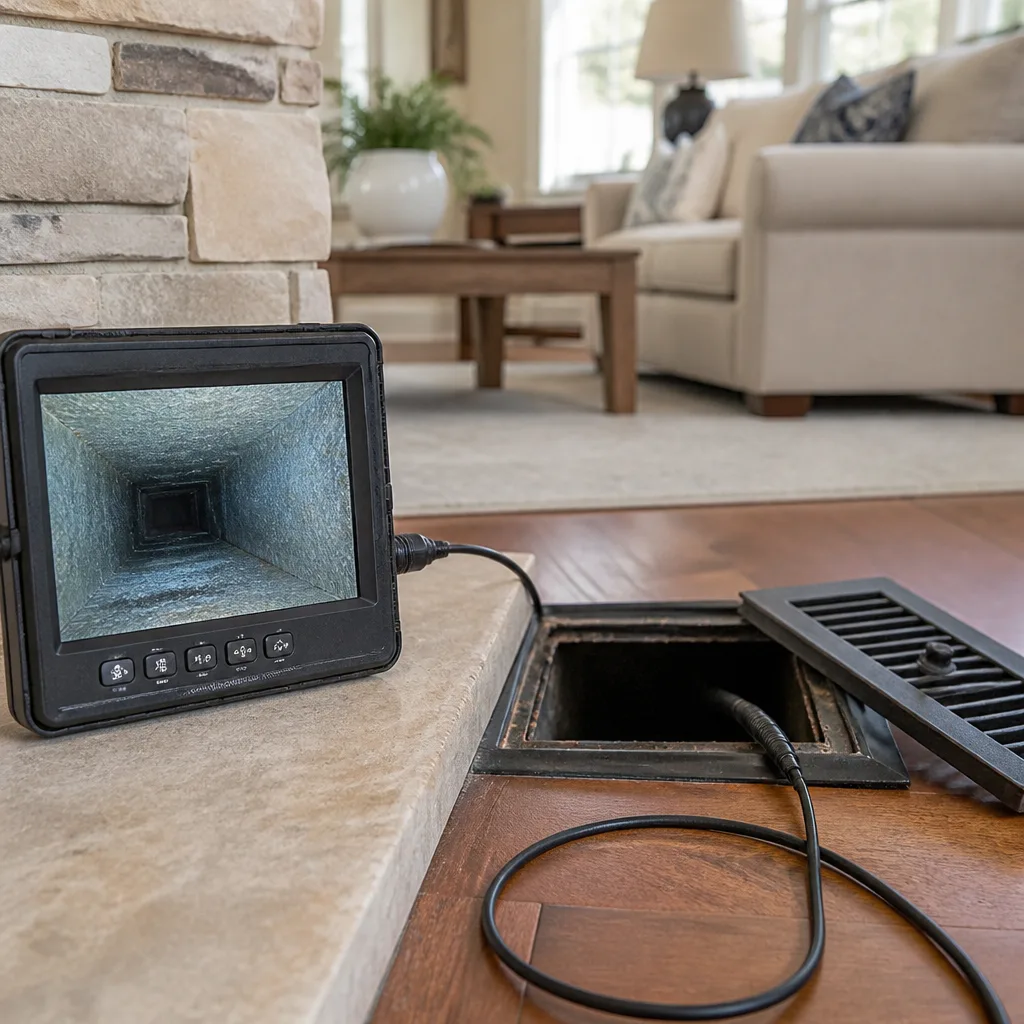 Camera inspection
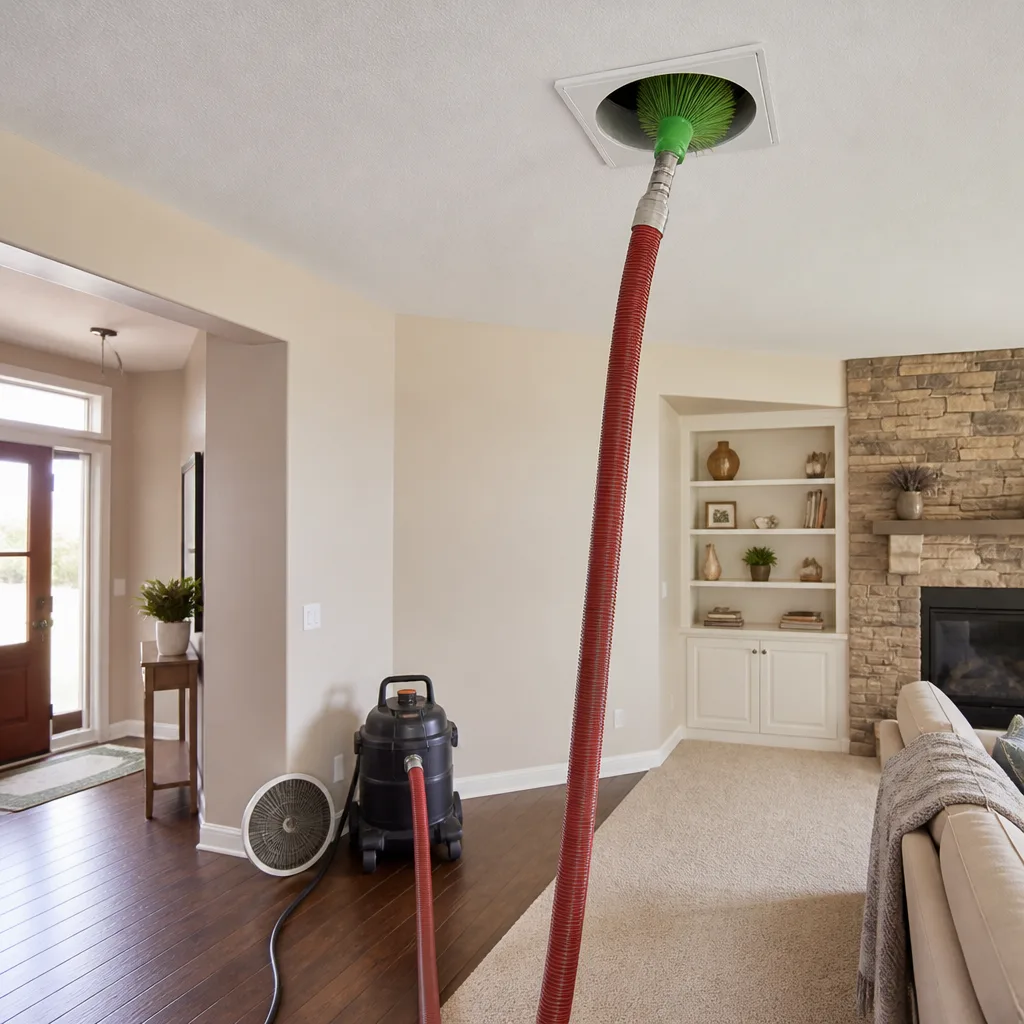 Sanitizing & deodorizing
Whole-system duct and dryer vent check with before-and-after photos - you see exactly what came out of your vents
That "$99 whole-house special" is a bait ad - the real number appears once they are in your hallway, or the "clean" is a shop-vac at the register. We photograph the inside of your ducts before and after instead.
Air Duct Cleaning Permits, Codes & Inspections in Downtown Santa Ana, CA: What You Need to Know
Here’s a misconception we run into often: homeowners assume a duct cleaning quote is all they need to think about. For a straight cleaning, that’s usually true. But the moment a technician cuts into a duct run, replaces a flex section, or seals a leaking joint, you’ve crossed into mechanical work that California treats very differently. A duct sealing job that bypasses California’s Title 24 Part 6 ventilation verification requirements can affect your HVAC system warranty and can surface as a disclosure item when you sell the home. In this guide we’ll walk through exactly where that line falls in Downtown Santa Ana, what a licensed C-20 contractor should document, how Orange County air quality rules touch debris disposal, and the questions to ask before anyone starts work.
Quick Answer
Routine air duct cleaning in Downtown Santa Ana generally does not require a building permit, because it removes debris without altering the mechanical system. Duct repair, replacement, re-sealing, or any change to airflow and ventilation can require a mechanical permit from the City of Santa Ana and must comply with California Title 24 Part 6, which references ASHRAE 62.2 for residential ventilation. Licensed C-20 (HVAC) contractors should document the work, and mold-containing debris must be handled under Orange County AQMD rules.
Styles & brands we work with
- Whole-home duct cleaning
- Dryer vent cleaning
- Camera inspection
- Sanitizing & deodorizing
Table of Contents
- Where the Line Falls: Cleaning vs. Permit-Required Mechanical Work
- How California Title 24 Part 6 and ASHRAE 62.2 Affect Duct Modification
- Aeroseal Applications and Flex Duct Replacement Under California Rules
- What a Licensed C-20 Contractor Must Document
- Orange County AQMD Rules and Mold-Containing Duct Debris
- What an Inspection Actually Covers
- Questions to Ask Before Work Begins
- Downtown Santa Ana Building Stock and Why It Matters
Where the Line Falls: Cleaning vs. Permit-Required Mechanical Work
The cleanest way to think about it: a permit is triggered by altering the system, not by cleaning it. A negative-pressure cleaning with professional-grade Rotobrush or Nikro equipment pulls debris out of the ductwork and leaves the mechanical assembly unchanged. That’s maintenance. But California’s building code treats ductwork as part of the mechanical system, and modifying the mechanical system brings permits and code compliance into play.
Here’s how we draw the line in practice for a Downtown Santa Ana job:
- No permit typical: Source removal cleaning of supply and return ducts, register and grille cleaning, blower and coil cleaning as part of HVAC cleaning, and sanitizing with products like Honeywell or Aprilaire solutions.
- Permit likely: Cutting a new duct run, replacing a section of flex duct, re-routing a run, changing the number or location of supply registers, or a full sealing project that measurably changes system airflow.
- Gray zone: Small repairs to a disconnected joint or a torn flex collar. These are the calls where you should ask your contractor whether the City of Santa Ana building department would classify the work as a repair under an existing mechanical permit or as new work requiring one.
The reason this matters isn’t bureaucratic. When ductwork gets cut and re-sealed improperly, you can end up with a system that no longer meets the ventilation assumptions it was originally permitted under. That’s a code problem and a performance problem, and it’s why our approach to Air Duct Cleaning Downtown Santa Ana is to diagnose first, then decide what the work actually requires.
How California Title 24 Part 6 and ASHRAE 62.2 Affect Duct Modification
Title 24 Part 6 is California’s energy code, and it governs the ventilation and duct-sealing performance of residential HVAC systems. It references ASHRAE 62.2, the national standard for ventilation and indoor air quality in low-rise residential buildings. In practical terms, when ductwork is modified, the system is expected to still meet those ventilation and leakage requirements, and in many cases a contractor is expected to verify it with a duct leakage test.
What that means for a Downtown Santa Ana homeowner:
- Verification is part of the job, not optional. A duct repair or replacement that changes the system’s leakage profile should come with a documented leak test result.
- Your warranty may depend on it. Many HVAC manufacturers tie warranty coverage to installation and modification performed to code. A modification that bypasses Title 24 verification can give a manufacturer a reason to deny a claim later.
- Disclosure can follow you. Unpermitted mechanical work is a standard disclosure item in a California real estate transaction, and it can turn into a negotiation problem or a repair bill at the worst possible moment.
We run into this most often when a home has had previous duct work done by someone who never pulled a permit. When we scope an air duct cleaning job and see patched flex or mismatched duct runs, we flag it. Cleaning around an unpermitted modification doesn’t fix the underlying issue, and we’d rather tell you what we see than hand you a clean system sitting on a code problem.
Aeroseal Applications and Flex Duct Replacement Under California Rules
Aeroseal is a sealing method that injects a fog of sealant particles into the duct system from the inside. It seals leaks that a technician can’t reach from the outside, and it’s genuinely useful in older duct systems where joints have separated. But aeroseal is a mechanical modification of the duct system, not a cleaning. In California it falls into the permit-and-verify side of the line, and any aeroseal project in Downtown Santa Ana should be scoped by a licensed contractor who understands Title 24 verification requirements.
Flex duct replacement has similar rules. Flex duct degrades faster than rigid duct, and collapse, tearing, or animal damage are common reasons to replace a run rather than seal it. When we replace a section, the questions to answer are:
- Does the replacement maintain the ventilation rate the system was designed for?
- Does the work require a mechanical permit from the City of Santa Ana?
- Is the work being verified with a duct leakage test, and is the result documented?
- Will the replacement preserve the manufacturer’s warranty on the HVAC equipment?
Our answer to a flex duct problem is never just “clean it and move on.” Duct Repair & Sealing is a separate service line for exactly this reason. Clean ducts are only half the job. We also seal and repair what’s letting contaminants back in, and we do it in a way that holds up to a code review. When the work does require a permit, we’ll tell you before we start rather than after.
What a Licensed C-20 Contractor Must Document
A C-20 license is California’s HVAC contractor classification, and part of the value of hiring a C-20 contractor is the paper trail they generate. In Downtown Santa Ana, where a lot of housing predates modern energy codes, that paper trail is the thing that protects you at resale and when you file an insurance or warranty claim.
A properly documented duct repair job includes:
- The scope of work in writing – what was cut, what was replaced, and what was sealed.
- The permit number, when a permit applies, so the work is inspectable and traceable.
- Duct leakage test results when Title 24 verification applies.
- Before-and-after photos of the actual ductwork so you have visual evidence of what was done.
- A written estimate that sets the price per job, agreed before work starts, so there are no surprises once the technician is on site.
When you call us, we’ll ask what you’re seeing – musty smell, uneven airflow, a recent high energy bill – and then scope the job so you know exactly what’s being done and whether anything in it needs a permit. Estimates are free. Call (866) 545-1338. We answer 24/7. Fast dispatch from 7am to 7pm, Sunday through Friday.
Orange County AQMD Rules and Mold-Containing Duct Debris
Most guides skip this completely, and it’s the piece that surprises people the most. The South Coast Air Quality Management District covers Orange County, and its rules apply to how certain wastes are handled, including debris that contains mold. Duct cleaning in a home with active mold growth isn’t just a routine source-removal job. It becomes a containment and disposal job, and the contractor needs equipment built for that.
What that looks like in practice:
- Containment first. The work area is sealed and put under controlled pressure so mold spores aren’t redistributed into the living space.
- Proper capture. Abatement Technologies equipment is what a contractor uses when the job requires contamination-level collection rather than a shop vacuum setup.
- Disposal. Collected debris has to be bagged, sealed, and disposed of as required rather than dumped in a standard bin.
- Sanitizing. After removal, surfaces are treated with products like those from the Aprilaire and Honeywell lines, which is what our Air Quality & Sanitizing service covers.
If your ducts smell musty, or if a prior water event left moisture in the system, tell us on the call. We’d rather scope the job accurately from the start than find active mold growth once the equipment is already set up. A dryer vent cleaning visit can also reveal moisture problems in nearby ductwork, and we’ll note anything we see.
What an Inspection Actually Covers
A duct inspection is not a permit inspection. They answer different questions, and knowing the difference keeps you from assuming one covers the other.
A permit inspection is performed by a City of Santa Ana building inspector. It confirms the permitted mechanical work was done to code. It typically happens after rough-in or after final, depending on the scope.
A duct inspection by your contractor is a diagnostic. It looks at what’s inside the system and how it’s put together. Here’s what we check on a walk-through:
- Visual condition of accessible duct runs – disconnected joints, torn flex, crushed sections.
- Register and return airflow, to spot balance problems.
- Signs of moisture, mold, or pest activity.
- Condition of the air handler, blower, and coil.
- Whether the equipment lineup matches the system’s age and assumptions.
That last item matters more than homeowners realize in Downtown Santa Ana’s older housing stock. Equipment gets replaced or upgraded, and the duct system is often left as-is, still shaped by assumptions from a much earlier era. When we run a HVAC cleaning job in an older building, we expect to find something in the duct system that predates the current equipment. That’s an inspection finding, not a permit finding, but it’s a finding you’ll want documented.
Questions to Ask Before Work Begins
Ask these before the truck shows up, not after. A contractor who can answer them clearly is a contractor who understands the code side of the work, and that tells you a lot about how the job will go.
- “Is this job a cleaning, a repair, or a modification?” The answer determines whether a permit is in play. A contractor who can’t clearly say which one you’re getting is a risk.
- “Will you pull a permit if the work requires one?” If the answer is “it doesn’t need one” for a job that clearly involves cutting or replacing ductwork, push back.
- “Are you a licensed C-20 contractor, and can you show the license?” California licenses are public and searchable. Ask them to point you to it.
- “Will you provide duct leakage test results if the work affects system leakage?” This is the Title 24 verification piece. It should not be an add-on surprise.
- “How will you handle mold-containing debris?” If the answer is “we bag it up,” ask how it’s contained and disposed of. Abatement Technologies equipment and proper disposal are the right answer.
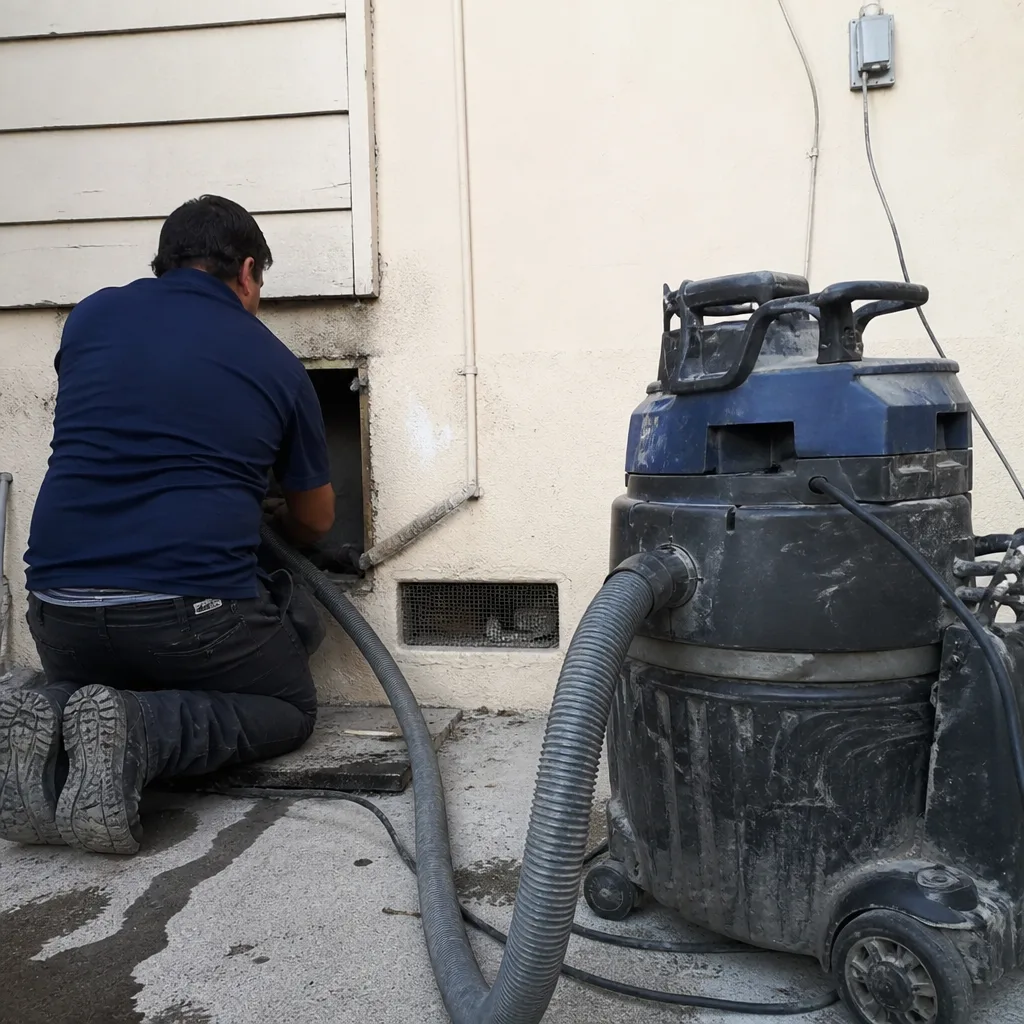
- “Will I get before-and-after photos of my own ducts?” This is the thing that separates a real job from a visit where nobody can prove what happened.
- “Is the price a flat price per system, set in a written estimate before work starts?” Bait-and-switch pricing is the number one source of complaints in this trade. Get it in writing.
One more question worth asking, even if it’s not a compliance item: “What equipment are you using?” Professional-grade Rotobrush and Nikro systems are the industry standard. If the answer is a shop vacuum and a hose, that tells you what kind of operation you’re dealing with.
Downtown Santa Ana Building Stock and Why It Matters
Downtown Santa Ana has a lot of older housing, and older housing means ductwork that’s often been modified multiple times over its life. Additions were built, room uses changed, HVAC equipment was replaced, and the duct system has usually been carried along without an updated scope of work. That’s a code and documentation issue, and it’s also where our Air Duct Cleaning Downtown Santa Ana work starts: with a real inspection, not a brush through the register.
This area’s climate matters too, though perhaps less dramatically than homeowners expect. Summers run warm enough that the HVAC system works hard, and the system spends most of the year moving conditioned air. Duct leaks that would be a minor nuisance in a mild climate add up quickly when the system is running season after season. Sealing and repair aren’t luxuries here. They’re the thing that keeps your energy bill from climbing and your air handler from working harder than it should.
What that means for a Downtown Santa Ana job:
- Expect to find at least one modification from a prior era that isn’t documented.
- Expect the duct system to be under more load than the equipment was originally designed for.
- Expect the contractor to recommend a scope that addresses sealing, not just cleaning.
- Expect the conversation to include whether a permit is needed for any of it.
Our technicians have up to 10 years of experience on duct systems in this kind of building stock. When we scope a job, we’re looking at it the way you’d want a diagnostician to, not the way a cleaning crew would.
Common Mistakes to Avoid
- Assuming cleaning never requires a permit, or that repairs never do. Cleaning almost never does; cutting and re-sealing usually does. Know which side of the line you’re on before work starts.
- Hiring a contractor who won’t put the scope in writing. If the estimate doesn’t specify what’s being cut, replaced, or sealed, you have no way to know later whether a permit was required.
- Skipping the leakage test after duct repair. In California, duct modification should be verified with a leakage test. A repair without verification leaves you exposed at warranty time and resale time.
- Letting a cleaning crew handle active mold without containment. Mold-containing debris has to be contained and disposed of under Orange County AQMD rules. A shop vacuum doesn’t cut it.
- Ignoring the disclaimers in a low coupon price. The bait-and-switch in this trade usually starts with a teaser price and grows once the technician is on site. Flat price per system, set in writing, is the only honest structure.
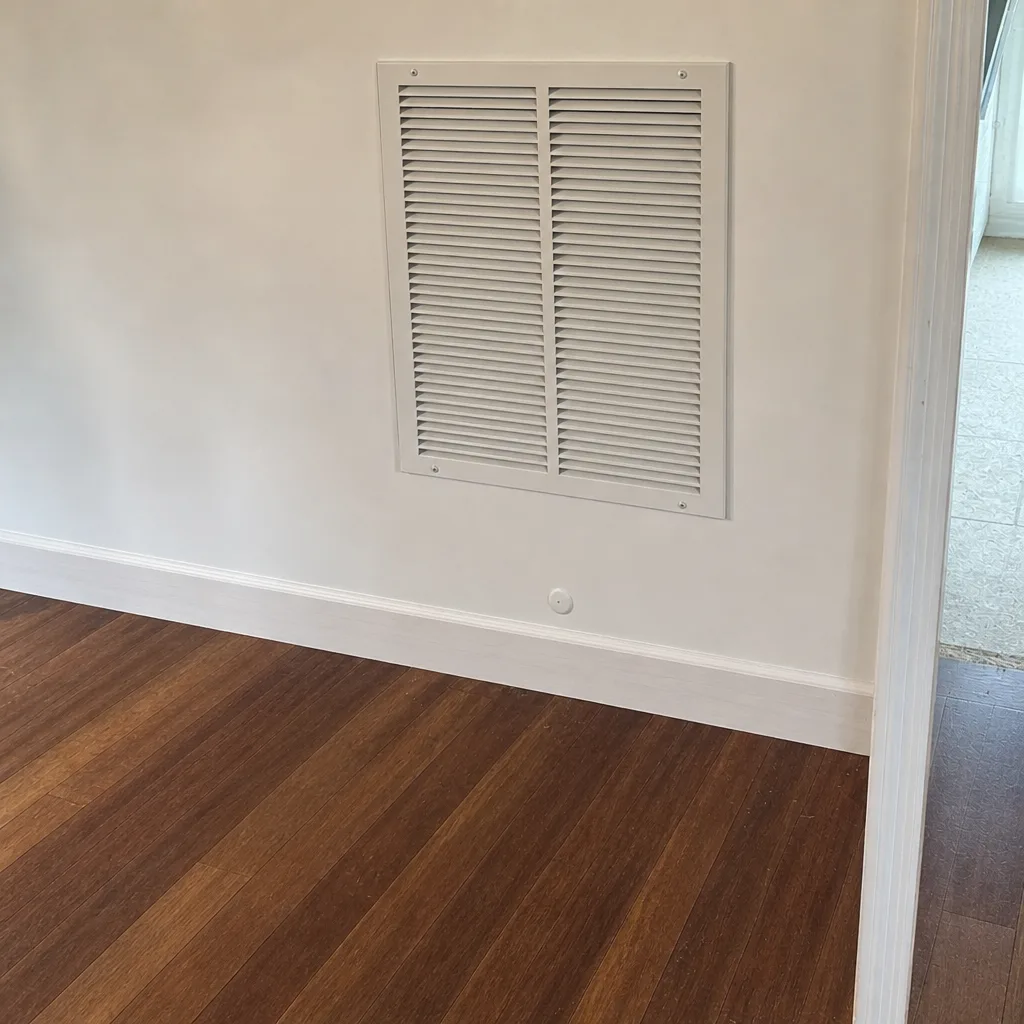
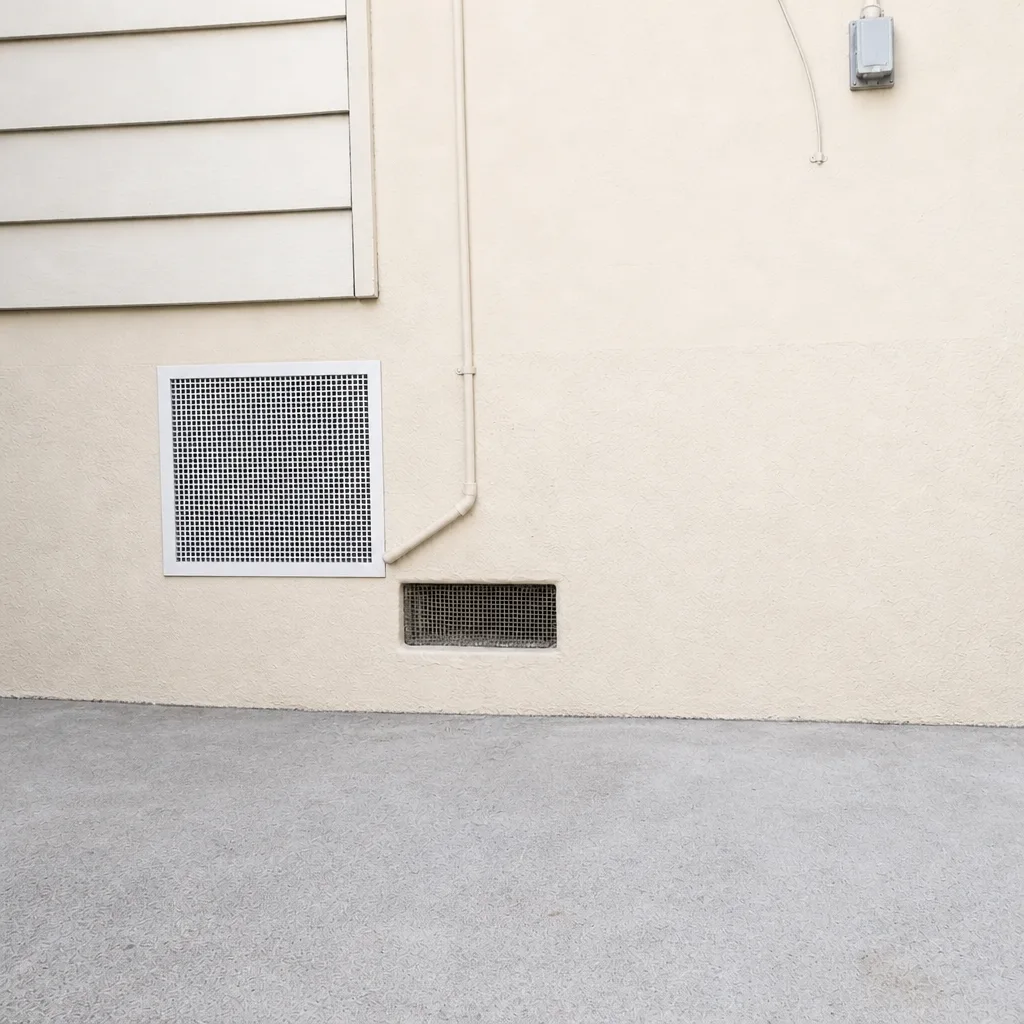
- Trusting a verbal “everything’s fine.” Ask for before-and-after photos of your own ducts, not stock images. This is the only way to know the work was actually done.
- Assuming the contractor’s inspection is a permit inspection. They answer different questions. If you need permit verification, get the permit number and have the work inspected by the city.
See the difference
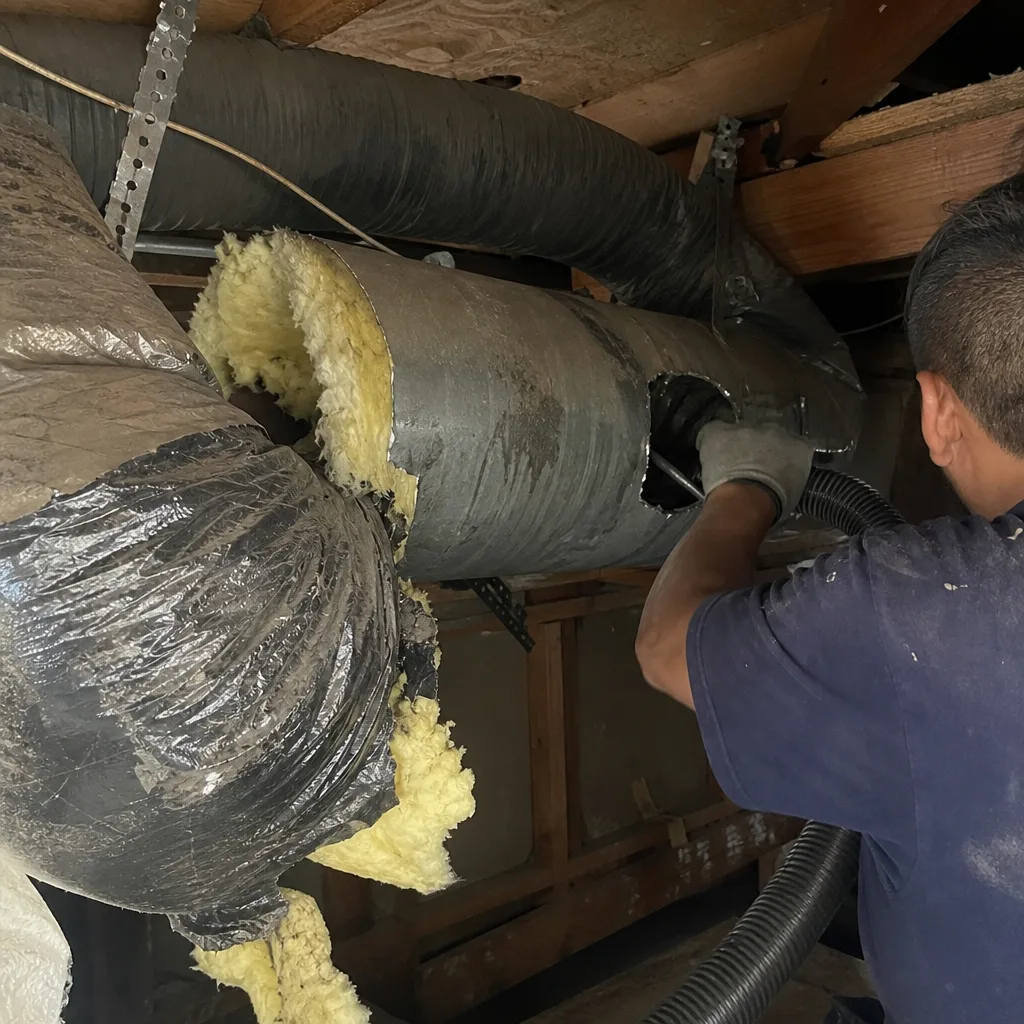 Before
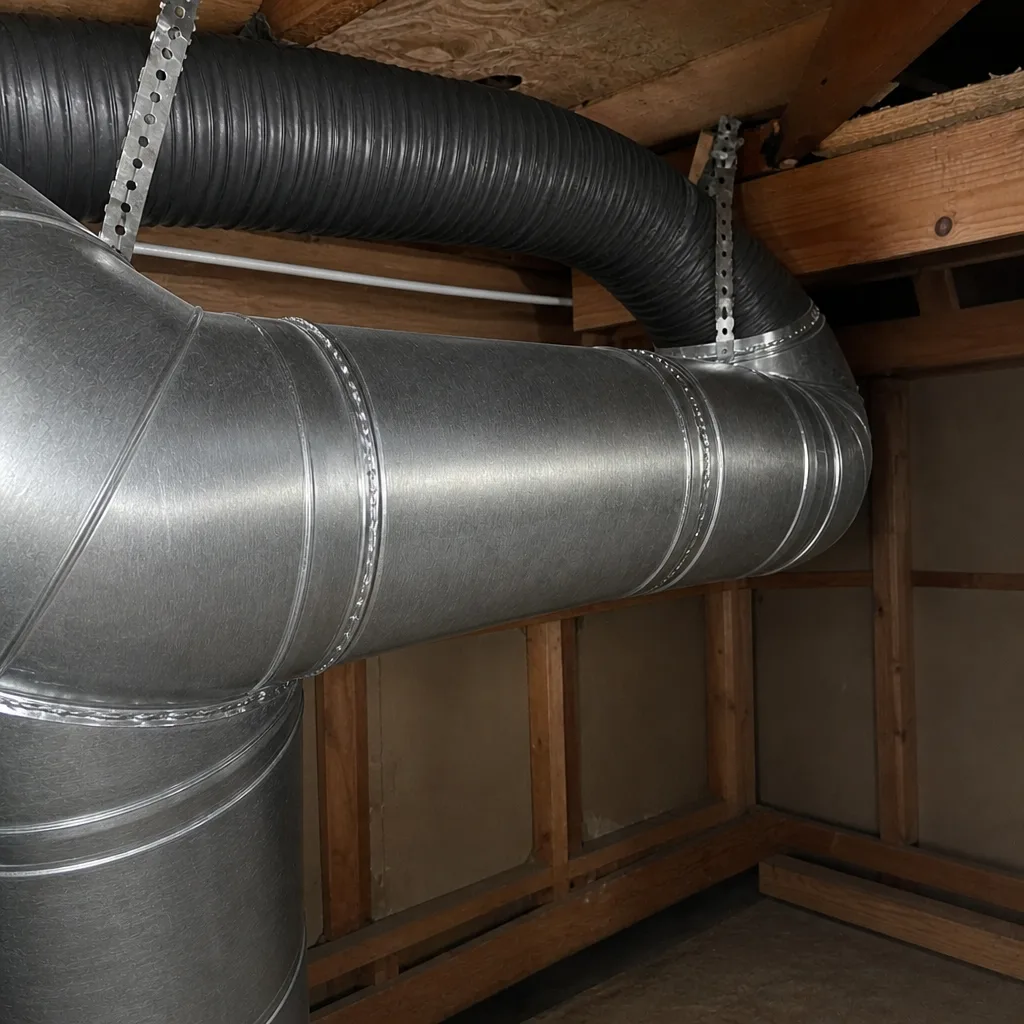 After
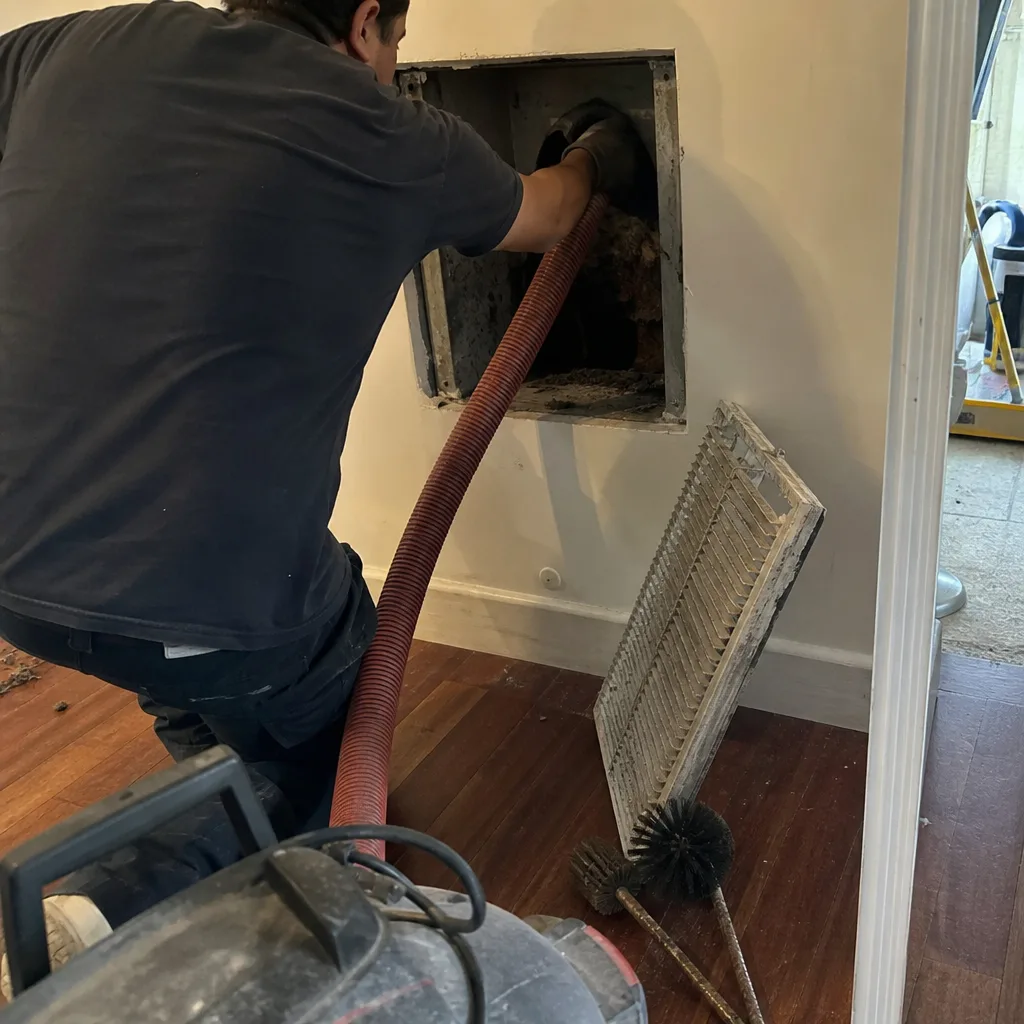 Before
 After
 Before
 After
When to Call a Professional
Call when something has changed and stayed changed. A musty smell that comes back every season. Airflow that was fine last year and now isn’t. An energy bill that’s climbed without a rate increase. A recent water event that may have reached the duct system. Multiple rooms that never feel right no matter where you set the thermostat. These are the symptoms of a system problem, and a proper duct inspection with professional equipment will answer questions a homeowner can’t from the register side.
If the work involves repair, sealing, or replacement, the permit and documentation questions only get easier when a licensed contractor handles the job and puts everything in writing. Air Duct Cleaning Downtown Santa Ana offers free estimates in Downtown Santa Ana – call (866) 545-1338. We answer 24/7. Fast dispatch from 7am to 7pm, Sunday through Friday. Fair warning on timing: a call outside those hours is booked into the next opening, and if your concern can wait a day, that’s usually fine.
Frequently Asked Questions
Routine air duct cleaning in Downtown Santa Ana generally does not require a permit, because cleaning doesn’t alter the mechanical system. If the work involves cutting, replacing, or re-sealing duct sections, a mechanical permit from the City of Santa Ana may apply, and Title 24 Part 6 ventilation verification comes into play. Ask your contractor to confirm which category the job falls into, and call (866) 545-1338 for a free estimate if you’d like us to scope it.
Pricing in Downtown Santa Ana is per whole system, quoted in a written estimate, not per vent. Clean, standard systems sit at the lower end; larger homes with multiple systems, or jobs involving active mold containment, sit at the higher end. We don’t quote teaser prices or per-vent rates, because those numbers rarely match the final invoice. The written estimate sets the final price. Call (866) 545-1338 to schedule an estimate – it’s free.
Because they’re structured to grow once the technician is on site. A coupon price usually covers a limited register count and leaves the rest of the system as an add-on, which is how the final invoice ends up far above the teaser. We quote a flat price per system in writing before work starts, and we show before-and-after photos of your own ducts. That’s the only honest way to structure it. Call (866) 545-1338 for a free estimate.
Ask for before-and-after photos of your own ductwork, taken during the job. A real cleaning with professional-grade Rotobrush or Nikro equipment generates visual evidence as part of the process, and a contractor using that equipment should have no trouble providing it. Stock photos don’t count. If you’re not sure what to ask for, call (866) 545-1338 and we’ll walk you through what a proper job looks like.
Most systems benefit from cleaning every few years, and the right interval depends on the home – pets, recent remodeling, moisture events, and how much dust the return side is pulling in all shift the schedule. If you’re seeing symptoms like musty odors, uneven airflow, or allergy flare-ups that didn’t used to happen, a diagnostic visit is worth more than guessing at an interval. Call (866) 545-1338 for a free estimate.
Yes. Orange County AQMD rules apply to how mold-containing debris is handled, so a cleaning in a home with active mold growth has to include containment and proper disposal, not just capture. A contractor using Abatement Technologies equipment is set up for that; a shop vacuum isn’t. If you suspect active mold in the ducts, tell whoever you call so the job is scoped correctly. Call (866) 545-1338 to discuss.
The Bottom Line
Routine duct cleaning in Downtown Santa Ana usually doesn’t need a permit, but duct repair, replacement, and sealing do – and Title 24 Part 6 verification, ASHRAE 62.2 ventilation requirements, C-20 documentation, and Orange County AQMD disposal rules all sit alongside that work. The permit questions only matter if you ask them before work begins, so use the questions in this guide as a checklist when you’re interviewing contractors. Get the scope in writing, ask for before-and-after photos, and don’t let a teaser price replace a proper written estimate. Then call the team at Air Duct Cleaning Downtown Santa Ana and we’ll scope it out.
Written by the team at Air Duct Cleaning Downtown Santa Ana.