
Last updated November 24, 2026
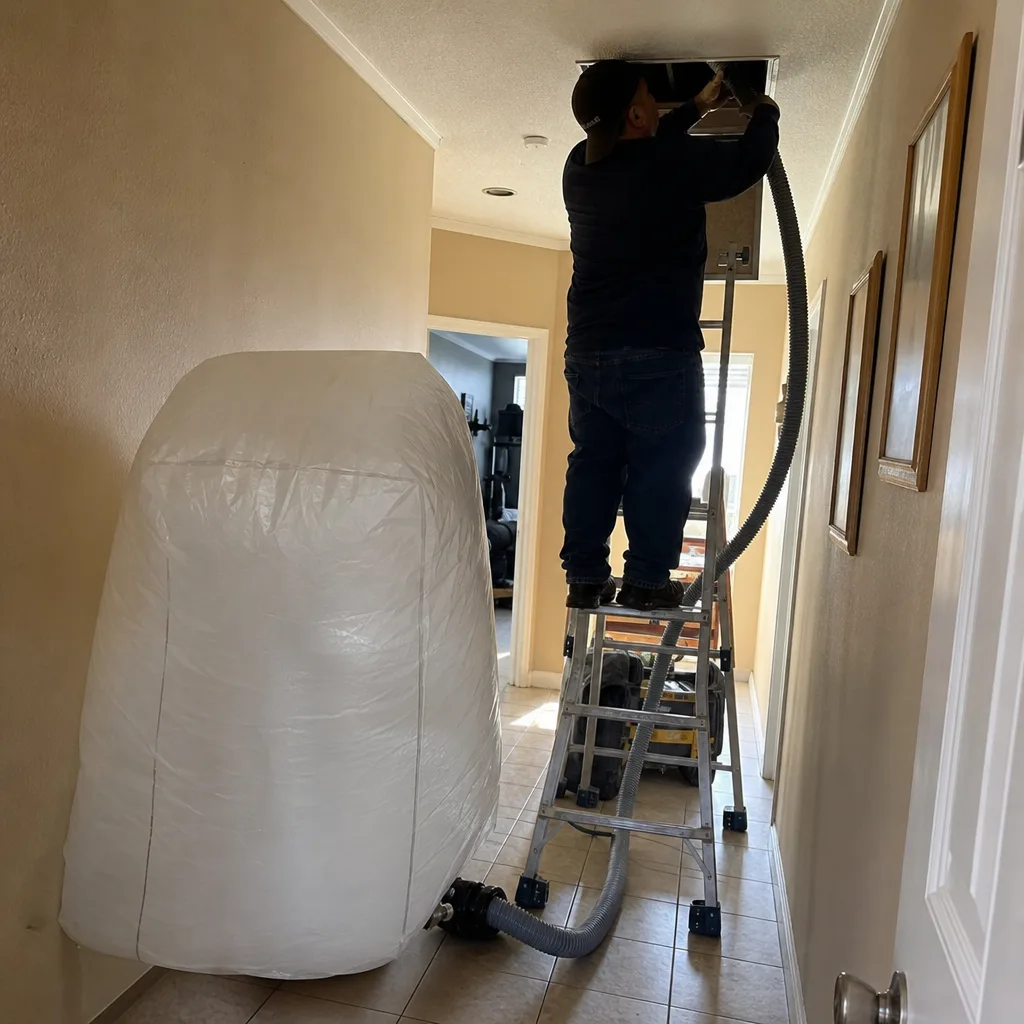
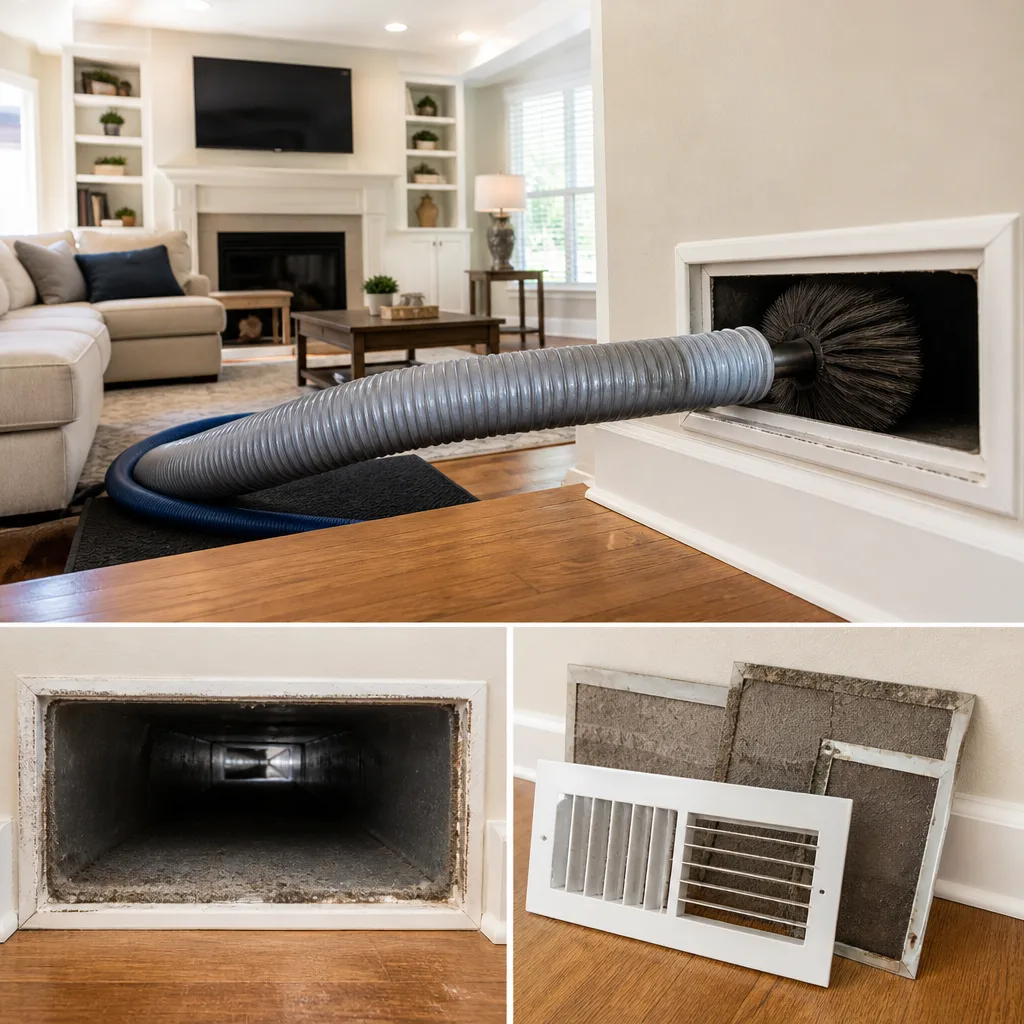 Whole-home duct cleaning
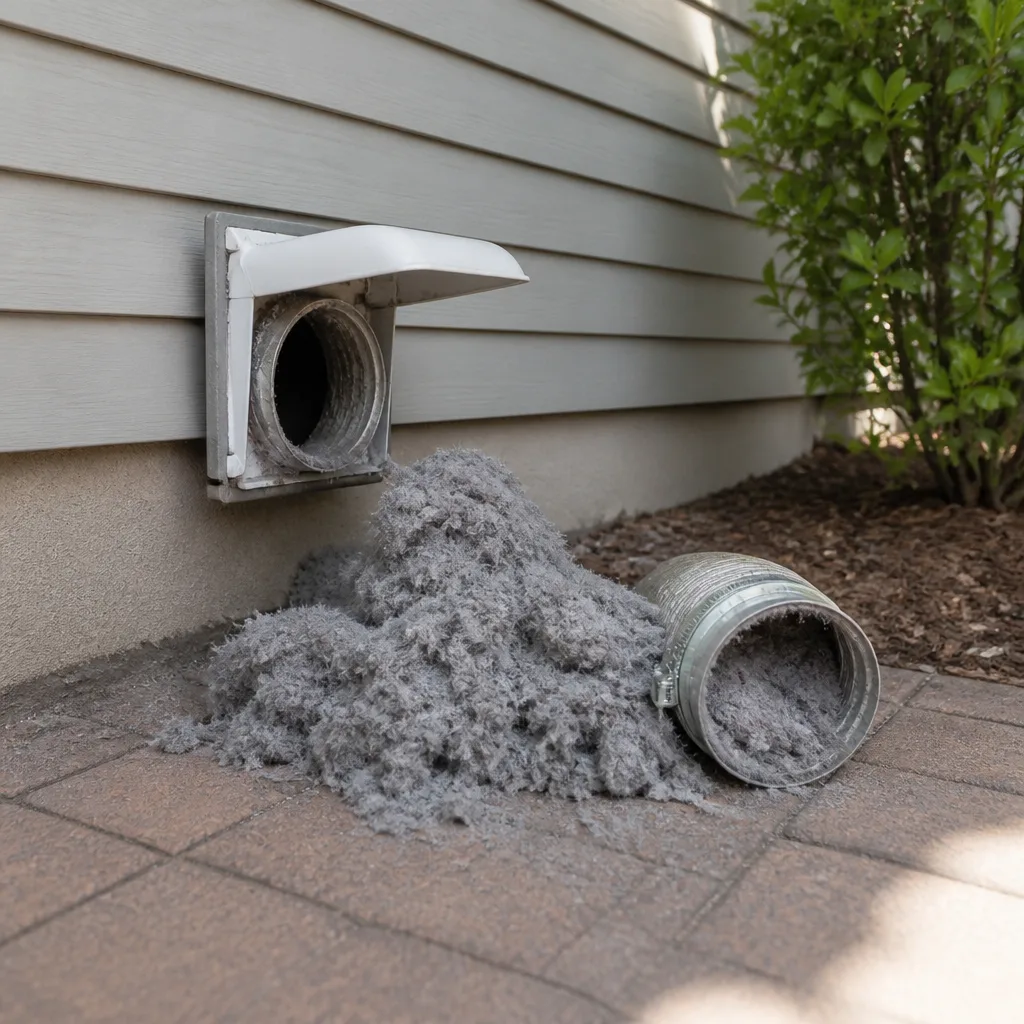 Dryer vent cleaning
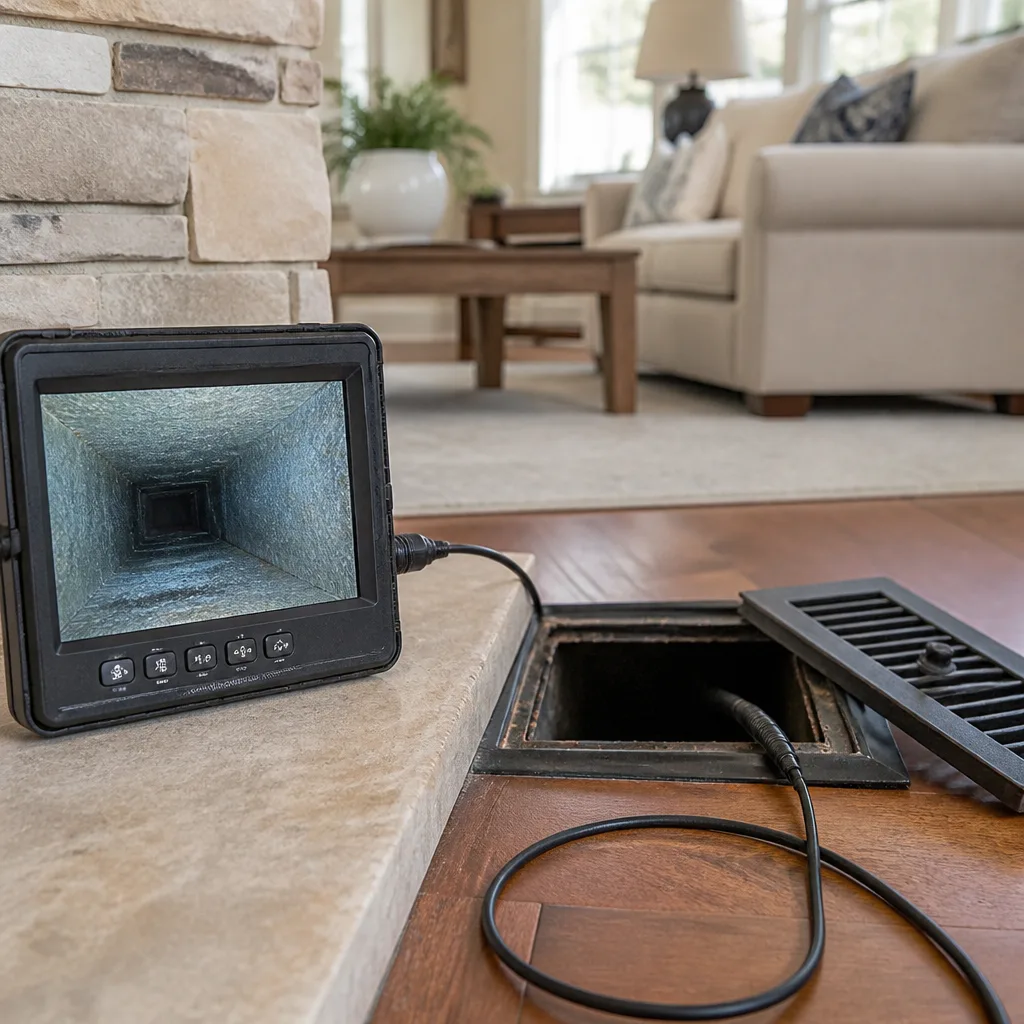 Camera inspection
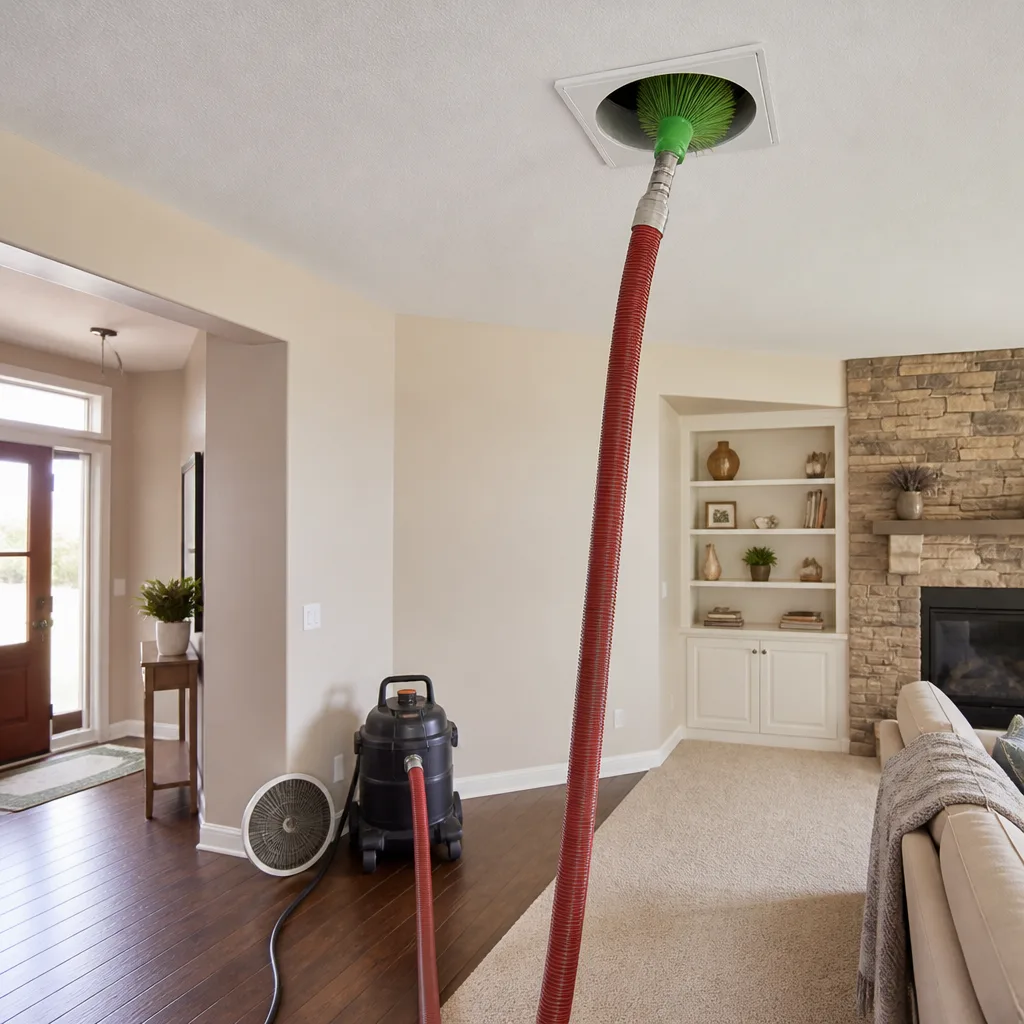 Sanitizing & deodorizing
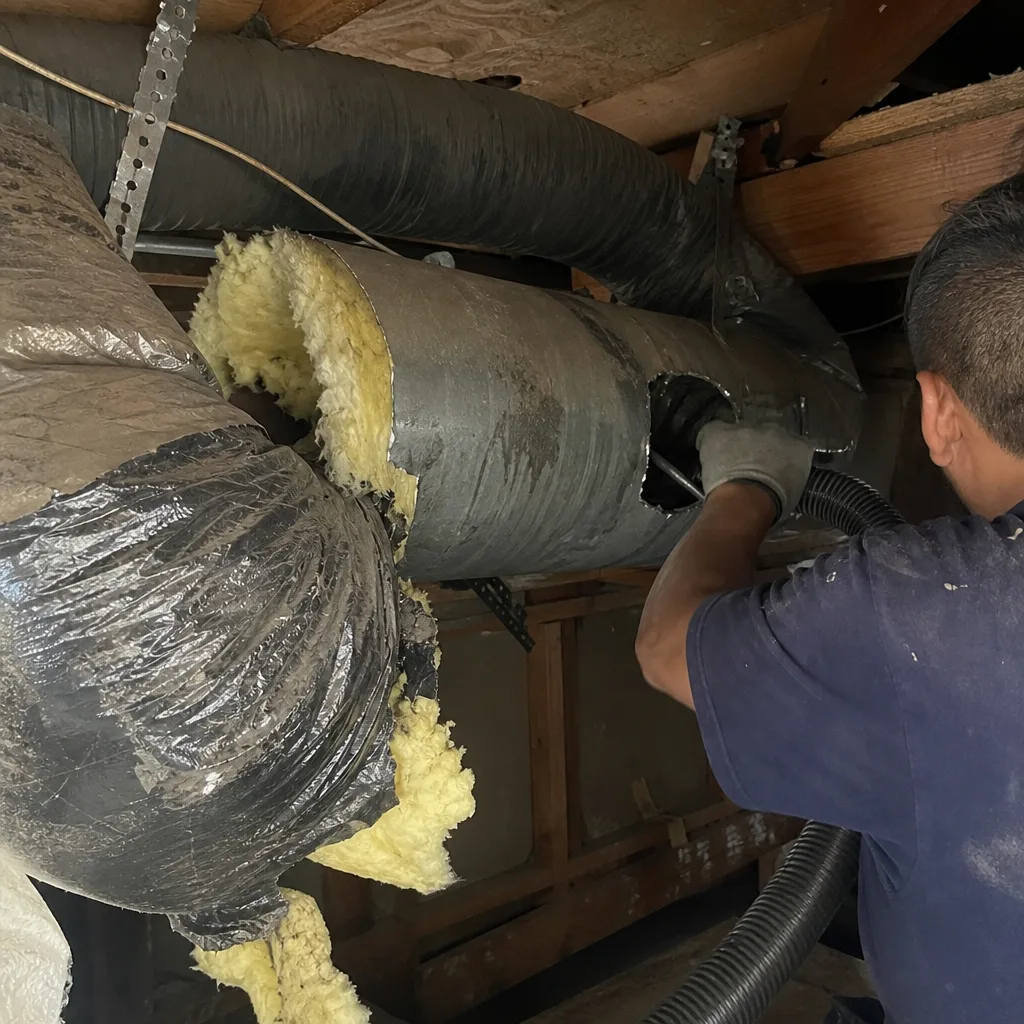
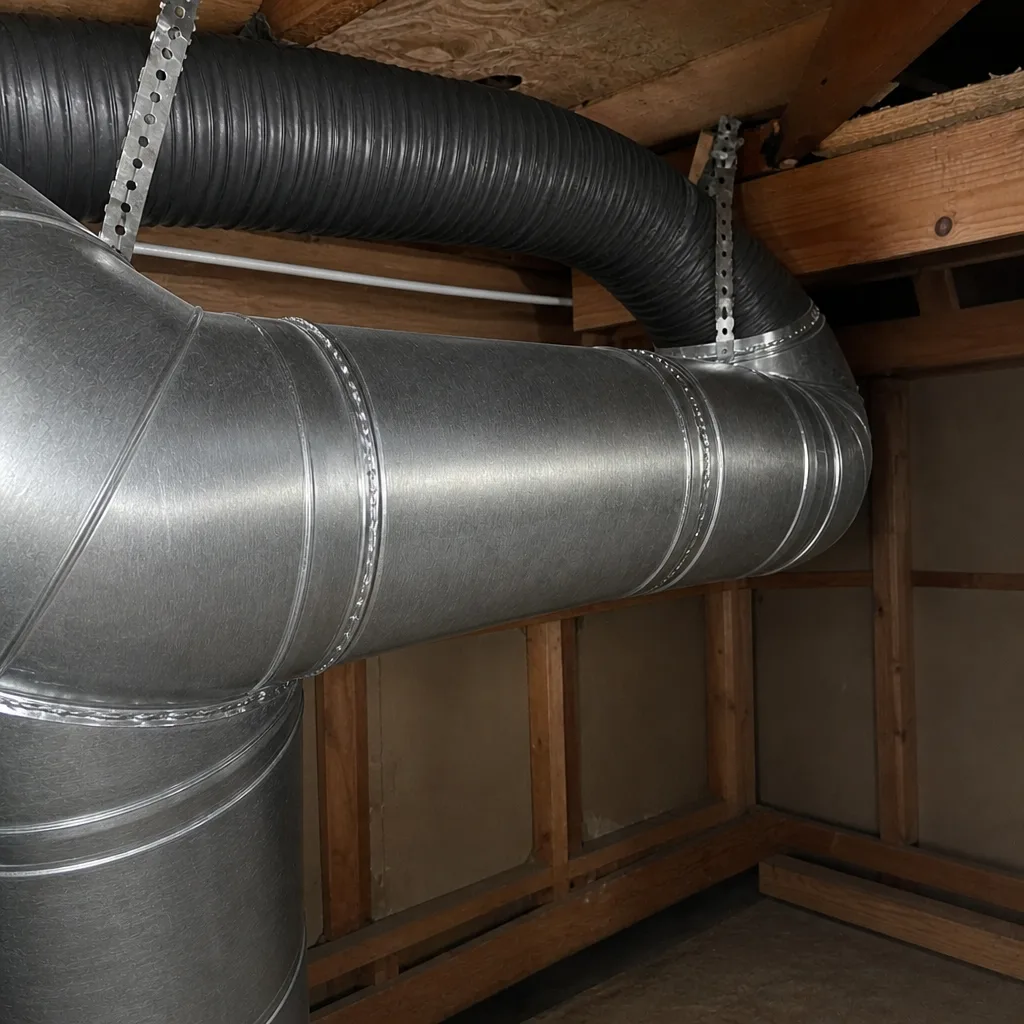
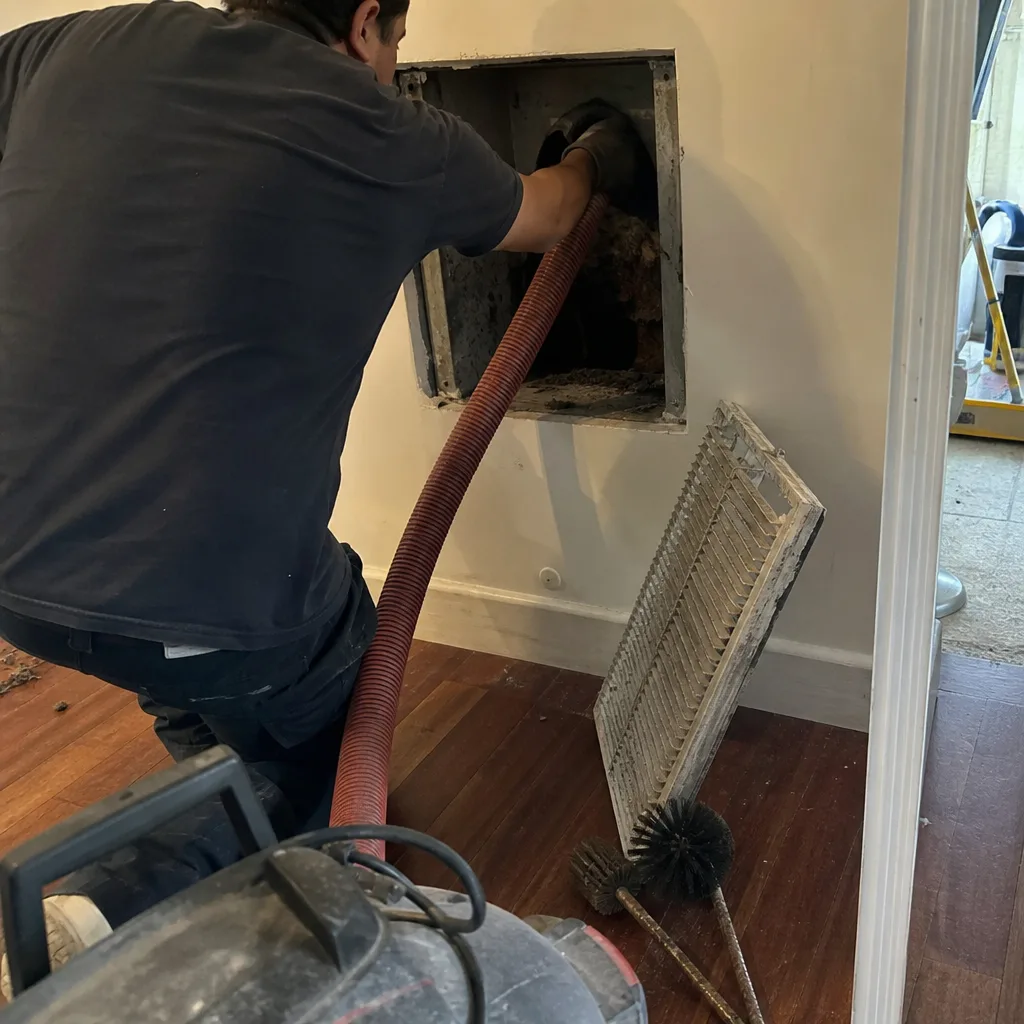
Whole-system duct and dryer vent check with before-and-after photos - you see exactly what came out of your vents
That "$99 whole-house special" is a bait ad - the real number appears once they are in your hallway, or the "clean" is a shop-vac at the register. We photograph the inside of your ducts before and after instead.
The Complete Guide to Air Duct Cleaning in Downtown Santa Ana
Most people picture duct cleaning as a vacuum pushed through a metal tube. That picture is wrong, and it’s why so many Downtown Santa Ana homeowners pay for a service and still smell the same musty air a week later. Your ducts aren’t a set of independent pipes. They’re one pressurized airflow system, and the contamination that matters most usually sits in the parts a single vacuum pass never reaches: the supply plenum, the air handler cabinet, the blower wheel, the evaporator coil. In this guide we’ll walk through what a real system clean involves, why Downtown Santa Ana’s older housing stock changes the job, how agitation-first equipment like Rotobrush works, and what leaky ducts quietly cost you each month. By the end you’ll know exactly what to ask a contractor and what to walk away from.
Quick Answer
Air duct cleaning in Downtown Santa Ana typically runs $350 to $700 for a standard home and $700 to $1,200 or more for larger or heavily contaminated systems, and a proper job covers the entire system: supply and return runs, the air handler cabinet, the blower wheel, the evaporator coil, and the plenum. The written estimate you receive before work starts sets the final price, and a good contractor will show you before-and-after photos of your own ducts rather than just hand you an invoice.
Styles & brands we work with
- Whole-home duct cleaning
- Dryer vent cleaning
- Camera inspection
- Sanitizing & deodorizing
Table of Contents
- Why Downtown Santa Ana Ducts Are Different
- What a True System Clean Actually Covers
- How Rotobrush Agitation-First Cleaning Works
- The 5/55 Corridor and Urban Particulate Load
- Sealing, Repair, and What Leaky Ducts Cost You
- How Much Does Air Duct Cleaning Cost in Downtown Santa Ana?
- DIY Checks vs. Professional Work
- When to Call a Professional
Why Downtown Santa Ana Ducts Are Different
Downtown Santa Ana’s housing inventory skews old. A large share of the homes and small apartment buildings around the downtown core were built before 1980, and that age shows up in the ductwork. Many sit on slab foundations with original galvanized duct systems that have been patched, extended, or rerouted at least once. Some still have the thin-gauge rectangular trunk lines that were standard when the house was built, and those seams loosen over time. Every loose seam is a place where conditioned air escapes and unfiltered attic or crawlspace air gets pulled in.
Newer tract homes in outlying suburbs tend to have flexible insulated duct runs installed in one piece, which fail in predictable ways. Downtown Santa Ana’s older systems fail in messier ones. We see disconnected branch runs behind drywall, crushed flex sections where a previous remodel squeezed them, and return plenums that have never been sealed since the house was built.
There’s a ventilation angle too. These homes were built for natural leakage: air moves through gaps, around windows, up the flue. When windows get replaced and gaps get sealed, the duct system becomes the main path for air movement, and any contamination inside it gets recirculated more aggressively. That’s not a reason to skip air sealing. It’s a reason to clean and seal the ducts as part of the same effort.
If you want the service overview first, our Air Duct Cleaning Downtown Santa Ana page covers the basics. This guide goes deeper.
What a True System Clean Actually Covers
A system clean treats every component that air touches. A single-pass vacuum down the branch runs doesn’t. Here’s what the full job includes.
- Supply and return branch runs. Every register gets a run cleaned with agitation and negative pressure, not just a brush in the easy-to-reach trunk.
- The main trunk lines. These carry the highest volume of air and collect the most settled debris. They need mechanical agitation along their full length.
- The supply plenum. The transition box where the air handler pushes air into the trunk. This is where contamination recirculates fastest, and it’s frequently skipped.
- The return plenum and return drop. The return side often carries more dust than the supply side because it pulls from living space. It needs the same attention.
- The air handler cabinet. The metal box holding the blower and coil. Dust builds on interior surfaces and gets blown back into the airstream.
- The blower wheel. A caged wheel that spins at high speed. When dust cakes onto the blades, airflow drops and the motor works harder. Cleaning it is part of the job, not an upsell.
- The evaporator coil. The cooling coil. A fouled coil loses capacity and can grow biological growth in a damp, dark housing.
- Registers and grilles. Pulled, cleaned, and reinstalled.
One accountable contractor handling all of this is the point. Splitting duct cleaning from HVAC cleaning across two companies usually means the air handler cabinet gets cleaned by nobody, because each side assumes the other is doing it.
How Rotobrush Agitation-First Cleaning Works
The difference between a real duct cleaning and a blow-and-vacuum is agitation. Loose dust sitting on the bottom of a duct is easy. The dust that’s bonded to the walls, matted into corners, or stuck to the air handler surfaces doesn’t move for suction alone. You have to break it loose first, then capture it under negative pressure so it leaves the system instead of settling into your living room.
Professional-grade Rotobrush and Nikro systems are built around that order of operations. A rotating brush head travels the length of each run, scrubbing contamination off the walls. Simultaneously, a high-volume vacuum collection unit holds the entire system under negative pressure and pulls the loosened debris into a HEPA-filtered containment. Nothing gets blown into the house.
Compare that to the setup a lot of low-cost operators bring: a shop vacuum at one register and compressed air at another. That approach pressurizes the duct and pushes dust out through every seam and register in the house. Whatever settles back down lands on your furniture and inside your lungs. It also leaves the bonded contamination exactly where it was.
For contamination that goes beyond ordinary dust, Abatement Technologies containment equipment lets us set up a sealed work zone and manage the higher particulate load that comes with mold-affected or heavily fouled systems, without spreading it through the home during the job.
Our technicians have up to 10 years of experience with these platforms, which matters most in older Downtown Santa Ana systems where you’re working around patched joints and unexpected routing.
The 5/55 Corridor and Urban Particulate Load
Downtown Santa Ana sits wedged between the 5 and the 55, and that geometry affects the air your HVAC system pulls in. Freeway corridors generate fine particulate from tire wear, brake dust, and exhaust. Those particles are small enough to stay airborne for hours, and they get drawn into return ducts along with the general urban dust load from older building stock, street traffic, and nearby construction.
Suburban homes pull in a different profile: more pollen from landscaping, more soil dust from open lots, less traffic-derived particulate. The volume can be similar. The composition isn’t. Fine urban particulate tends to settle into the horizontal runs and coat the inside of the return plenum. Over time that coating acts like a sponge, holding moisture and odor.
In practical terms, it means a Downtown Santa Ana home can reach the point of needing a cleaning faster than a comparable house in a rural or low-traffic area. It also means filtration choices matter more. A properly fitted filter changed on schedule reduces how much of that load ever reaches the coil. If you can’t remember the last time you changed yours, that’s a reasonable place to start before you call anyone.
The commute-hour pattern has a second effect. When the system runs during high-traffic periods, it’s pulling the most particle-dense air of the day into the return. Running the fan continuously during a heat wave or fire season compounds the load. That’s a strong argument for cleaning the return side thoroughly rather than just brushing the supply runs.
Sealing, Repair, and What Leaky Ducts Cost You
Clean ducts are only half the job. If the seams are open, contamination comes right back in and you’re paying for air you never feel. This is the step most one-truck operations skip, because sealing and repair require different skill and different materials than running a vacuum.
Where leaks hide in Downtown Santa Ana homes:
- Loose joints on galvanized trunk lines. The original duct sealer from decades ago dries and cracks.
- Disconnected branch runs. A flex run pulled loose during a remodel or attic work and never reconnected.
- Crushed flex duct. Squeezed into a tight space, it loses capacity and collects debris at the pinch point.
- Unsealed plenum penetrations. Gaps where ducts pass through the air handler cabinet or chase walls.
- Missing or loose register boots. The gap between the boot and the drywall lets attic or wall-cavity air straight into the room.
What does that cost in utility bills? Leakage means the system runs longer to reach the thermostat setpoint because conditioned air is escaping into unconditioned space and outside air is being pulled in. In older Downtown Santa Ana systems with multiple loose joints, that extra runtime shows up month after month during cooling season. We won’t quote you a savings percentage, because it depends on how bad the leaks are. What we will say is that sealing the leaks first makes every other improvement work better.
Repair and sealing sit alongside cleaning in our service menu for exactly this reason. Fixing the root cause is the difference between a service that lasts and a service you repeat.
How Much Does Air Duct Cleaning Cost in Downtown Santa Ana?
Air duct cleaning in Downtown Santa Ana typically costs $350 to $700 for a standard single-family home, with larger homes, multi-unit buildings, or systems with heavy contamination running $700 to $1,200 or more. These are typical estimates for the local market. The written estimate you receive on site sets the final price, and that price should be flat per system, agreed before any work starts.
Here’s a realistic breakdown of what drives the range:
- Number of registers and runs: More runs means more time. A small bungalow with 8 registers is a different job than a triplex with 24.
- System access: Ducts routed through tight attics or wall chases take longer to reach and clean properly.
- Contamination level: Pet hair, tobacco residue, and mold-affected surfaces require more time and different handling.
- Air handler and coil cleaning: Included in a true system clean. Ask specifically, because some quotes exclude it.
- Repair and sealing: Priced separately and based on how many joints and connections need attention.
- Dryer vent cleaning: A separate service, priced on its own, and one we treat as serious rather than an add-on.
A note on the lowball quote you’ll see advertised: a price that starts very low usually turns into a much larger invoice once the technician is on site and starts pointing at “problems.” A flat price per system, agreed upfront, is the honest structure. No per-vent pricing, no surprises. Ask any contractor for that in writing before they start.
If you have a dryer, that vent deserves its own conversation. dryer vent cleaning addresses a real fire risk, and lint accumulation doesn’t announce itself. It’s a dedicated service for us, not an afterthought.
DIY Checks vs. Professional Work
There’s a useful line between what a homeowner can safely check and what requires a trained technician. Cleaning the air handler and coil is not a DIY job. Electrical components, refrigerant, and confined attic spaces make it a hazard. Here’s what you can reasonably do, and what you should leave alone.
Safe to do yourself:
- Remove and clean the register grilles with soap and water.
- Shine a flashlight into the nearest register and look for visible dust buildup or pest debris.
- Change the filter on the schedule the manufacturer specifies, and check it monthly during heavy-use seasons.
- Feel for airflow at each register. A weak register or warm air on a cooling call points to a problem worth investigating.
- Look for gaps around register boots and note them for the contractor.
Leave to a professional:
- Anything involving the air handler cabinet, blower wheel, or evaporator coil.
- Opening the duct system anywhere other than the register.
- Sealing joints beyond accessible boots.
- Antimicrobial treatment of contaminated surfaces.
- Any work in an attic or crawlspace on an older home where routing is uncertain.
For the professional side, we offer a full range of air duct cleaning that pairs Rotobrush and Nikro equipment with Guardsman protective materials to keep floors and furnishings covered during the job.
How to Choose a Duct Cleaning Contractor
Ask five questions before you book anyone. The answers separate a system-level contractor from a crew that will be done in under an hour.
- What equipment do you use? Look for a named professional platform like Rotobrush or Nikro, not a shop vacuum. If the answer is vague, that’s the answer.
- Does the price include the air handler and coil? A true system clean does. Ask them to say so explicitly.
- Will you show me before-and-after photos of my own ducts? A contractor who photographs the work has nothing to hide.
- Is the price flat per system, or per vent? Per-vent pricing invites upcharges. Flat per-system pricing is what you want.
- Can you seal and repair leaking seams? If they can’t, the cleaning won’t hold.
Two more practical notes. In California, ask whether the technician working in your home is licensed and insured as the state requires. And pay attention to how the estimate is delivered. A written estimate that specifies what’s covered, before and after photos shown after the work, and a single agreed price is the pattern you’re looking for. An estimate given verbally and changing on site is not.
One point on hours that comes up often: how to reach us. Call (866) 545-1338. We answer 24/7. Fast dispatch from 7am to 7pm, Sunday through Friday. If you call outside those dispatch hours, your call gets booked into the next opening. We’re closed on Saturday.
Common Mistakes to Avoid
- Hiring on price alone. The lowest quote typically reflects the smallest scope. It’s a vacuum through the easy runs, and the plenum, air handler, and coil are left as-is.
- Accepting a per-vent price. Per-vent pricing makes it easy to tack on registers once the technician is inside. Ask for a flat per-system price in writing.
- Skipping the air handler. In older Downtown Santa Ana homes, the air handler cabinet and blower wheel collect more contamination than the runs. If they’re not on the scope, the job isn’t complete.
- Cleaning without sealing. New contamination returns fast through open seams. Downtown Santa Ana’s pre-1980 stock has plenty of them.
- Assuming a musty smell means mold everywhere. Sometimes it’s a damp coil or a dirty return plenum, not a mold problem. Get a diagnosis before agreeing to treatment.
- Ignoring the dryer vent. Lint buildup in the vent is a fire hazard. It needs cleaning on its own schedule, separate from HVAC work.
- Taking a verbal promise over a written one. Before-and-after photos, a written scope, and a fixed price are the three things that protect you.
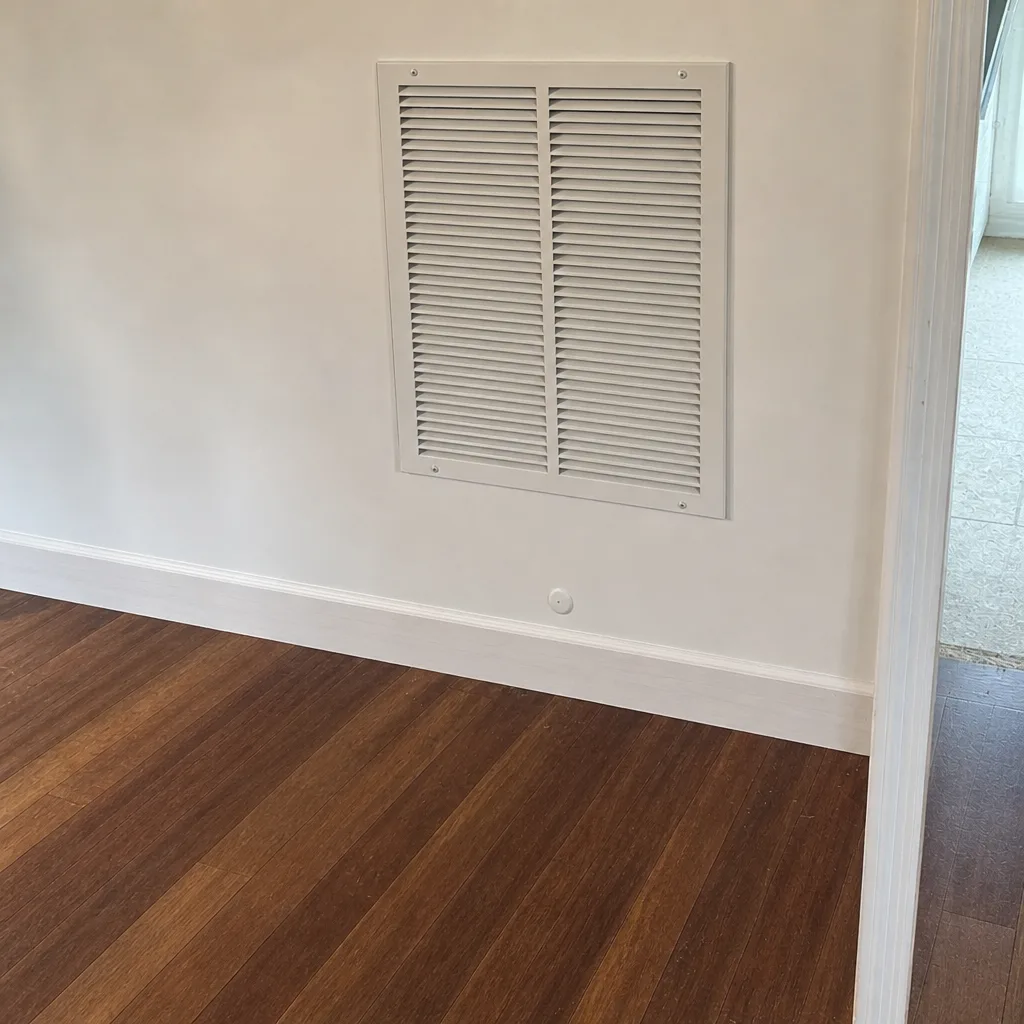
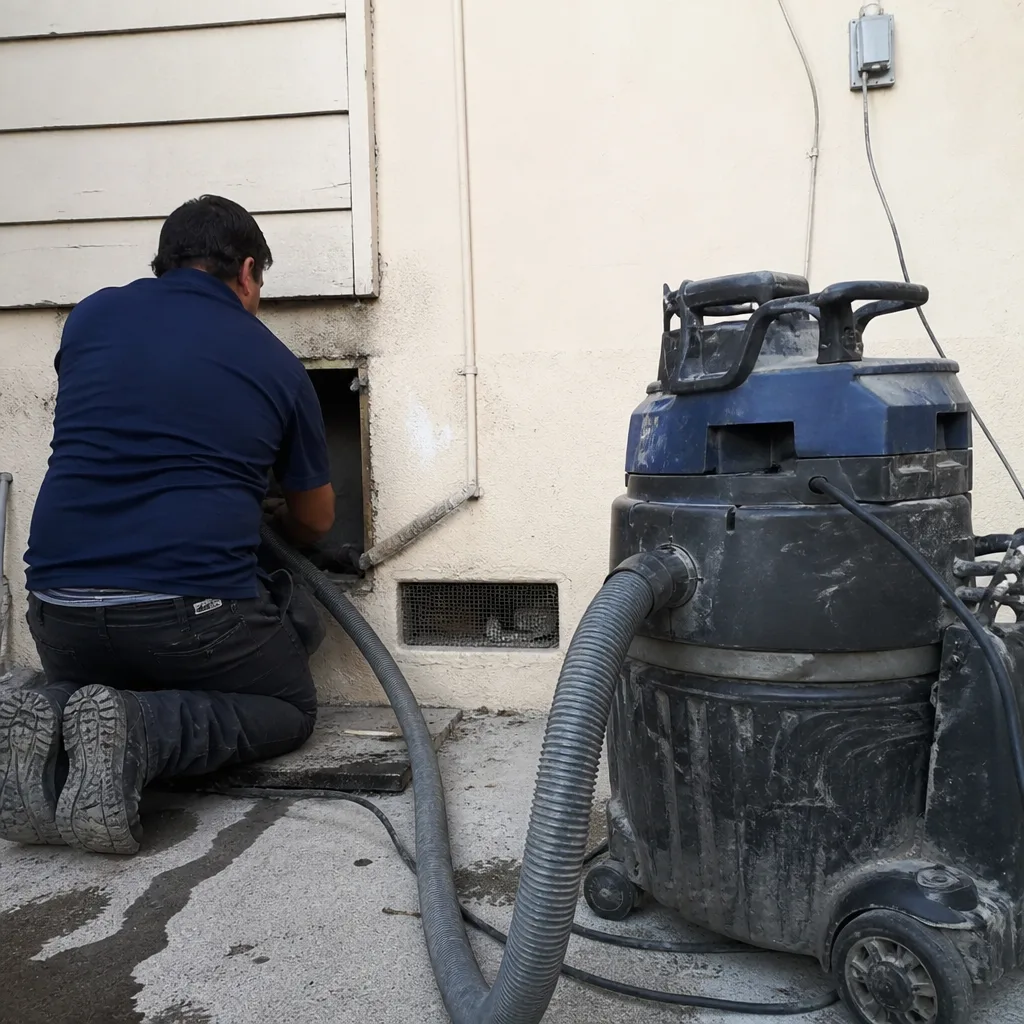
See the difference
 Before
 After
 Before
 After
 Before
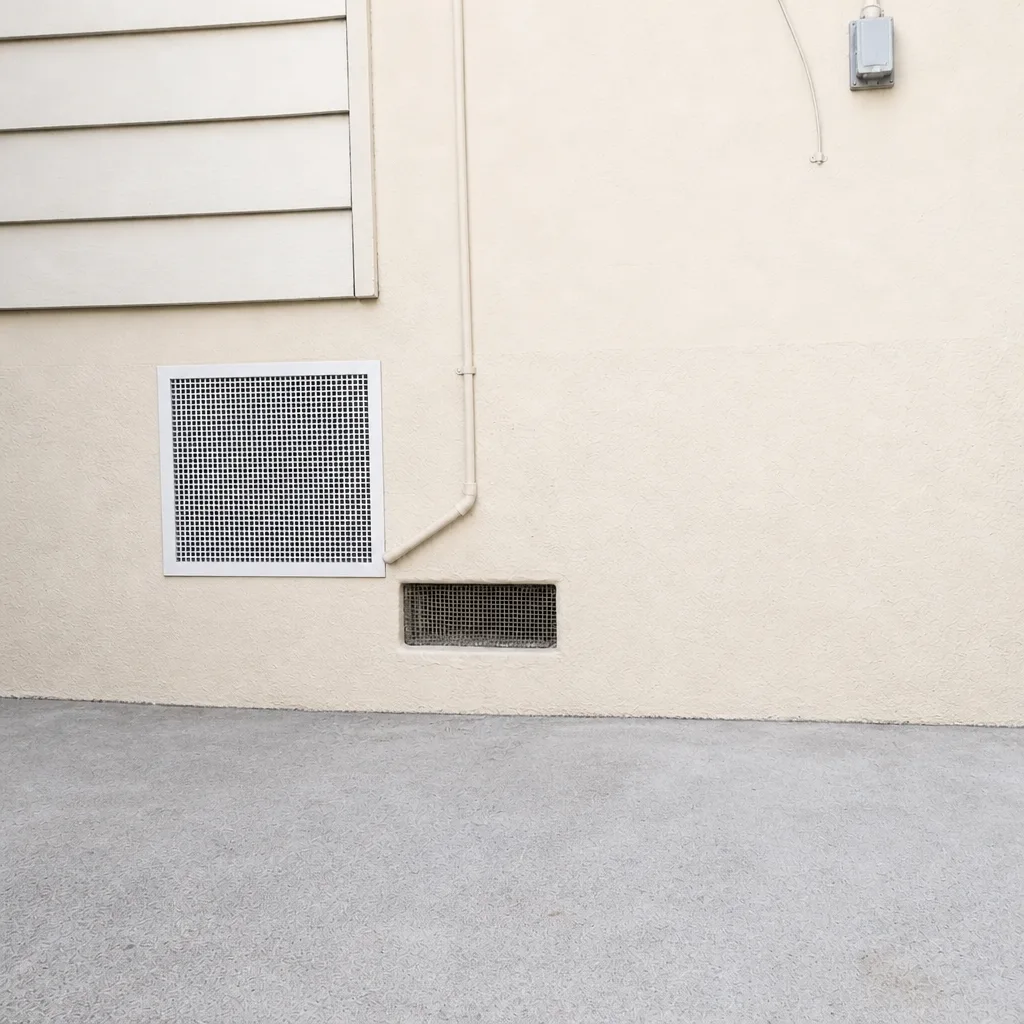 After
When to Call a Professional
Call when you notice a pattern, not a one-off. A musty odor that returns every time the system kicks on. Allergy symptoms that flare up indoors and ease when you’re outside. A room that never gets comfortable while the rest of the house does. Visible dust streaking out of the registers right after you’ve dusted. A spike in the energy bill without a change in usage. Any of those, in a Downtown Santa Ana home over 40 years old, points to a system that needs more than a filter change.
The other trigger is contamination you can see or smell. Pest droppings, mold growth, or a strong chemical or smoke odor coming through the registers needs professional handling with proper containment, not a shop vacuum in the register.
Air Duct Cleaning Downtown Santa Ana offers free estimates in Downtown Santa Ana. Call (866) 545-1338. We answer 24/7. Fast dispatch from 7am to 7pm, Sunday through Friday.
Frequently Asked Questions
Most homes in Downtown Santa Ana run between $350 and $700 for a system clean, and larger or heavily contaminated systems can reach $700 to $1,200 or more. Those are typical ranges, not quotes. The written estimate sets the final price, and it should be flat per system rather than per vent. Call (866) 545-1338 for an exact quote. Estimates are free.
Cheap quotes are usually narrow quotes. They cover the visible branch runs and skip the supply plenum, air handler cabinet, blower wheel, and evaporator coil, which is where most contamination actually recirculates. Others rely on per-vent pricing that grows once the technician is inside. A flat price per system, agreed in writing before work starts, plus before-and-after photos of your own ducts, is the structure that protects you. Call (866) 545-1338 and we’ll walk through what’s included.
Ask for before-and-after photos of your own ducts, not stock images. A contractor using proper agitation and containment equipment should be able to show the plenum and air handler surfaces before and after the job. You should also see the negative pressure setup during the work: the system stays under vacuum so debris leaves rather than settling back down. Call (866) 545-1338 for an estimate.
For most homes, every three to five years is a reasonable interval, and that’s a general rule of thumb rather than a fixed schedule. A Downtown Santa Ana home near the 5 or 55 corridors, one with pets, one with smokers, or one undergoing renovation may need it more often. Change filters on schedule regardless. Call (866) 545-1338 if you’re unsure whether it’s time.
Cleaning removes accumulated dust, pollen, and fine urban particulate from inside the system, so the air being pushed into your rooms has less to pick up along the way. It won’t cure allergies and we won’t claim it will. It does reduce one source of indoor particulate. Pairing the cleaning with proper filtration and air quality work using Aprilaire and Honeywell products addresses the load more fully than cleaning alone. Call (866) 545-1338 to talk through your situation.
A system clean includes the air handler cabinet, blower wheel, evaporator coil, supply and return plenums, and all branch runs. That’s the standard scope rather than an optional add-on, because skipping any of those means contamination stays in the airstream. Call (866) 545-1338 and we’ll confirm the full scope on your home.
The Bottom Line
Duct cleaning isn’t a vacuum down a tube. It’s a system-level service that should cover the branch runs, the main trunks, both plenums, the air handler cabinet, the blower wheel, and the evaporator coil. Downtown Santa Ana’s older housing stock and its proximity to the 5 and 55 corridors make the return side and the seams especially important. Agitation-first equipment like Rotobrush and Nikro breaks contamination loose under negative pressure rather than blowing it into your living room. And the step most contractors skip, sealing and repairing leaking joints, is the one that keeps the work done. Expect $350 to $700 for a standard home, more for larger or heavily fouled systems, and a flat price per system in writing before anyone starts.
Call (866) 545-1338 for a free estimate. We answer 24/7. Fast dispatch from 7am to 7pm, Sunday through Friday.
Written by the team at Air Duct Cleaning Downtown Santa Ana.