
Emergency Air Duct Cleaning Near Me: What Downtown Santa Ana Homeowners Should Do First
A dead rodent in your ductwork and a dusty return grille are both reasons people search “emergency air duct cleaning near me” in Downtown Santa Ana. They are not the same problem, and they don’t get handled with the same protocol, timeline, or equipment. If you shut off the system, seal the accessible vents, and photograph what you can see before anyone arrives, you’ll get an honest assessment instead of a rushed invoice. If you’d rather not sort that out alone, call (866) 545-1338.
What Actually Counts as a Duct Emergency in Downtown Santa Ana?
A duct emergency is a contamination event with an active source: sewage backing into the system, rodent or bird intrusion, soot from a fire, or mold growth confirmed by moisture and visible spread. Those four situations warrant urgent attention because contaminants are being pushed through the house every time the blower runs. Heavy dust, pet dander, and debris you can see at the vent are urgent enough to schedule, but they aren’t emergencies, and a contractor who treats them like one is usually selling urgency rather than solving a problem.
Here’s the split we walk Downtown Santa Ana homeowners through:
- True emergency: sewage backup into ductwork, live rodent or bird intrusion with droppings, post-fire soot, or mold confirmed on duct interiors.
- Urgent but scheduled: heavy visible dust at supply vents, pet dander buildup, musty odor with no visible source, uneven airflow between rooms.
- Maintenance backlog: a single dirty return grille, seasonal dust, or a system that hasn’t been cleaned in years but shows no contamination signs.
Downtown Santa Ana’s older housing stock makes the first category more common than it should be. Many of these homes were built before 1980 with rigid metal trunk lines, then retrofitted with flex duct runs during later HVAC upgrades. Flex duct is easy to install and easy to tear. A small breach in a run that passes through a hot attic or a cramped closet can pull dust, insulation fibers, and whatever else is nearby straight into the living space. When something gets into the system, those breaches spread it faster than a sealed rigid system would.
The First Three Things to Do Before the Technician Arrives
Shut the HVAC system off at the thermostat, seal the accessible vents with painter’s tape, and photograph every vent, grille, and duct opening you can safely reach. Those three steps contain the spread and give the technician documentation to scope the job against. Do them in that order.
- Turn the system off. This stops the blower from pushing contaminants through every supply run in the house. It also keeps soot or rodent debris from settling deeper into the ductwork. Leave it off until someone has assessed the system.
- Seal accessible vents and grilles. Painter’s tape is the right choice because it releases cleanly from painted trim and drywall. Cover supply registers and return grilles. You’re not trying to make the system airtight, just slowing migration room to room.
- Photograph visible contamination. Get the vent openings, any debris you can see, and the area around the air handler if it’s accessible. These photos become part of the scope conversation. They also protect you if a quote later claims contamination you can’t verify.
One thing to skip: don’t spray household disinfectant or air freshener into the vents. It masks the odor a technician needs to identify the source, and it doesn’t address what’s growing or nesting inside the duct. Leave the containment to the equipment.
How a Proper Emergency Assessment Works
A real emergency assessment starts with a camera scope and a source identification before any cleaning equipment is connected. Negative-pressure containment comes next, and the difference between an emergency run and a standard cleaning is how that containment is set up and how long it stays in place.
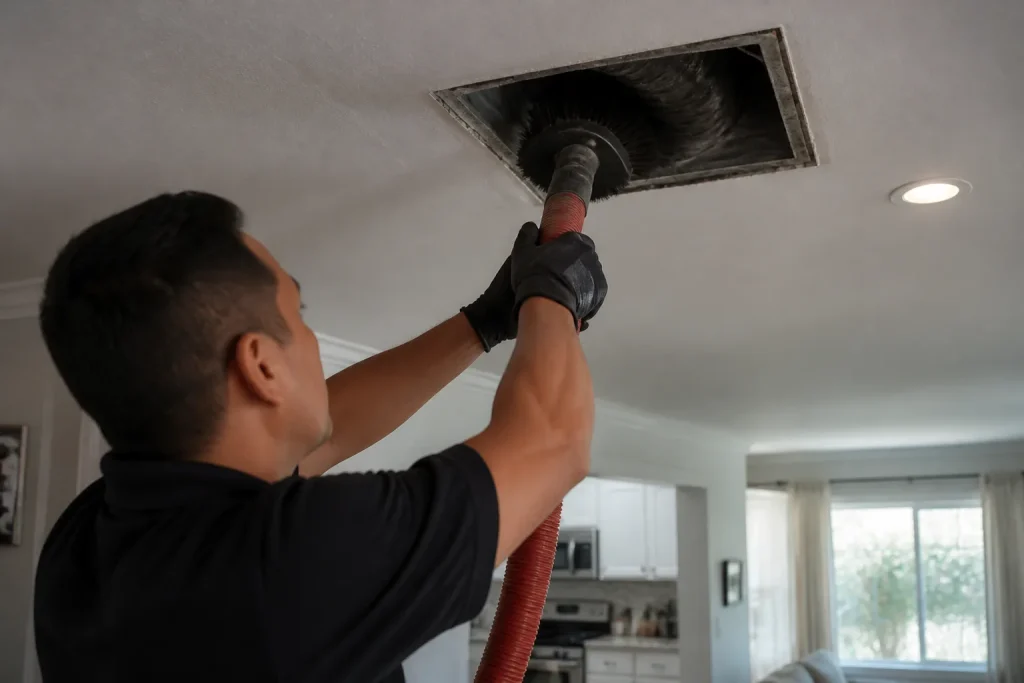
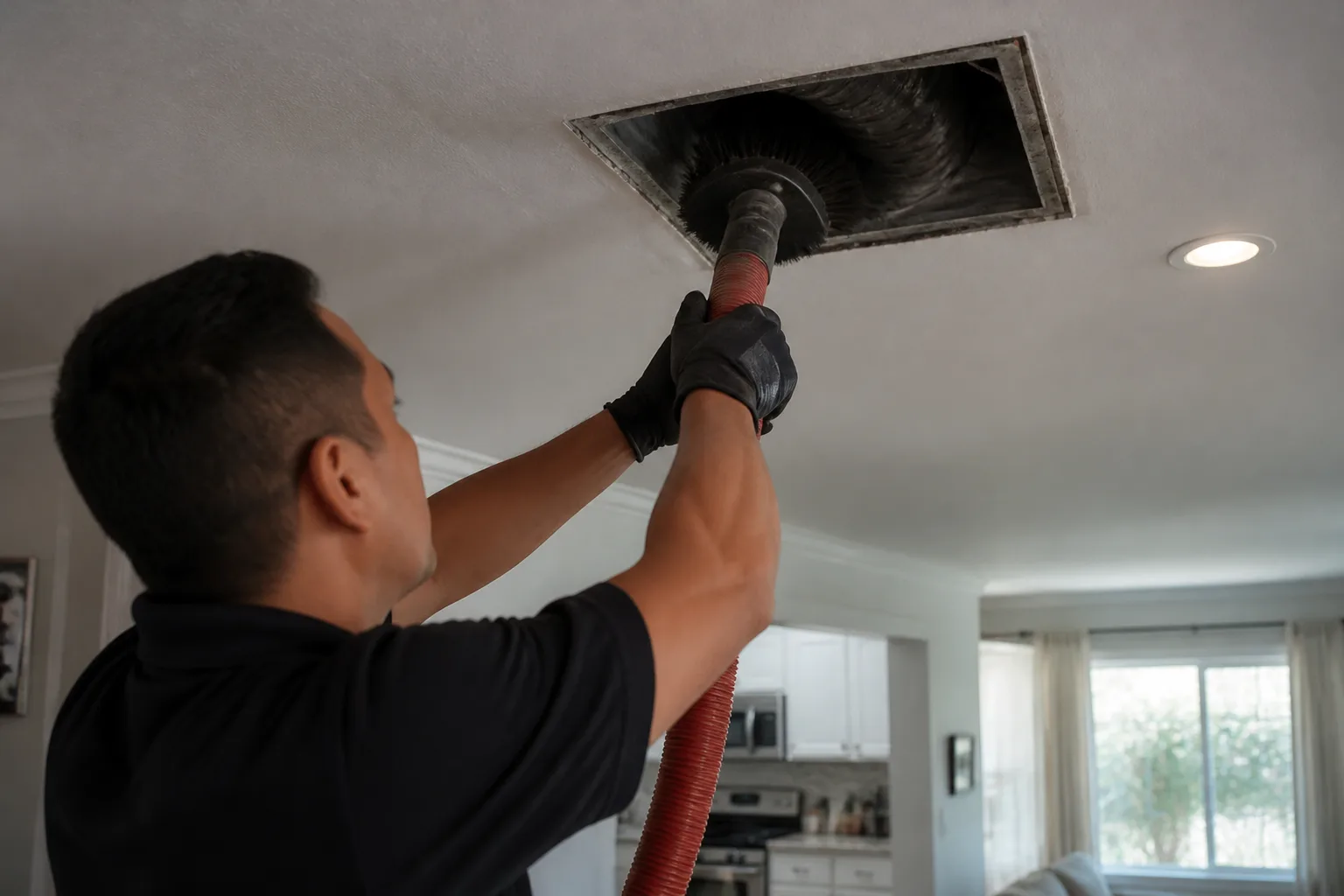
On a normal cleaning, we connect a Nikro negative-pressure system to the main trunk and pull the whole system under vacuum while we work the branch runs with a Rotobrush. The vacuum keeps debris from escaping into the rooms while the rotary brush loosens it. On an emergency call, the negative-pressure setup is more aggressive and stays running through the entire service, and containment barriers go up around the affected zone before anything is opened. That’s the whole point: nothing gets pushed into a clean room while a contaminated zone is being worked. Abatement Technologies air-quality equipment comes into play when the contamination is significant enough to warrant scrubbers and HEPA filtration in the living space, which is the case with soot or confirmed mold.
What this looks like from your side of the house:
- A pre-inspection camera scope of the main trunk and accessible branch runs.
- Identification of the contamination source and its extent.
- Containment barriers set before any duct is opened.
- Negative-pressure vacuum running for the full duration.
- Sanitizing only after the source is identified and removed, using products matched to what was found.
Our technicians have up to 10 years of experience running this kind of assessment, and the sequence matters more than the equipment list. A crew that skips straight to sanitizing without finding the source is charging you for a smell, not a solution.
Red Flags of Emergency Duct Scams Targeting Downtown Santa Ana Homeowners
The red flags to watch for are a verbal-only quote, no camera scope before pricing, and pressure to authorize sanitizing chemicals before anyone identifies what’s in the duct. Panic is the scammer’s best tool, and an emergency search is exactly when homeowners are most likely to say yes to whatever’s on the clipboard.
Here’s what to hold the line on:
- No written scope, no work. You should see the contaminated zones named, the equipment to be used, and the price before anything is unhooked. One flat price per system, agreed before work starts, not a per-vent number that climbs as the job goes.
- No camera scope, no authorization. A camera inspection takes minutes and shows exactly what’s in the system. If a technician quotes a cleaning without looking inside, they’re guessing at your expense.
- No source ID, no sanitizing. Chemical treatment without identifying the contamination source is a red flag. Sanitizing a mold problem that’s still feeding on moisture does nothing, and you’ll pay for it twice.
- No pressure to sign on the spot. A legitimate assessment gives you a written estimate you can think about. Urgency is fine; coercion isn’t.
We’ve seen the back end of these calls in Downtown Santa Ana. A homeowner paid for a “same-day emergency cleaning” that turned out to be a shop-vac pass over the main trunk with a verbal quote and a sanitizing fog that made the house smell like a hotel lobby for a week. That’s not duct cleaning. If you want before-and-after photos of your own ducts so you can see the work actually happened, ask for them up front.
Why Older Downtown Santa Ana Housing Stock Changes the Response
Downtown Santa Ana’s pre-1980 homes and flex-duct retrofits mean a contamination event spreads faster and reaches further than it would in a newer, sealed system. Rigid metal ductwork with properly sealed joints contains a problem to one zone. Flex duct with compromised connections carries it into every room the system serves.
The practical implications for emergency response:
- Seal checks come first. Duct Repair & Sealing isn’t an upsell on older systems; it’s part of fixing the root cause. Cleaning a leaky system just means the same contaminants get pulled back in through the same breaches.
- Access is tighter. Older homes were built without duct access panels in mind, so a camera scope and negative-pressure rig have to be set up carefully. That’s another reason a rushed job on old ductwork tends to do more harm than good.
- Flex runs fail silently. A flex duct that’s been kinked, crushed, or torn during a prior HVAC replacement can pull attic dust, insulation, and rodent debris directly into a bedroom. You won’t see the breach from the vent; the camera finds it.
- Air quality compounds. A sealed, properly sized system with fresh filtration is the long-term answer. Aprilaire and Honeywell filtration products integrated into an Air Quality & Sanitizing service address the source rather than masking the symptom.
If you’ve got an older system and the ducts haven’t been scoped in years, that’s a good reason to schedule a proper air duct cleaning before a small breach turns into a real contamination call. While we’re in the system, it’s worth having us look at the dryer vent cleaning too, since lint buildup in older homes is a fire risk that’s easy to overlook. If the HVAC equipment itself hasn’t been cleaned in years, HVAC cleaning covers the coil and cabinet side of the system.
When to Call a Pro
Call a pro the moment you smell sewage, see droppings, find soot, or spot mold inside a vent. Everything else can wait for a scheduled assessment, and scheduling gives you time to compare written scopes instead of taking whatever’s offered under pressure. The estimate is free and the price is set per job by the written estimate.
Call (866) 545-1338. We answer 24/7. Fast dispatch from 7am to 7pm, Sunday through Friday.
The Bottom Line
Most “emergency” duct situations in Downtown Santa Ana are triage calls, not same-day cleaning calls. Shut the system off, seal the accessible vents, and photograph what you can see. Then decide whether you’re dealing with sewage, rodents, soot, or confirmed mold (emergency) or heavy dust and dander (scheduled). Knowing the difference keeps you out of a rushed decision and an inflated invoice.
If you’re in Downtown Santa Ana and need help, Air Duct Cleaning Downtown Santa Ana offers free estimates. Call (866) 545-1338. We answer 24/7. Fast dispatch from 7am to 7pm, Sunday through Friday, and we’re closed Saturday. One flat price per system, agreed before work starts, with before-and-after photos of your own ducts. For the full picture of Air Duct Cleaning Downtown Santa Ana, start with the service overview.
Frequently Asked Questions
There’s no honest single number, because emergency work in an older system can range from a contained single-zone job to a full-system clean with sealing and sanitizing. The written estimate sets the final price, and it’s free. Call (866) 545-1338 for an exact quote – estimates are free.
No. Heavy dust at a vent is a scheduled cleaning, not an emergency. Same-day attention makes sense for sewage, rodent or bird intrusion, soot, or confirmed mold. If you’re unsure which category you’re in, call (866) 545-1338 and describe what you’re seeing – estimates are free.
Ask for before-and-after photos of your own ducts, taken inside the system with a camera, and a written scope that names the zones cleaned and the equipment used. If a contractor won’t provide either, that’s your answer. Call (866) 545-1338 for a scoped estimate – estimates are free.
There’s no universal interval that fits every home. In Downtown Santa Ana’s older housing, a camera inspection every few years is the practical approach, and a cleaning is warranted when the inspection finds contamination or a breach. Sealing leaky joints matters as much as cleaning the duct. Call (866) 545-1338 to schedule an assessment – estimates are free.
Written by the team at Air Duct Cleaning Downtown Santa Ana.
Need Air Duct Cleaning Help?
Call Air Duct Cleaning Downtown Santa Ana - the local pro we connect you with is licensed and insured, here with fast help in Downtown Santa Ana.
(866) 545-1338